The Generation Everyone Talks About, But Never Talks To.Young people are still excluded from decisions made in their name.
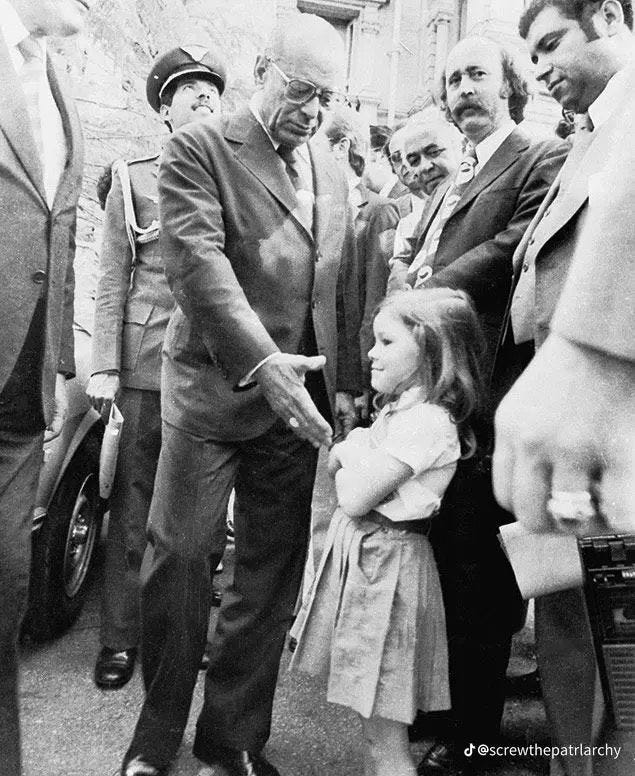
People love to preach about “investing in the younger generation”. They create programs, campaigns and shiny initiatives that supposedly prioritize the youth. But when young people actually speak, no one listens. Our voices, especially as a Gen Z, often feel dismissed before they’re even heard. We’re judged, lectured and talked over by the older generations who insist they know better. One of the most recent examples of this can be seen in the large protests that happened in Indonesia back in August 2025, where thousands of students and activists gathered outside the parliament after the government’s announcement of increased housing allowances for their lawmakers, at a time when funding for education, health and other services were being cut. According to an article written in the Human Rights Watch, instead of genuinely listening to the young activists, authorities responded with violence. Riot police used water canons and harmful tear gas to disperse demonstrators, which violated fundamental human rights standards. The moment we push back, when we try to fix the very world we’re inheriting, we’re judged even more harshly. Our concerns get reduced to background noise, dismissed simply because we supposedly “lack experience”, as if not having lived as long somehow makes our perspective less real or less valuable. A journal article published in the American Psychological Association, “Supporting the Old but Neglecting the Young? The Two Faces of Ageism”, shows that societal ageism doesn’t just disadvantage older people; it also significantly harms the younger generations, whose ideas and contributions are routinely undervalued precisely because of their age and ‘lack of experience’.
Yet, in many ways, the younger generations today have experienced so much more.We’re the first generation to grow up alongside the rise of social media. We watched technology evolve in real-time, shaping how we think, connect and navigate the world. That gives us a uniquely dual perspective: we remember what life felt looked like before the internet dominated everything, while also being fully fluent in the world after. Several studies even confirmed this. One of them is a study published in Frontiers in Psychology, by Metin Elkatmiş of Kırıkkale University, where it was concluded that because Gen Zs developed digital skills from an early age, they tend to be “more independent and entrepreneurial, open to innovations, and sensitive to global issues.” In many ways, Gen Zs embody the “spirit and dynamism” of the era we’re all living in. Despite this, our voices remained overlooked. Ironically, even though countless campaigns are created “for the youth”, very few are created with us, and sometimes, they’re not even truly for us. This pattern is especially visible in the education sector. Through a report published by the Brookings Institution, researchers found that young people are still “largely excluded” from shaping the transformation of the very education systems they experience every single day. As the researchers put it:
So what’s the point of advocating for the younger generation if our voices get silenced the moment we speak? It’s like conducting a survey only to ignore the results. Going through all the motions, while completely missing the meaning entirely. Because that’s what this feels like: a performance.A show of “listening” without the substance of actually hearing. Decisions that are made in rooms we’re not invited into, then presented to us as if they were done for us, rather than without us. And when we point that out, we’re told to be ‘grateful’ for the scraps of attention we get. But real progress doesn’t happen when one generation speaks over another. It happens when the people who will inherit the future are allowed to shape it. It happens, when our insight isn’t treated as a threat, but as the asset it actually is.
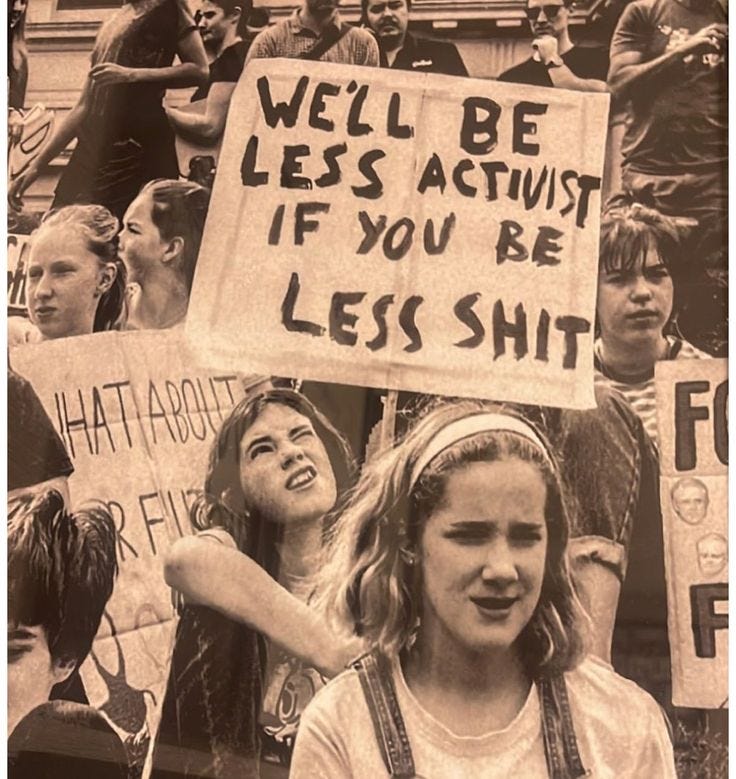
Take the global youth climate activism movement in 2019, as reported by Juliane Kippenberg for The Human Rights Watch. Under the hashtag #FridaysForFuture, thousands of young people across dozens of countries marched together, demanding that their governments take real action on climate change. They weren’t asking for symbolic promises or distant pledges, they were calling for concrete, measurable steps to secure the future they will inherit. Movements like this highlight just how informed and engaged today’s young people are. They understand the policies shaping their lives, and they’re willing to mobilize collectively to defend their future. Their activism isn’t impulsive or naïve. It reflects credibility, awareness and a deep sense of responsibility for the world they’ll soon lead. We saw a similar surge of youth-led mobilizations in Indonesia. As reported by CNBC, university students, and many from the country’s leading institutions, poured onto the streets to protest a new law that threatened to weaken the anti-corruption agency. These demonstrations were not orchestrated by any political party or organization. They were student-led, driven by a shared belief that citizens deserve transparent governance. Historically, too, as recorded in the Association for Diplomatic Studies and Training, student movements in Indonesia have always played a crucial role in political change. Most notably in the 1998 protests around the country that contributed to the end of the Suharto regime. So no, we don’t need empty advocacy. We need participation. We need seats at the table, not token mentions in a report.A clear example of meaningful inclusion can be seen in the United Nations meeting in September 2022, where youth delegates were given a formal platform to voice their concerns about their countries’ policies. In these forums, young representatives collectively called for young people’s right to participate in, and actively shape, decision-making processes at both national and international levels. However, this participation is still far from universal. As the UN itself acknowledges, not all countries send their youth delegates, which means even the representation itself is uneven. The majority of youth delegates come from developed countries, resulting in ‘lack of diversity in participation’.
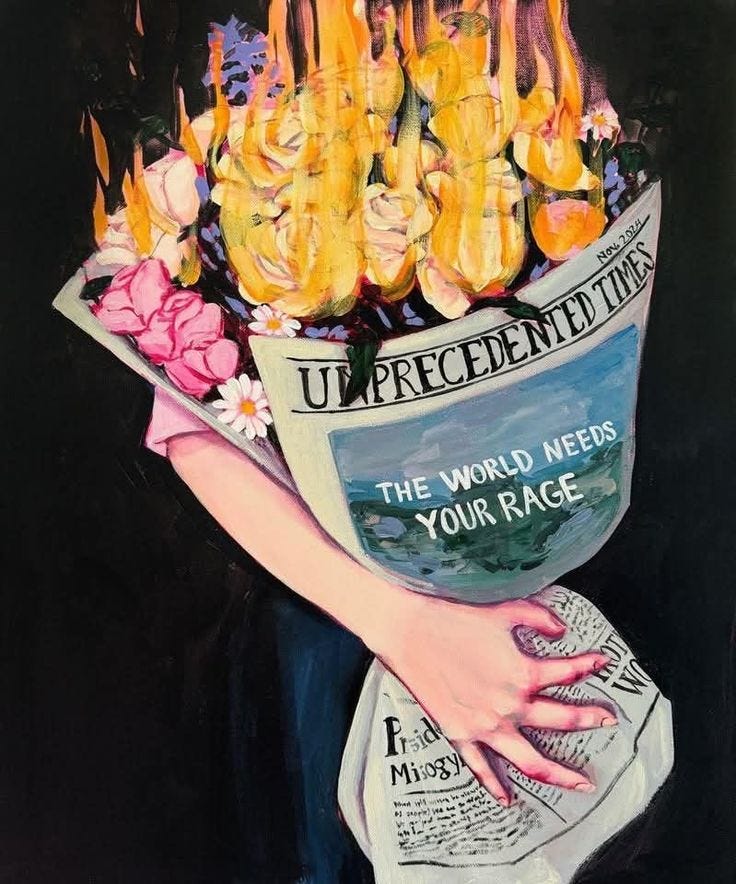
So what will it take for the voices of the youth to finally be heard?Maybe the answer doesn’t lie in waiting for the highest offices to listen. Maybe it begins at the ground level. At home, in classrooms, in workplaces, in the everyday spaces where young people are most often dismissed. It starts with refusing to let our perspectives be treated as naïve, with rejecting the idea that: fewer years lived means less insight, less intelligence, or less right to shape the world we are inheriting. Because the truth is, the system isn’t broken. It’s working exactly as it was built to work. Just not for us. And until the youth are given not only the microphone, but the power that should come with it, the world will continue to speak about us, instead of with us. That is why we have to keep pushing, keep organizing, keep raising our voices. Not because we want permission to matter, but because we already do. And it’s time the world caught up. Sincerely, The Whiffler is free today. But if you enjoyed this post, you can tell The Whiffler that their writing is valuable by pledging a future subscription. You won't be charged unless they enable payments.
|
Tuesday, 9 December 2025
The Generation Everyone Talks About, But Never Talks To.







Subscribe to:
Post Comments (Atom)
Newsround: Advanced Qualitative Research Seminar, Historical Methods in Organisation Studies, Podcast on DuPont Ch…
Speaker sought for next research seminar · Webinar on organizational history methods · Hagley History Hangout podcast ͏ ͏ ͏ ...

-
Dear Reader, To read this week's post, click here: https://teachingtenets.wordpress.com/2025/07/02/aphorism-24-take-care-of-your-teach...
-
CALL FOR APPLICATIONS: AOM 2025 PDW ͏ ͏ ͏ ͏ ͏ ͏ ͏ ͏ ͏ ͏ ͏ ͏ ͏ ͏ ͏ ...


No comments:
Post a Comment