Howard Polivy, the Man Who Never LeftA long tenure, a consistent vote, and the comfort of continuity
There is a particular rhythm to board meetings. Once you have sat through enough of them, they begin to blend together. The agenda appears. The minutes are approved. The budget is reviewed. The language is familiar, almost comforting. Concerns are acknowledged. Reassurances are offered. A vote is taken. The meeting moves on. If you were to close your eyes and open them again, you might not know whether it was 2011 or 2019 or 2024. The numbers change. The faces change. The chairs around the table change. But for a very long time, one presence did not. Howard Polivy. Board meetings are like reruns of a show you never liked. New cast, same script, and somehow Howard Polivy was always renewed for another season.
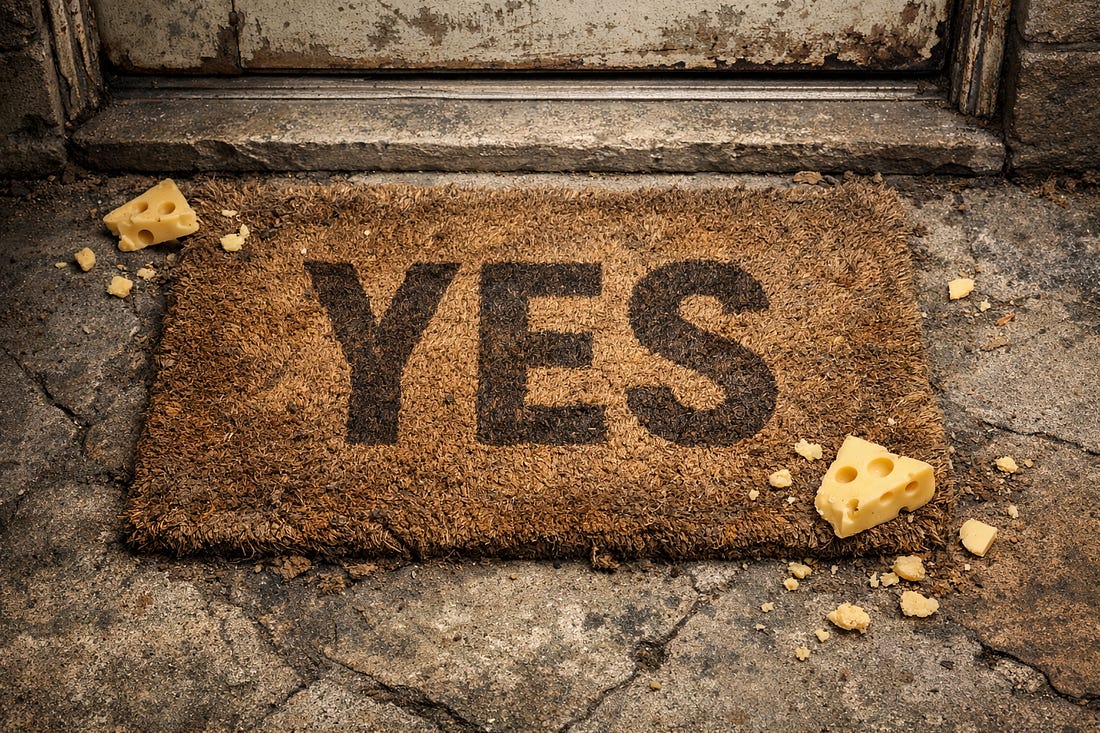
He was there when the meetings ran smoothly and when they did not. He was there when CEOs came and went, when governors changed, when priorities shifted quietly behind closed doors. He was there when the tone of the room softened and when it tightened. He was there when others raised their voices, and he was there when they left. And through it all, the meetings continued to end the same way. With a yes. Howard Polivy wasn’t just renewed for another season. He was syndicated. How He Entered the RoomHoward Polivy joined the Roosevelt Island Operating Corporation board in 2009, recommended by Mayor Bloomberg and appointed by Governor David Paterson. His term, like many others, was finite on paper. It expired, unlike many others, his presence did not. Years passed. Governors changed. Board members rotated in and out. Polivy remained seated long after the technical end of his term, a constant through successive administrations. He was not the loudest voice in the room, but he was a familiar one. And familiarity, in institutions like RIOC, carries weight. He did not build influence by challenging authority. He built it by never forcing authority to react. From early on, Polivy aligned himself with the structure of the board rather than its personalities. Others raised their hands. Howard raised no objections. He simply positioned himself where the vote would end up, which is a far more efficient use of energy. Over time, that instinct made him useful. And usefulness, more than independence, is what ensures his survival. The Illusion of OversightAt a recent committee meeting, the room lingered on a small procedural question. An agenda item concerning needed work on the AVAC pipe had already been added. The substance was not in doubt. The work was necessary. The outcome was clear. The debate was not about whether the pipe needed fixing. It was about how politely the board wished to take credit for agreeing with an agenda that had already been distributed based on the meeting now underway. Oversight, in that moment, became a matter of presentation. Which was, by then, the usual form of supervision. Over the years, Polivy occasionally postured to remind the room that he held power. He asserted control when someone suggested he did not. He even made a brief attempt to elevate himself to CEO during one of the leadership transitions that followed the termination of an executive he had helped scrutinize. The attempt went nowhere, which was exactly where it needed to go. The state did not elevate him. It did not need to. It let him stay, accumulating committee chairs and internal influence instead. Time did not move him upward. It let him spread sideways. As chair of the Audit Committee and the Real Estate Advisory Committee, Polivy wielded influence indirectly, initiating internal investigations that shaped careers and constrained executives. Those actions rarely surfaced in public minutes. His power rarely appeared in the minutes. It preferred the hallways, where decisions are harder to quote. Yet even here, his role was not that of an architect. It was that of an enabler. He rarely hesitated with the room, and when he did, the hesitation never crossed into opposition with the state or with large real estate deals. On every final vote, he aligned with the will of the chair and, by extension, the will of those who held power. Performing authority while obeying it turned out to be a marketable skill that repeated quietly over years. It is also what made him indispensable. Indispensability, in this case, meant never being the problem.
When Staying Becomes the DecisionOf course, everything was not always fine. Infrastructure aged. Retail thinned out. Trust eroded in small, accumulative ways. The consequences of earlier votes surfaced slowly, often years after the meetings that authorized them. By then, the language that had justified them was long forgotten. This is how institutional harm often appears. Not as a single failure, but as a widening gap between procedure and experience. Between what is approved and what is lived. Nothing failed spectacularly, which made everything harder to question. Howard Polivy did not create that gap. But he helped normalize it. His votes did not introduce risk. They removed interruption. Stability proved useful until it outlasted its purpose. He certified continuity at moments when continuity itself had become the problem. Over time, the meetings grew quieter not because there were no problems, but because the process had learned how to absorb them. Votes passed. Language softened. Responsibility diffused. The board continued to function. In that system, staying was not neutral. It was the decision. What the Yeses Leave BehindHoward Polivy’s legacy is not abstract. It is visible in the decisions that were approved, quietly and consistently, and in what those decisions produced over time. He voted yes when the board extended the Rivercross ground lease in 2011, a deal introduced mid-meeting without public notice. That vote helped unlock privatization, delivering windfall gains to shareholders while permanently weakening the state’s leverage over one of the island’s largest housing complexes. The affordability protections cited at the time dissolved years later, exactly as critics warned. The vote passed. The consequences arrived on schedule. He voted yes when the board handed Main Street retail to Hudson–Related under a 30-year master lease, promising revival through scale and professional management. A decade later, storefronts still cycle through vacancy, small businesses struggle to survive, and RIOC quietly subsidizes the deal to keep it afloat. Main Street became leverage for Southtown development, not a strategic asset for the community it was meant to serve. He voted yes on years of capital plans that emphasized presentation over prevention. The tram elevator took seven years to complete. Blackwell House reopened years late. Eleanor’s Pier closed for safety and remains closed. The Helix deteriorated to the point of emergency repair. Each project had its own explanation. Together, they told a simpler story: maintenance deferred long enough becomes crisis. He voted yes when Sportspark closed for renovation in 2019, a project pitched as a brief disruption. It remained shuttered for nearly four years. When it reopened, residents were met with fees so high they had to be rolled back after public backlash. The facility exists now, improved and functional, but the cost was years without access and a pricing model misaligned with the community it serves. He voted yes as Audit Chair while contracts slipped just under board-approval thresholds, including the now-infamous PR contract designed to polish executive reputations with public money. Oversight did not fail loudly. It simply failed to intervene. Each “yes” was defensible in isolation. Together, they formed inertia. Every decision arrived with an explanation. The outcomes arrived later, without one. The cost of that inertia is visible now. Not in one broken system, but in many weakened ones. In infrastructure that aged faster than expected. In public spaces managed rather than cared for. In a board that learned how to proceed without fully accounting for where it was going. Nothing here requires scandal to explain it. It requires only years of assent. Though, over the years, several scandals seemed to wander in anyway. If the Chair Were EmptyIt is difficult to imagine the board without Howard Polivy because for so long, it did not have to. But imagine it anyway. Imagine meetings where experience is paired with interruption. Where memory produces questions instead of reassurance. Where a vote does not arrive already decided. Where “yes” is something earned, not supplied. The room might be louder. It might hesitate. And when it finally moved on, it would do so with less certainty than before. Howard did not need to lead or obstruct. Remaining in place turned out to be enough. And for a very long time, that was exactly what the state needed. Continuity served the state faithfully. Whether it served the island is a newer question. The island is now left to decide whether that is still enough.
If one person came to mind while you were reading this, consider forwarding it to them. Subscribe for free to receive updates on new posts and support our work.
|
Friday, 30 January 2026
Howard Polivy, the Man Who Never Left






Subscribe to:
Post Comments (Atom)
Issue 1 of NeuroHub Zine is out: a new library for neurodivergent voices
Free to read, a new issue every Friday, your own saveable library, and room for your work too. ...
-
Dear Reader, To read this week's post, click here: https://teachingtenets.wordpress.com/2025/07/02/aphorism-24-take-care-of-your-teach...
-
A slightly unconventional guide to your first time ͏ ͏ ͏ ͏ ͏ ͏ ͏ ͏ ͏ ͏ ͏ ͏ ͏ ͏ ͏ ...


No comments:
Post a Comment