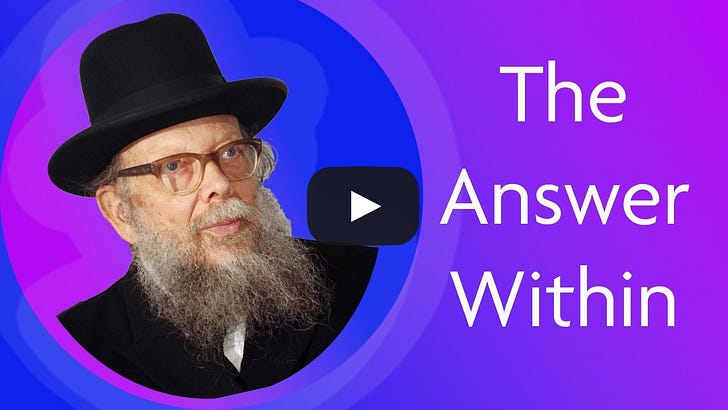
 Moses comes to the Israelites with the greatest promise in Jewish history: freedom, redemption, a future.
They don’t reject God. Rashi explains kotzer ruach almost physiologically: when a person is in anguish, their breath becomes short; they can no longer draw a deep breath. Ramban goes further. The Israelites, he says, were so crushed that they could not tolerate waiting even one more moment for hope—even though they knew redemption was coming. Cassuto names it bluntly: depression. The Torah’s diagnosis is unsettling. And that is where my teacher, Rabbi Shlomo Wolbe, enters the story. “If You Asked Me What My Ani Ma’amin Is…”Rabbi Shlomo Wolbe (1914–2005) was my mashgiach, my teacher, and—arguably—the last great master of the Mussar movement. Born in Berlin to a non-religious family, trained at Mir, a survivor of wartime Europe, founder of Be’er Yaakov, Wolbe combined breathtaking intellectual range with rare inner authority. But nothing captures him better than a single paragraph from his lecture “The Wonder of Man” (נוראות האדם), published in בין ששת לעשור (1975).
“If you were to ask me what my Ani Ma’amin is,” Wolbe writes, Not God. And he means it literally:
“I believe that the human being is so great that he can stand before his Creator and hear Him speak—that is prophecy—and speak to his Creator—that is prayer.” Wolbe insists that the pinnacle of Jewish history was not conquest or survival, but human encounter with greatness:
“The greatness of the people of Israel reached its summit when the entire nation stood at Mount Sinai and heard the Ten Commandments from the mouth of God in prophecy.” And from that greatness, he concludes:
“From this greatness, a person can repair himself, his surroundings, and the entire world.” Belief in God Is Easy. Belief in Man Is Hard.Wolbe then delivers what may be his most unsettling line:
“In God—all people believe. Judaism, Wolbe argues, demands a faith that is far more demanding than theology: the belief that a human being can sustain a living relationship with God.
“That a human being can walk before God in the land of the living—this is our faith.” Sophocles, the Moon, and the Shrinking of the SoulWolbe begins his essay not with Torah—but with Sophocles:
“Many things are awe-inspiring,” Sophocles writes, Sophocles marvels at humanity’s power to drain swamps, cultivate deserts, tame seas. Wolbe updates the list:
“In our own days we can add yet another great deed: the human being dares—to fly to the moon.” And yet Wolbe asks the Mussar question modernity avoids:
“Has humanity, through such achievements, exhausted all that lies within its power for building the world?” Civilization, Wolbe warns, may expand the world while shrinking the human being:
“Civilization enlarges the world and diminishes the human being… while the human inner life steadily contracts and grows impoverished.” A Personal ConfessionThen Wolbe does something disarming. He tells a story about himself.
“Once I stood atop a very high mountain… I believed all my small traits would vanish. But I soon realized that inwardly nothing had changed.” External grandeur does not cure inner smallness.
“He is still the same human being. So where is the repair of the human being—and where is the repair of the world?” What Mussar Really IsThis is the essence of Mussar as Wolbe understood it. Not ethics. Not guilt. Not obedience training. Mussar is the discipline of גדלות—inner greatness. I saw this daily as his student. Wolbe was soft-spoken and unassuming. But everything about him radiated sovereignty. There were no wasted gestures, no performance. Just presence. He once asked a student crushed by failure: True greatness is not grandiosity. From Kotzer Ruach to RedemptionSeen this way, Exodus reads differently. The real slavery is not Pharaoh. Wolbe ends with a quiet but audacious call:
“The awe-inspiring power of the human being lies in his inner life—let us reveal its light through our deeds.” Redemption begins when a human being dares to believe they are not too small to matter—and finally takes a deep breath again. Sefaria Source Sheet: https://www.sefaria.org/sheets/701299 Link to fully transcribed and translated article The Wonder of Man here.
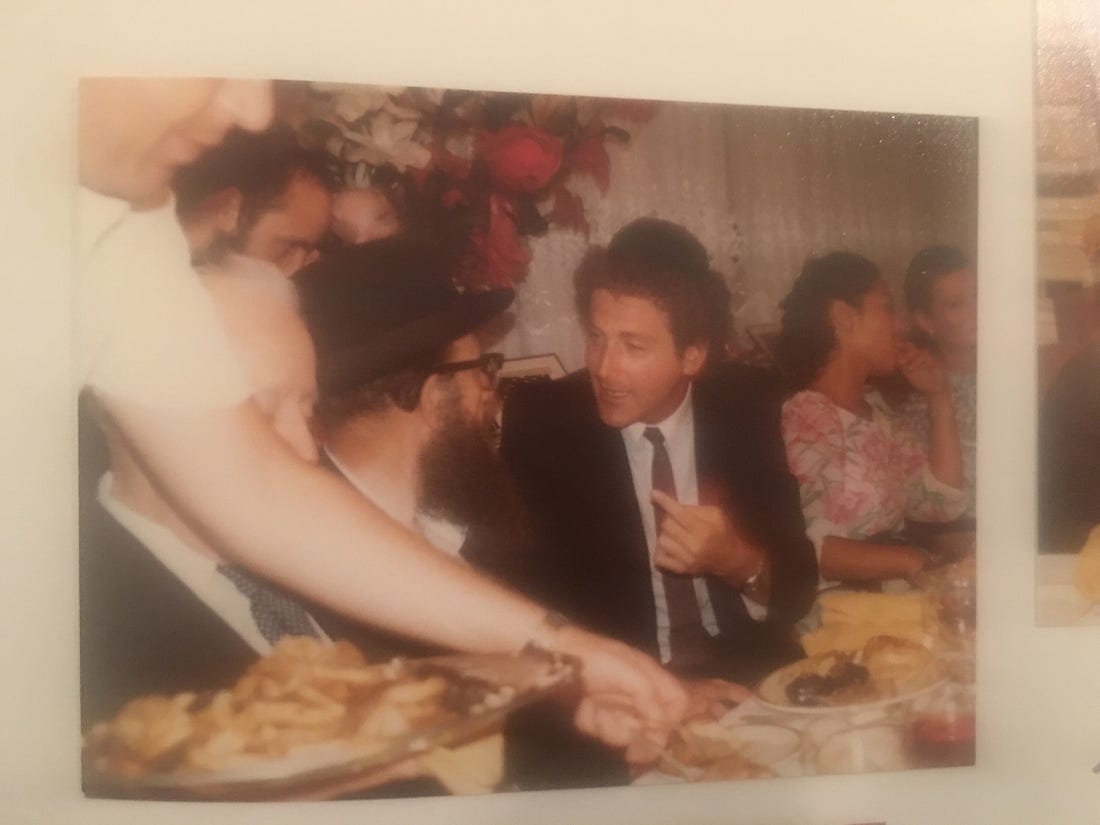
Professor Saul Lieberman, Rabbi Shlomo Wolbe and me at my Sheva Brachot
|
Wednesday, 14 January 2026
Kotzer Ruach and the Courage to Be Great






Subscribe to:
Post Comments (Atom)
Six years ago, Tony Abbott ...
Sometimes you can't escape your past! ͏ ͏ ͏ ͏ ͏ ͏ ͏ ͏ ͏ ͏ ͏ ͏ ͏ ͏...

-
Dear Reader, To read this week's post, click here: https://teachingtenets.wordpress.com/2025/07/02/aphorism-24-take-care-of-your-teach...
-
CALL FOR APPLICATIONS: AOM 2025 PDW ͏ ͏ ͏ ͏ ͏ ͏ ͏ ͏ ͏ ͏ ͏ ͏ ͏ ͏ ͏ ...


No comments:
Post a Comment