Did we know we needed a handheld mini-computer that fitted into a pocket and also served as a phone before Apple released the first iPhone in 2008? Not so much. Did you know you wanted to code your own websites and apps? Well, I watched “Whizz Kids” in the 80s (and just so you know, it took many years for a programme to come from the US to non-English-speaking European countries, so I am not THAT old), so… yes, I always did. Not enough to actually learn coding, but with hindsight, that looks like a good choice. So, after listening to one of my favourite tech podcasts over the snowy weekend, I felt inspired to give vibecoding another go. (They are calling it the Claude Code moment, and I’ve been a bit of a Claude fan from the beginning.) Also, the FT’s AI newsletter, interestingly enough, focused on how AI will change the way social scientists work. I think the sub-text here was quantitative social scientists (it’s the FT, after all, even though they do the occasional bit of qualitative work). Nevertheless, their point was that it was making working with data easier and quicker, including laborious but thankless tasks such as data cleaning. While there is a fierce debate about the possibilities of AI for qualitative research, and specifically “qualitative coding” (which means identifying themes, not writing computer language here), this type of work has more straightforward quality standards and is very obviously the kind of task a researcher would want to outsource. The Projects
I thought this would be a straightforward task to check AI capabilities. Well, turns out, it is’t. Only an incomplete list exists, and AI tools differed greatly on how well they rustled up alternative sources from the depths of the internet. And guess who is the only academic to win the Henrietta Larson Award twice? Yes, it’s me! Worth noting that there are currently no records of who won the preceding Harvard Newcomen Award, as the Henrietta Larson was called prior to 2007. I emailed BHR about that. They don’t know either, but may find out. But even then, I am currently the only one to have won the Henrietta Larson twice. As a paying subscriber, you get the full list (cross-checked and confirmed by BHR). The tasks that I tested AIs for were data searching and data validation. The tools were Claude and Gemini, and their performance was noticeably different.
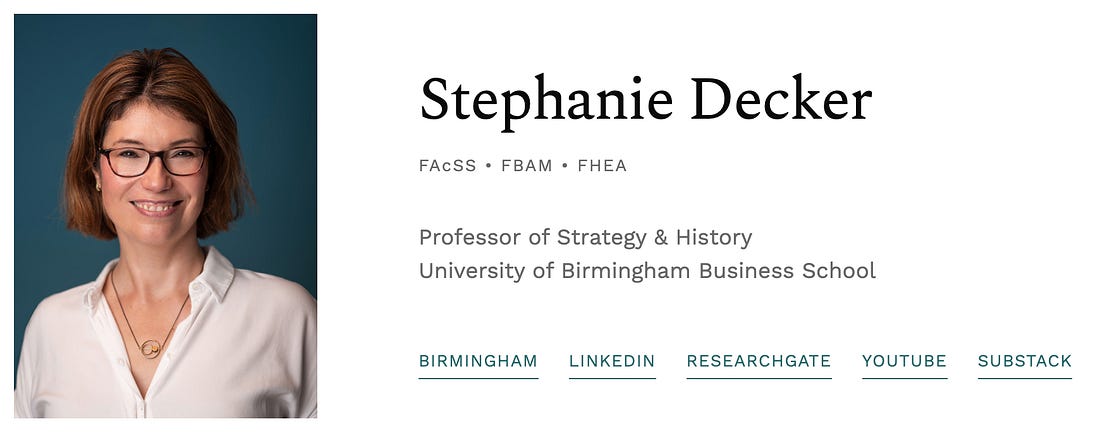
(Which I really need to update to highlight that I am the only author to win the Henrietta Larson Prize twice. Did I mention this yet?) My two cents, nobody needs them today with all the profiles and whatnots. Mine is a set of links to my many other profiles, and pulls in my publications through my university’s publication repository (so no additional updating). But it was really super-easy, it looks rather good, and it is completely free to host on GitHub, so what’s not to like?
The task was creating a website (duh) and I only used Claude — it was more a proof-of-concept, really. Also, not everything worked, and I am still not sure why.
Now, this is a long-running test vehicle of mine, which I roll out periodically to see how useful these AI buddies might be as research assistants. The answer to this has long been disappointing — until now!
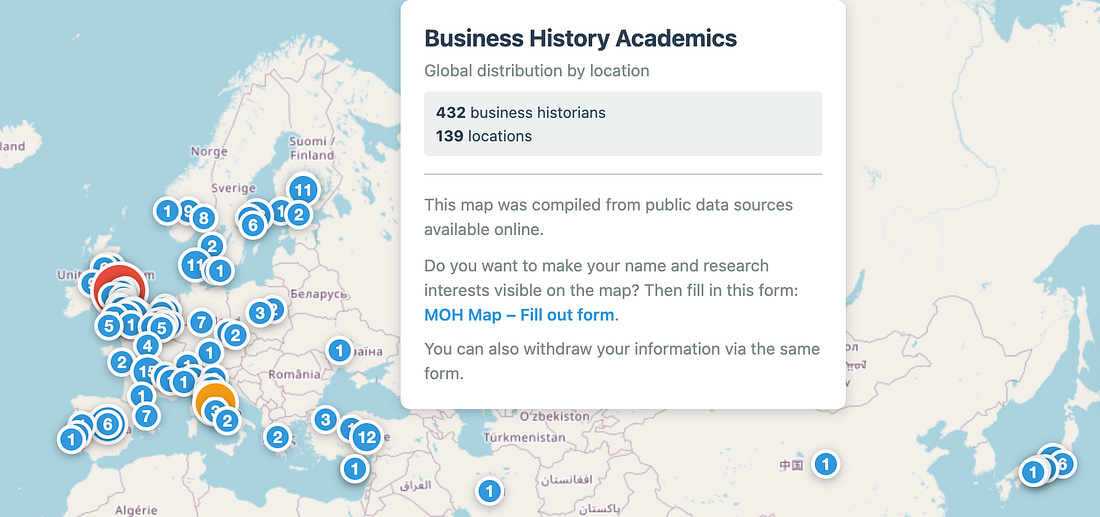
Now we have a map. It is not complete. Don’t blame me; relying on publicly available online data sources is trickier than one might expect. Also, the title is slightly wrong — this map also includes people identifying as management history, historical organization studies and organizational memory. More about how to do this, and what this teaches us about the abilities and limitations of current AI models, after the paywall. The tasks here were many: data searching, data cleaning, creating an intermediate output, creating a website, and teaching a clueless academic how to work GitHub. I predominantly used Claude with some Gemini and Copilot/ChatGPT thrown in. More on why below. After the paywall: how vibecoding works, what you should look out for, and why this will make you slightly sick of hearing “You are absolutely right!” from an AI…... Continue reading this post for free in the Substack app
|
Friday, 23 January 2026
The Vibecoding Historian






Subscribe to:
Post Comments (Atom)

-
Dear Reader, To read this week's post, click here: https://teachingtenets.wordpress.com/2025/07/02/aphorism-24-take-care-of-your-teach...
-
How i recognise psychosis and manage it in myself as an Autistic person ͏ ͏ ͏ ͏ ͏ ͏ ͏ ͏ ͏ ͏ ...


No comments:
Post a Comment