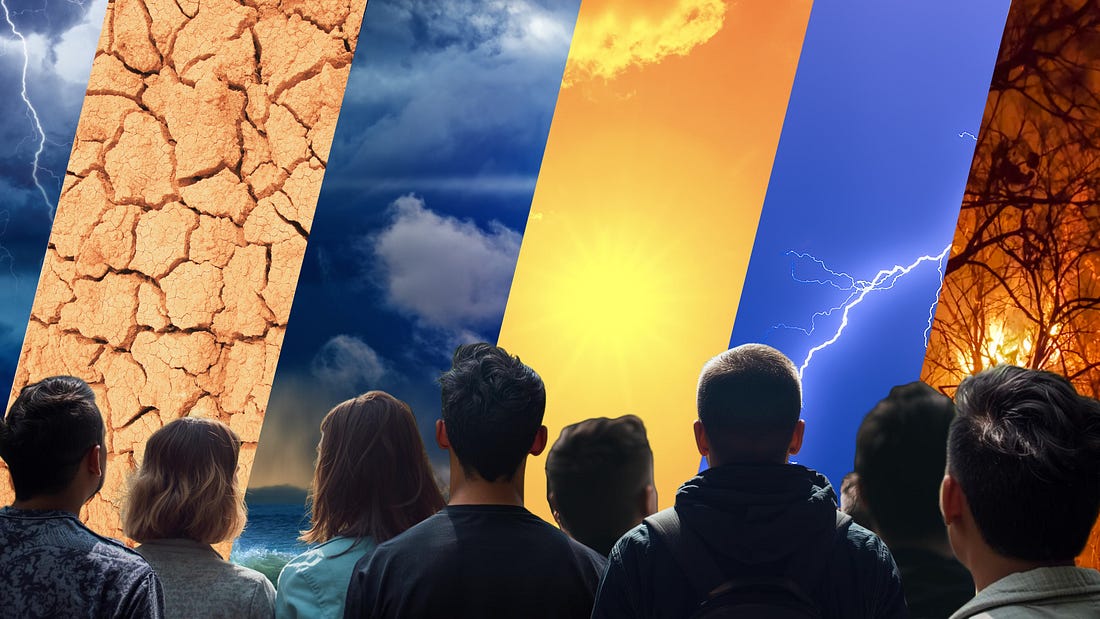
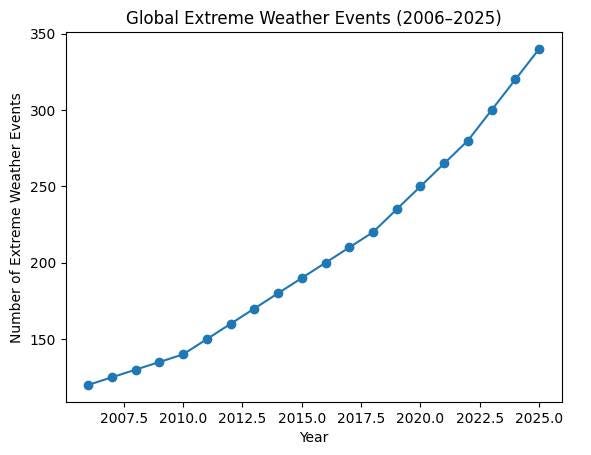
While people do not notice rising levels of climate change causing emissions, it is much harder to ignore extreme weather events. Billions of people around the world are now exposed to more frequent and increasingly severe weather disasters, and attribution science is linking these events to a warming world. Extreme weather is exacting a heavy toll both in terms of human life and material costs. Aggregated disaster reporting trends illustrate the sharp rise in extreme weather events over the past two decades.
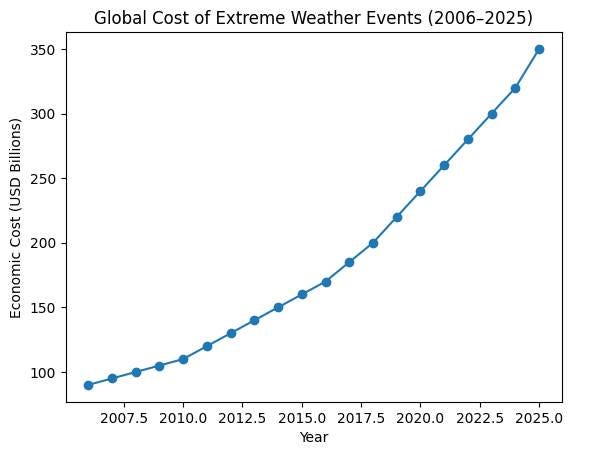
Cost Increasing storms, heatwaves, floods, and fires are imposing escalating costs worldwide. In the U.S., 2025 weather-related climate disasters claimed 276 lives and cost $115 billion. Globally, extreme weather events in 2025 resulted in insured losses of more than $120 billion. Extreme weather erodes economic productivity and competitiveness. Over the last 20 years, the economic toll from extreme weather has surged to $2.8 trillion from 2000-2019 and more than $2 trillion in just the last decade. To illustrate the financial impacts on individual countries, Canada’s GDP declined by $25 billion between 2015 and 2025 due to extreme weather. This represents approximately half of all the growth the country saw in the last decade.
Heat In 2025, Canada experienced a tenfold increase in the frequency of heatwaves, and Europe also suffered through some of the longest and most severe heatwaves on record. In some parts of the world, temperatures of 45°C and even 50°C are becoming commonplace. Heat is deadly. A 30-year study estimated that there are more than 153,000 additional heatwave-related deaths per season globally. Heatwaves also stress and weaken entire ecosystems. Approximately half the world’s population (4 billion people) is impacted by extreme heat for at least part of the year. Significantly more people are expected to be impacted by extreme heat by 2050. Even if we start slashing emissions in earnest today, increasing heat will be with us for decades, if not centuries. No matter what we do, heatwaves will become hotter, longer, and more frequent. Storms and Flooding In 2025, we saw intensified cyclones, hurricanes, and flooding. Major events included Hurricane Melissa in the Caribbean (one of three category 5 storms), which caused widespread record-setting destruction in Jamaica, Cuba, Haiti, and the Dominican Republic. At least 100 people are known to have died. Super Typhoon Fung-Wong in the Philippines and exceptionally intense monsoon flooding in India and Pakistan affected millions of people and led to hundreds of deaths. Storms and cyclones killed thousands in Asia, and flooding events in central Texas killed 135 people. Droughts and Wildfires In 2025, prolonged drought threatened ecosystems and contributed to severe wildfires in California, Greece, and Turkey. Drought is contributing to the extent, intensity, and severity of fires globally. These fires cause death and destruction; they also release carbon pollution and fine particulate matter that is damaging the mammalian respiratory and cardiovascular systems. According to one report, wildfires increased CO₂ by 9 percent between 2024 and 2025. The report found that wildfires are two to three times more likely due to anthropogenic climate change, and they anticipate the frequency of wildfires will continue to rise as the world keeps warming. The Los Angeles wildfires have been described as a climate-fueled catastrophe. These fires burned 78 square miles across Los Angeles. More than 16,000 structures were destroyed, and 180,000 people evacuated. The estimated economic damage may exceed $100 billion. The official death toll is pegged at 30, but some estimates put that number at over 440 deaths when smoke-related health impacts are factored. Wildfire smoke is far more deadly than the fire itself. Smoke from wildfires kills 40.000 Americans annually, and by 2050, smoke from wildfires is expected to cause 71,000 fatalities in the country. Conclusion The steady increase in billion-dollar disasters and heat-related fatalities is forcing the public to face the gravity of the climate crisis. While people may not notice rising levels of atmospheric carbon, billions are feeling the heat and suffering through storms, floods, drought, and wildfires.
|
Wednesday, 11 February 2026
Weather Disasters are Hard to Ignore





Subscribe to:
Post Comments (Atom)
Intersecting Identities: The Double Rainbow
Watch now (60 mins) | NeuroHub Live! Recording (14th June 2026) ͏ ͏ ͏ ͏ ͏ ͏ ͏ ͏ ͏ ͏ ...

-
Dear Reader, To read this week's post, click here: https://teachingtenets.wordpress.com/2025/07/02/aphorism-24-take-care-of-your-teach...
-
How i recognise psychosis and manage it in myself as an Autistic person ͏ ͏ ͏ ͏ ͏ ͏ ͏ ͏ ͏ ͏ ...


No comments:
Post a Comment