Why We're Obsessed With Yearning Men AgainFrom Bridgerton to Heated Rivalry, and the romance we still believe in.
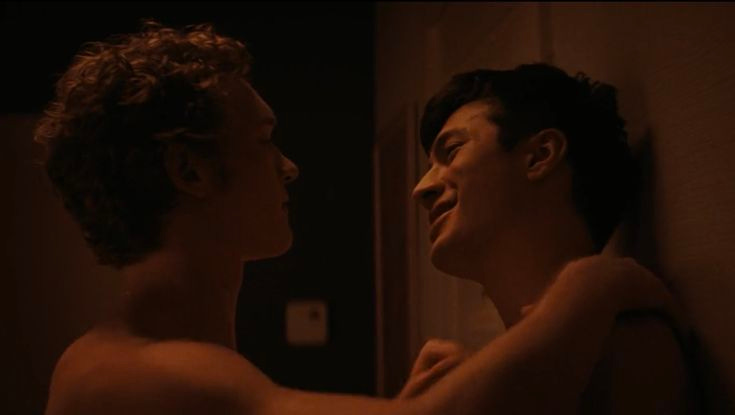
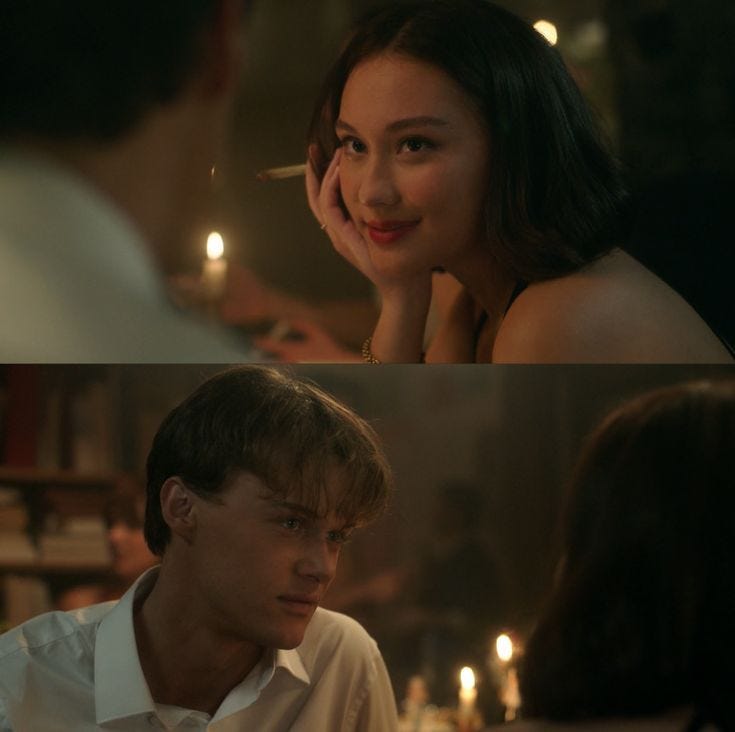
There is a noticeable rise in male yearning across contemporary romance. May it be on our bookshelves, on streaming platforms, and all over social media. It lives in the long silences between words, in restrained hands hovering just short of touch, in glances that linger a second too long. From the quiet, aching friends-to-lovers tension of People We Meet on Vacation, to the emotionally volatile obsession that fueled the Heated Rivalry phenomenon, to Bridgerton’s deliberate focus on breathless pauses and intimate, almost accidental touches. Audiences, predominantly women, are not just consuming these moments. They are devouring them. Even the enduring dominance of the enemies-to-lovers trope that has shifted in texture. Conflict is no longer about power or conquest. It’s about restraint, fixation and emotional vulnerability simmering beneath hostility. The modern romantic hero does not simply pursue, he aches. He waits. He wants him/her with an intensity that is visible, often painful, but unmistakably sincere. This surge in male yearning is not incidental. It reflects a cultural recalibration of desire, intimacy and emotional safety. One in which romance is no longer defined by dominance or emotional distance, but by presence, by longing, by the willingness to feel deeply. What we are responding to, is not just love stories, but a reimagining of masculinity itself.
Yet this version of male yearning feels increasingly absent from modern dating culture. This absence is echoed by Emilia Jamea, a sex and relationship therapist writing for Psychology Today, who notes a “stark contrast” between her older and younger clients’ experiences of romance. While her younger clients often bring dating concerns framed around embracing independence and navigating “singledom”, her older clients recall the beginnings of their relationships with a distinct sense of “nostalgia”, often describing their first encounters marked by obvious “chemistry”, deliberate pursuit, and even the kind of “cheesy but charming pickup line they couldn’t help but fall for”. The contrast is telling. Where earlier romantic experiences allowed space for visible desire and emotional risk, contemporary daring narratives increasingly prioritize self-containment over attachment, coolness over confession. And why is that?One reason male yearning feels increasingly rare in modern dating culture lies in the way people now meet, communicate and form connections. Before the internet existed, romantic encounters were largely face-to-face. People would meet their partners either from school, at work, in shared social spaces or simply, by chance. If you felt a spark with someone, there was often a sense of urgency, that: if you didn’t pursue them, didn’t find a way to stay in contact with that person, you might never see them again. That scarcity created emotional momentum. Desire carried weight because our social circle was much more limited. But now, sociological research published by the Stanford Report notes that people today are far “more likely to meet romantic partners online than through personal contacts and connections”. Connections that historically, encouraged deeper emotional investment and visible pursuit. When connection moves from real, shared spaces to screens and algorithms, longing starts to lose its urgency. The emotional risk that once came with attraction softens, because there’s always the quiet reassurance that someone else is just a swipe away. One study published on ScienceDirect even found that the more “abundant” our options become through dating apps, the less satisfied we tend to feel, echoing what’s often described as ‘the agony of choice’. The research also links this abundance to a heightened fear of being single, suggesting that when alternatives feel endless, people are more likely to hesitate, keep looking and emotionally hold back. In other words, too many options don’t deepen desire, they undermine emotional investment instead.
So how do we fix this?There is no fixing it. This is simply the direction our society is moving toward. But just because we now rely more on dating apps and social media to meet new people does not mean that romance is inevitably dead. It just means that yearning has to adapt. Like in the beloved series Heated Rivalry, some of Shane and Ilya’s most intimate moments are not made up of grand gestures, but through quiet ones. Time spent alone together, conversations stretched across texts and late-night calls. Their longing unfolds in private, sustained through distance and secrecy rather than spectacle. Similarly, in the most recent season of Netflix’s Bridgerton, Benedict’s yearning is expressed through repetition and fixation. He would sketch the “lady in silver” episode after episode, searching for her while unconsciously gravitating toward Sophie, the very woman he is already drawn to. Though set in different eras, both stories share the same core understanding of yearning: that it is defined not by certainty, but by the willingness to invest emotionally even when the future remains unclear. Yearning looks different in different eras, but that does not mean it no longer exists.But that doesn’t mean that it no longer exists. What has changed is simply our tolerance for uncertainty. In a world of endless options, people are increasingly reluctant to invest emotionally when outcomes are unclear. And this hesitation to invest isn’t just something we feel happening. In an article for Psychology Today, Dr. Liesel Sharabi, an associate professor at Arizona State University who studies modern relationships and technology, points out that having too many options can actually make us less satisfied and less emotionally committed (the ‘choice overload’ effect). Over time, the constant availability of alternatives can make people feel disposable, feeding the idea that there will always be someone better. As she puts it:
Which is why the stories that linger with us are built around risk. Around choosing someone without certainty. Because in real life, we don’t really do that anymore.Shows like The Summer I Turned Pretty didn’t resonate because everything lined up perfectly, or because the outcome felt safe. They worked because characters like Conrad were willing to yearn in uncertainty. He wanted Belly without knowing if she would love him back, forgive him or choose him at all. The same is true for Shane and Ilya in Heated Rivalry. They continue choosing each other despite the very real risks to their careers, reputations and public lives. And that’s what makes their longing feel so charged, because it costs them something. So perhaps yearning hasn’t disappeared at all.It’s just become more selective.
In a world where connection is easy and options are endless, yearning now asks for something different from us: discernment. The courage to pause the swipe, to sit with uncertainty, and to choose one person not because they are the most convenient option, but because they feel worth the emotional risk. Modern yearning doesn’t always look like love letters or dramatic pursuits. Sometimes it looks like staying in the present. Like choosing depths over distraction. Continuing to invest in someone even when the future isn’t guaranteed, even when walking away would be easier. That willingness to stay, feel or risk being disappointed, is what gives longing its weight. Yearning still exists. The question isn’t whether romance is dead, or whether men or anyone are capable of it anymore. The real question is quieter, and harder: who is worth yearning for in a world that constantly tells us to keep looking? The Whiffler is free today. But if you enjoyed this post, you can tell The Whiffler that their writing is valuable by pledging a future subscription. You won't be charged unless they enable payments.
|
Monday, 2 February 2026
Why We're Obsessed With Yearning Men Again









Subscribe to:
Post Comments (Atom)

-
Dear Reader, To read this week's post, click here: https://teachingtenets.wordpress.com/2025/07/02/aphorism-24-take-care-of-your-teach...
-
How i recognise psychosis and manage it in myself as an Autistic person ͏ ͏ ͏ ͏ ͏ ͏ ͏ ͏ ͏ ͏ ...


No comments:
Post a Comment