There was a time during the 1980s when two Canadian men ranked among the most successful singers anywhere in the world in terms of chart success. Those two men were Bryan Adams and Corey Hart. For a country that was longing for a star system of its very own, the emergence of both Hart and Adams did a lot to boost our national pride. The two men followed each other around the world, playing the biggest stages in the biggest cities the world had to offer. They were both nominated for multiple Juno Awards in Canada and both have ended up with stars on Canada's Walk of Fame in Toronto. Bryan Adams and Corey Hart were kings of the music world, and they were both all ours as Canadians. Then, seemingly just like that, the 1990s appeared, with Adams transitioning into movie soundtracks and power ballads while Corey Hart just, well, disappeared. The story of what happened to Corey Hart remained one of Canada's great musical mysteries. As it turned out, the mystery wasn't so great after all. Instead of chasing fortune and fame, Corey Hart chose family and personal fulfillment. While the music careers of Bryan Adams and Corey Hart blossomed during the same time period, their priorities were very different, as was how their careers played out, as you shall soon see.

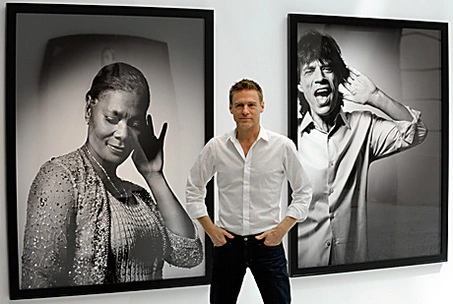
Neither man knew of the other growing up. Adams moved from Ottawa to the suburbs of Vancouver as a teenager. He dropped out of high school and concentrated on playing anywhere he could find a gig and make a few bucks. Soon he met musical partner Jim Vallance, and off to the top of the charts he went with songs like "Cuts Like a Knife", "Run to You" and other rocking tunes of that ilk. Despite having success as a young man in his early twenties, Bryan Adams always remembered what it felt like having to scramble from gig to gig, part-time job to part-time job, in order to earn enough money to pay his rent and have enough to eat. Thus, Bryan Adams took his career as far as the record-buying public allowed it to go. While Adams still tours periodically today, his days as a heavyweight A-list musician have been over for many years now. As his album sales began to drop as the 2000s dawned, Adams began spending more and more of his time with his other passion, photography. He is now known as much or even more for his photographic skills as he ever was for his music. Adams has exhibited his photographs in galleries around the world and is constantly busy as an in-demand portrait photographer for celebrities and politicians, in addition to his other areas of subject interest. It was only during this latest phase of his career that Bryan Adams found time for children. He has two daughters with two different women but has never married. From everything I have read about him, Bryan Adams appears happy and content with his life. You can't ask for much more than that from life. Good for Adams.
Meanwhile, back in Montreal, a handsome teenage boy named Corey Hart was introducing himself to the likes of Tom Jones, Paul Anka and Billy Joel, when those professional entertainers played in the city in the late 1970s. Through those introductions, Hart got to sing to Jones when he was eleven years old, and he actually recorded a duet with Anka when he was just fourteen years old called "Oooh Baby!" Through his connection to Billy Joel, Hart got to travel to New York and record some demo tapes at Joel's studio. As his teen years were ending, Corey Hart found himself in London, England, in a studio with Jon Astley, the same producer who had recorded with The Who. In 1983, at the ripe old age of twenty-one, Corey Hart released his first album called No Offense. On that debut album were two songs that launched Corey Hart into the music stratosphere…"Sunglasses at Night" and "It Ain't Enough". Both songs became Top 10 hits around the world, and the album ended up going quadruple platinum in Canada. On the liner notes for No Offense, Corey Hart dedicated the album to his mother. Hart's parents had divorced a few years prior, with Hart and his siblings being raised by his mother in Montreal. The album dedication, which showed Hart's appreciation for what his mother had done for him by supporting his artistic vision, was just the beginning of a lifelong pattern exhibited by Hart that focussed on the importance of family and of his personal life.

As a twenty-one-year-old, Corey Hart traveled the world as he promoted the No Offense album and sang his hit song about wearing sunglasses at night. As has been noted on this blog many times, musicians in the 1980s were greatly impacted by the introduction of music videos as a marketing tool and by organizations such as MTV and Much Music as vehicles for helping artists to reach wide swaths of audiences quicker and more easily than ever before. Because music videos contained such a visual element to them, those artists and bands who were visually appealing, in a physical sense, stood to have an advantage. Corey Hart was teen idol handsome. Just as Hart's appearance undoubtedly opened doors for him as a teenager, it always coloured the perceptions of many who met him now that he was a touring musician with hit records under his belt. Not unlike the career history of singer George Michael, Corey Hart viewed himself as a singer and a songwriter first. He had many ideas for songs and wrote these ideas down constantly in notebooks that he kept with him at all times. And yet, all that many wanted (including record executives) were more photo shoots, more television interviews, more appearances at shopping malls and record stores, more opportunities to stare at Hart's smoldering good looks.
Corey Hart thought that he had made some professional points when his second album, Boy in the Box, was released. It contained his highest charting single, "Never Surrender". That single was declared the Single of the Year at the Juno Awards. Once again, Corey Hart toured relentlessly around the world. He did everything his record company asked of him in terms of promoting the album. He made himself available to the media. He signed every autograph. He posed for every camera. As he did all of this, Hart knew that he had more to say as an artist. This became apparent with the release of his third album, Fields of Fire. Music critics noted that Hart's songwriting seemed to be maturing. Ironically enough, the biggest hit from that album was not an original Corey Hart song at all but instead his cover of the old Elvis Presley chestnut "Can't Help Falling In Love". But the endless grind from touring and from promotional work was working at odds with being creatively sharp. Hart was finding it harder and harder to find the time and the energy to devote to his songwriting. Eventually, the strain of building and maintaining his brand became too much, and Corey Hart collapsed from mental and physical exhaustion. He was only twenty-five years old, but his body was warning him to change his ways or else. Hart listened to his body. He cut back on touring and returned home to Montreal.
It was this point in his career that many people claim to be the moment when Corey Hart disappeared. The truth of the matter is that Hart did not disappear at all. Instead, he decided to stop playing the record company's promotional game and began a transition away from the spotlight and into a quieter, more grounded, cerebral and supportive musical life. He still wrote songs and released albums. In fact, Corey Hart has released seven full albums since Fields of Fire came out in 1986. None of these albums has contained a chart-topping hit like "Sunglasses at Night", but all have allowed Hart to conduct smaller, more controlled tours. In fact, many of his tours have taken place in Quebec and in the Maritime provinces of Canada and have been conducted in French. Unlike Bryan Adams, who soldiered on until his album sales petered out, Corey Hart walked away from the musical spotlight at the height of his success, turning down opportunities to make lots of money and experience great fame. Corey Hart also walked away when he did because of love. Always a family man at the core of his being, Corey Hart met his future wife Julie Masse at the Juno Awards. The Canadian music industry was desperately attempting to keep Hart in the spotlight even though he had cut back on his touring. So they asked him to be a presenter at the Juno Awards. Hart was paired as a presenter with Quebecoise singer Julie Masse. The two hit it off as they prepared to be co-presenters. This sparked a professional relationship that saw Corey Hart write some songs for Masse to sing on her next album, which Corey Hart helped to produce. Not only did the two of them make beautiful music together in more ways than one (eventually marrying and having four children together so far), Hart served notice that he had what it took to produce records as well as sing on them. As time went on, Corey Hart formed his own record label called Siena Records. Through this label, Hart has worked with French-speaking Caribbean artists, as well as eclectic Canadian artists, such as Jane Siberry, k-os and, of course, a certain someone named Julie Masse.
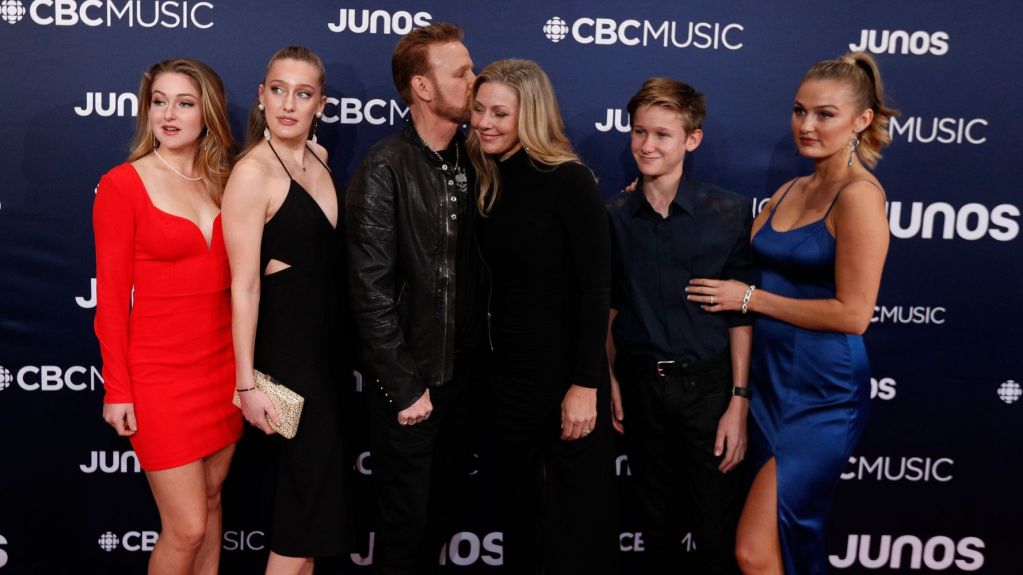
Corey Hart, Julie Masse and their four children.
It has been over forty years since Corey Hart hit the charts with "Sunglasses at Night". The song was originally marketed as a song about fashion and style and about following one's own vision of personal style regardless of what the trendsetters and media influencers tried to sell you. Hart tells the story that the inspiration for the song came from the fact that he recorded his first album in a studio that had air vents that blew hot or cold air directly into the eyes of the sound mixer who was trying to carefully watch his meter readings. Eventually, in lieu of goggles, the sound mixer donned sunglasses to protect his eyes from drying out and even wore them when they recorded at night. The jokes that arose from the sound mixer wearing sunglasses even at night sparked the idea for the song in a young Corey Hart's mind, and the rest is Canadian music history. This song started Corey Hart off on a professional path that brought him great notoriety initially but also provided him with the experience necessary to know what was truly important to him in his own life. For Corey Hart, what turned out to be most important to him was family and being creative on his own terms. Even as he heads into his early sixties, Corey Hart remains a handsome man. But more than that, he is content and healthy and in love. You can't ask for much more from life. Good for Corey Hart.
The link to the video for the song "Sunglasses at Night" can be found here. ***The lyrics version is here. ***A cover by fashion model Heidi Klum can be found here.
The link to the official website for Corey Hart can be found here.
The link to the official website for Bryan Adams: photographer can be found here.
***As always, all original content contained within this post remains the sole property of the author. No portion of this post shall be reblogged, copied or shared without the express written consent of the author. ©2024 http://www.tommacinneswriter.com




No comments:
Post a Comment