By Jemmy Suwannaluck
Utopian Scenaries
Have you ever dreamed of a perfect world? And what about an ideal society with a flawless legal system? I like to think that imagining a perfect world is a game that everyone has played at least once, and that fantasizing of a legal system that is always just, correct, and fair is an ideal that every law student – and not only – has daydreamed of, albeit quietly and timidly.
In 1516, Thomas More coined the term utopia, which is a neologism that means 'place that does not exist': when imperfect individuals attempt perfection – personal, political, economic, legal, and social – they fail. Utopias are idealized visions of a perfect society. The belief that humans are flawless inevitably leads to mistakes when attempting to establish a perfect society for an imperfect species. There is no better way to live because there are so many ways to live and so many ways people want to live. As a result, there is no such thing as a better society; instead, there are multiple variations that arise according to our very human nature.
On the contrary, dystopias – the dark mirror of utopias – are failed social experiments, repressive political regimes, unsustainable economies, and unjust legal systems, resulting from these utopian dreams put into practice. This is precisely what happened in Communist Russia, Fascist Italy, Nazi Germany, revolutionary Marxism in Cambodia, North Korea and numerous states in South America and Africa, all 20th century large-scale attempts to achieve political, economic, social, and even racial perfection, which led to civil wars, revolutions, murders, pogroms, genocides, and ethnic cleansings, all in the name of establishing a heaven-on-Earth utopian fantasy, that were no other than the worst dystopian nightmares.
Between Chaos And Order
If this is the case, the general framework within which the law moves is less precise, organized, and stable than one might think; it is the framework of the legal system that is not a mere set of norms, but a real-life experience, which involves living relationships that always and necessarily complicate things.
The jurist's cosmos is neither a perfect world where everything is ordered, defined and predetermined, nor a reality so magmatic and intricate that it transcends any understanding. In the first scenario, we imagine an order in which every effort would be adequate to reality; in the latter one, we envisage a chaos before which to surrender, being able only to follow events and to adopt appropriate and provisional measures. Daily practice, in courts and in all other places where law meets (or clashes with) life, regularly and without any denial demonstrates that right is inherent in the magma of existence, but does not identify with magma or existence. It is worthwhile, then, to look directly at the origins of this strange combination of chaos and predetermination: that world of imperfection where human co-existence extends according to the imperfect finitude that qualifies and makes manifest the human, but also makes the world itself central, fascinating, and mysterious. And it is precisely in this imperfect reality that law finds its deepest reason.
Guarda che Luna!
The world of law is that of imperfection, in which the lawyer has the duty to understand, first of all, and only then to act, with technical ability and sensitivity. This approach contrasts both with the image of that perfect and utopian reality that has often been laid at the basis of numerous legal theories, and with that of eternal dystopian chaos, from which jurists have tended to escape, so as not to assume any personal legal responsibility.
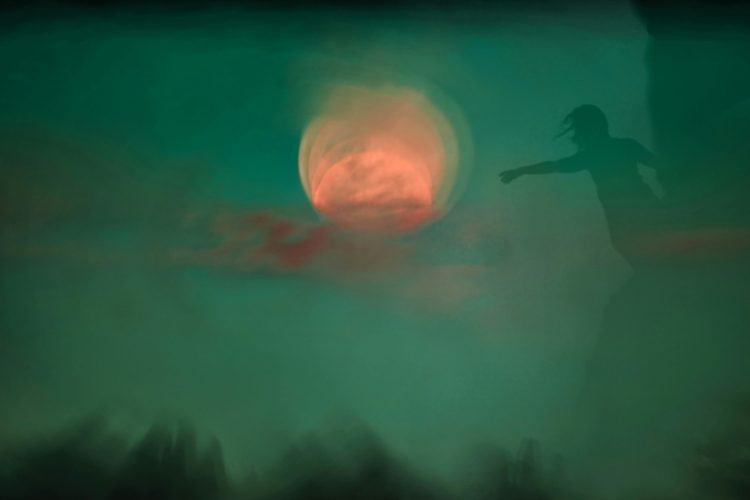
In this imperfect world, the 'perfect' jurist – the most imperfect of imperfects – should have the empathy to know how to understand reality, especially its colors: to look at the moon that is shown to him, without focusing, more than it should be, on the finger that points to it. Italian songwriter, Fred Buscaglione, would sing 'Guarda che luna, guarda che mare! Che luna! ('Look, what moon! Look, what sea! What moon!') Thus, the jurist is asked to follow the passion that exists in law and that can be aroused by law, without, however, becoming passionate about "the right for the right", a pathological and illogical form of exercise of legal reason, which leads to the labile border between utopian dream and dystopian nightmare.
Knowledge of regulatory data, case law, and codes and regulations is not sufficient to accomplish this 'revolutionary' legal reasoning. It is necessary to know how to interpret the world, which means to learn how to look at others and – even before – ourselves, to put personal facts and general facts in relation, to consider our own and others' flaws and limits, and to find the proportions of life.
A Protopian Future
The idea of this imperfect legal cosmos inhabited by imperfected human beings and jurists is not utopia, but protopia, which is not 'a place that does not exist', but a state that today is better than yesterday, although it might be only a little better. That is why protopia is much harder to visualize: a protopian world contains as many new problems as new benefits; the cost-benefit analysis to undertake is complex and very hard to predict. The protopian progress best describes the monumental moral achievements of the last centuries attained by most countries: the abolition of slavery, the end of torture and death penalty, universal suffrage, liberal democracy, civil rights and freedoms, same-sex marriage, and animal law. These are all examples of protopian progress in the sense that they happened one small step at a time: protopia is an incremental progress in steps toward improvement, not perfection. A protopian future is not only practical, but also possible, and it should focus on all the flaws of this brave new world. In this sense, to imagine a 'perfect' world, one should envision a better – not best or perfect - self; to envision a 'perfect' legal system, a law student should imagine themselves as a better jurist. One should always act so that the consequences of their actions are consistent with the perpetuation of genuine human existence, which means to protect future humanity's autonomy, dignity, integrity, and vulnerability. A permanent protopian revolution that ideally will never find its utopia should be the moon to look at. Guarda che luna, guarda che mare! Che luna!





No comments:
Post a Comment