
I usually dislike the phrase intimate epic, but it applies to 1940's City For Conquest. The film is full of great moments and many subplots. It's like an overstuffed burrito: a bit messy to eat but worth the effort.
James Cagney was tired of playing gangsters. He didn't think he could top 1939's The Roaring Twenties and was ready to move on to new challenges. In City For Conquest, Cagney plays a reluctant boxer who fights so his kid brother played by Arthur Kennedy can pursue his music. Cagney's character is a brash and tough New Yorker with a heart of gold but not a criminal.
The movie shows the strength of the studio system: the cast was populated with actors who knew and liked one another. The affection between Cagney, Ann Sheridan, Frank McHugh, Donald Crisp, and Arthur Kennedy is manifest in every scene they share. Long live the Warner Brothers stock company.
As the credits rolled, I pointed out to Dr. A that the cast includes two Greeks in George Tobias and Elia Kazan as well as the ultimate honorary Greek Antony Quinn. If you thought Quinn danced beautifully in Zorba The Greek, he may have a learned a few tricks while playing a professional dancer in City For Conquest.
Quinn is also Cagney's rival for the affections of the Oomph Girl. Sheridan hated that studio created nickname, but I felt the need to put some oomph into the proceedings.
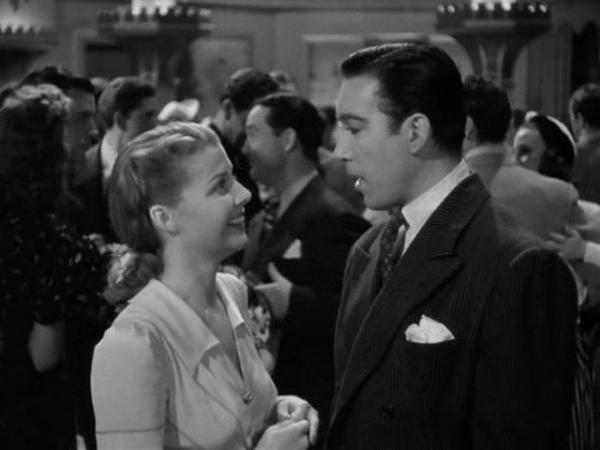
Cagney is that rarity among movie pugilists: an honest boxer. When he signs on as manager Donald Crisp warns Cagney that there will be no cheating on his watch. Instead, the cheating came from Jerome Cowan as a rival manager; it ended Cagney's time as a professional pugilist and nearly blinded him.

In addition to being an ode to New York City, City For Conquest is a genre jumper. It has elements of all the things Warner Brothers did well in the prewar era. It's part musical, romcom, boxing flick, family story, immigrant saga, and gangster film. That sounds confusing, but somehow they pull it off. This movie sucks me in every time I see it. What's not to love about this melting pot meeting of Irishmen Cagney and McHugh with my countryman Elia Kazan:
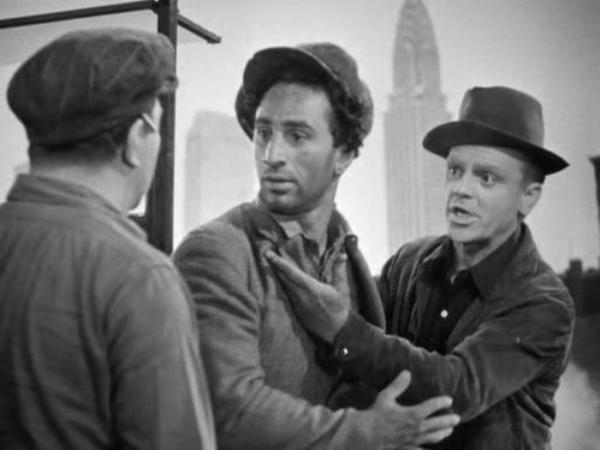
The mythic aspect of City For Conquest is perfected by Frank Craven's presence as a wandering hobo narrator. It's neither a big plus nor minus for the story. Craven is good but his character is lagniappe, not absolutely necessary.
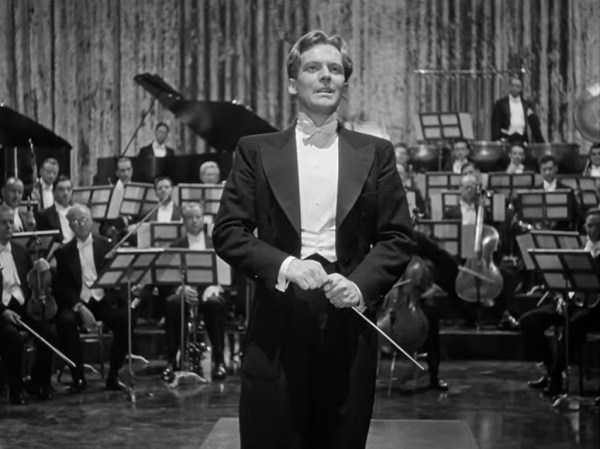
The movie has a plausible happy ending, which includes Arthur Kennedy conducting his symphony:
That's all the plot I'm willing to share. This feature is called pulp fiction, not pulp spoilers, after all.
Composer Max Steiner often cited City For Conquest as one of his favorite scores. The symphony within the movie is something of a tribute to George Gershwin who died three years before Steiner composed Arthur Kennedy's symphony for the city.
City For Conquest is based on a novel by Aben Kandel:

The film was directed by Anatole Litvak who brought a different sensibility than Cagney's past and future directors Raoul Walsh, Michael Curtiz, and Wild Bill Wellman. Ain't nothing wild about this elegantly shot movie.
City For Conquest is not for everyone. It's on the melodramatic and even schmaltzy side at times but I find it irresistible.
Grading Time: I give City For Conquest 4 stars and an Adrastos Grade of A.
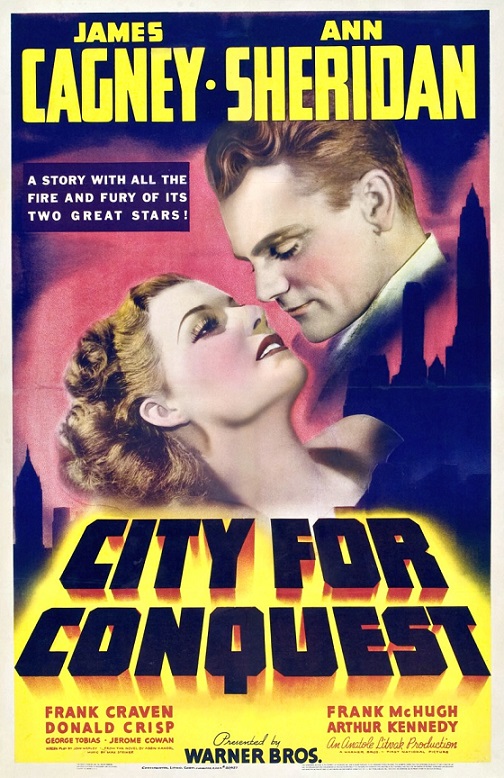
Let's take a look at the posters:
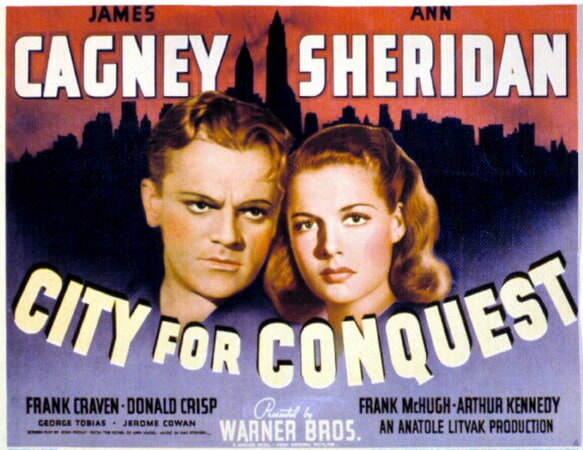
Pondering Cagney's pugilistic plight made me hungry. Let's all go to the lobby for a treat.

That was refreshing. Following the dancing refreshments is always, well, refreshing.
The lobby cards have less text than usual. There's even a black and white one for this black and white flick.


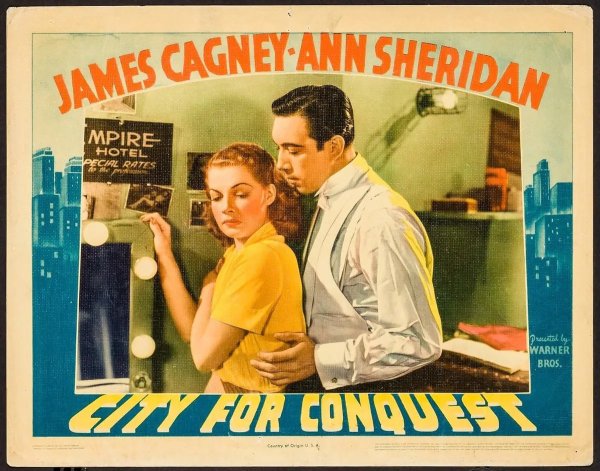
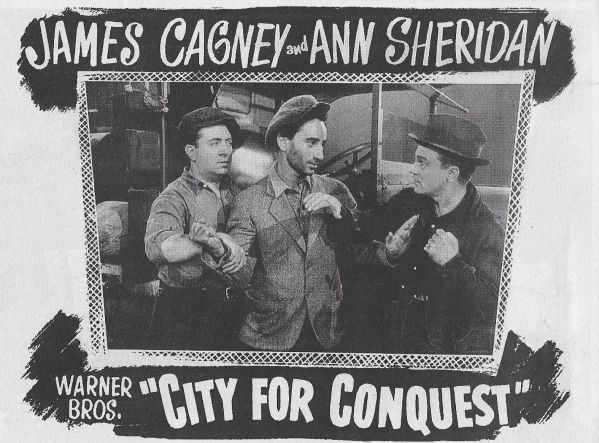
Elia Kazan was excellent as the representative of the world of gangsterdom. It was the best part he ever had as a screen actor.
Let's conquer the city by watching this trailer. I have no idea what that means but it scans.

Some call City For Conquest film noir. I do not. Instead of the Noir Czar, the last word goes to Max Steiner:


No comments:
Post a Comment