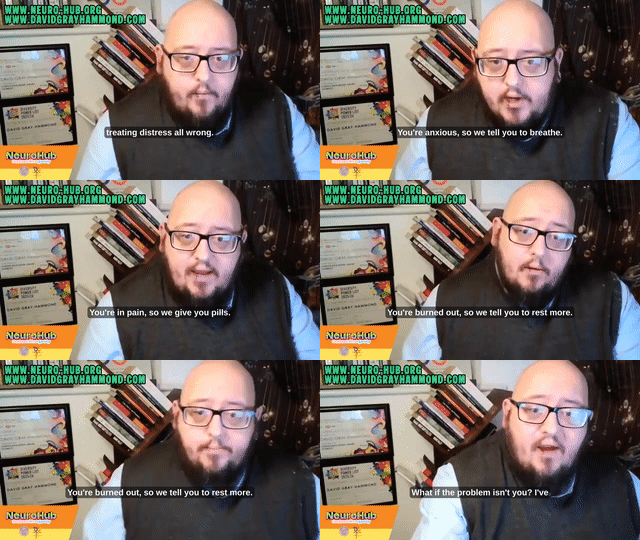
What if mental health and distress isn’t a personal failing, a broken brain, or something to be “fixed” inside an individual? What if distress is produced; shaped by bodies, environments, and systems that don’t fit? In this video, I introduce the Ecosystemic Model of Distress, a way of understanding wellbeing that moves beyond diagnosis, pathology, and blame. This model looks at distress as something that emerges across three interconnected levels, rather than something that lives solely inside a person. Register for our upcoming course with Kelly Mahler We explore: Level 1: The Bodymind- sensory processing, energy, trauma, health, and how the nervous system meets the world Level 2: The Immediate Environment- sensory spaces, relationships, expectations, routines, and daily demands Level 3: Systems & Power- institutions, policies, services, and the wider structures that shape access, safety, and autonomy This framework is especially relevant for Autistic and neurodivergent people, but it applies far beyond diagnosis. It helps explain burnout, crisis, mental health distress, and why so many people are harmed by systems that claim to support them. If you’ve ever felt like the problem was bigger than you; you’re probably right. This video is about shifting the question from Don’t forget to check out my new company focusing on community building and consultancy! View All of my content and more by clicking the button below. You're currently a free subscriber to David Gray-Hammond. For the full experience, upgrade your subscription.
|
Saturday, 24 January 2026
Your Brain Isn't Broken, Your Distress Isn't Coming From You




Subscribe to:
Post Comments (Atom)
Intersecting Identities: The Double Rainbow
Watch now (60 mins) | NeuroHub Live! Recording (14th June 2026) ͏ ͏ ͏ ͏ ͏ ͏ ͏ ͏ ͏ ͏ ...

-
Dear Reader, To read this week's post, click here: https://teachingtenets.wordpress.com/2025/07/02/aphorism-24-take-care-of-your-teach...
-
How i recognise psychosis and manage it in myself as an Autistic person ͏ ͏ ͏ ͏ ͏ ͏ ͏ ͏ ͏ ͏ ...


No comments:
Post a Comment