Embracing Our Autistic Selves. It starts TOMORROW, 1st May, at 6pm UK time, and runs for five weekly sessions on Zoom through to 29th May followed by a live Q+A session. This is not a course that will tell you what autism is. You already know what autism is, you live it. This course is part of the Mindfully Divergent program over at NeuroHub. What it will do is give you space. Space to explore how your relationship with your Autistic identity has been shaped; by diagnosis, by other people’s language, by systems that were never designed with you in mind. Space to sit with the complexity of that without being pushed toward resolution or positivity. Space to be in a room with other Autistic people who are also figuring this out. We will move through three areas across the five sessions:
Each session is discussion-based and runs approximately 90 minutes. There are no lectures. There are no right answers. There is guided mindfulness practice adapted for neurodivergent ways of being, which means movement is welcome, eyes open is always an option, and “just relax” will never be said. There are two ways to join: If you’re already a paid member of the NeuroHub Community, this course is included in your membership. Log in at connect.neurohubcommunity.org and you’ll find the Zoom link waiting for you. Sign up for the community at the button below. If you’re not yet a member, you can purchase the course directly from the website at the button below for £50/$68. That gets you access to all five live sessions, plus the Q+A. The first session is tomorrow, May 1st, at 6pm UK time. I’d love for you to be part of it. David NeuroHub Community Invite your friends and earn rewards
If you enjoy NeuroHub Community Journal | Newsletter | Announcements, share it with your friends and earn rewards when they subscribe.
|
Thursday, 30 April 2026
Last Chance To Join Embracing Our Autistic Selves
When a Real King Schools a Wannabe King
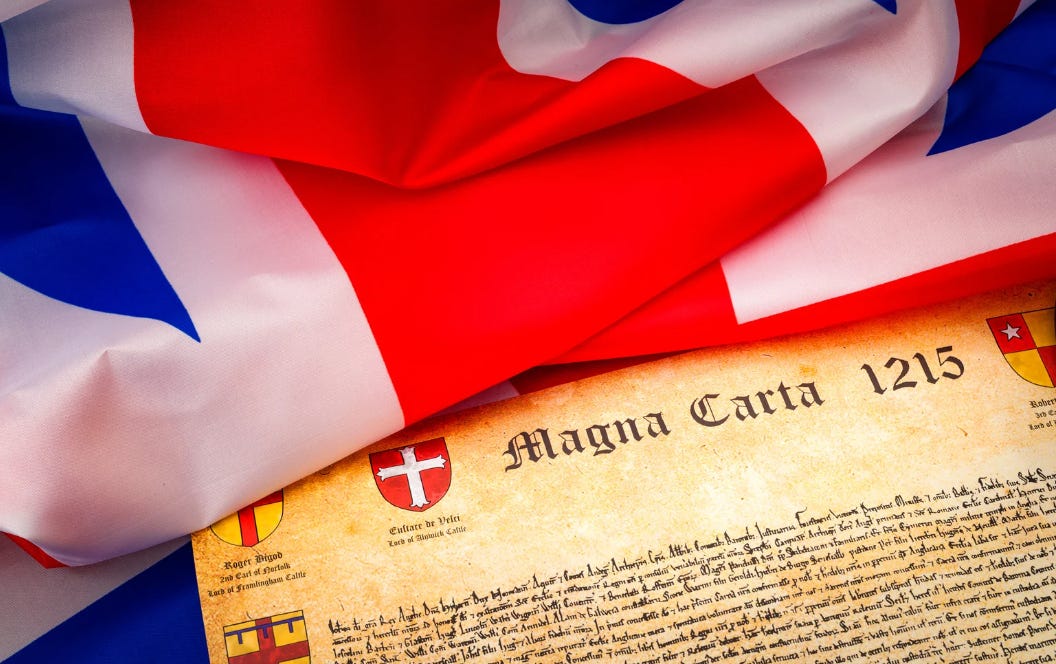
On April 28, King Charles III addressed a joint session of the United States Congress in a speech that was a master stroke of diplomatic genius. The 77-year-old monarch was tasked to smooth over the tensions between US President Donald Trump and British Prime Minister Kier Starmer. This he did with royal elegance and charm, but his speech before Congress was an unmistakable rebuke that struck at the heart of Trump’s authoritarian agenda. The King offered a history lesson that refuted Trump’s unilateralism and centralization of power. Charles spoke of the alliance and mutually beneficial partnership between the US and the UK, and he also called for cooperation with the rest of Europe, NATO, and the wider world. Throughout his remarks, the King repeatedly extolled the virtues of democracy and emphasized the need for limits to executive power. The King took aim at Trump’s attempts to consolidate power by referencing the 1215 Magna Carta, the basis for constitutional law and democracy around the world. In a message that seems tailored for Trump, this seminal document is best known for having established that the monarch is subject to the law, not above it. Specifically, the principle that the King is subject to legal constraints rather than ruling by arbitrary whim. Charles also mentioned the 1689 British Bill of Rights that established parliamentary supremacy over the monarch, legalized free elections, and secured free speech. This act, which confirmed the rights of the subject, directly influenced the U.S. Bill of Rights. Several other remarks sharply contradict the president’s position. The King spoke about “all people of all faiths and of none.” This inclusive message was aimed at Trump’s racism and xenophobia. While Trump wants to divide, Charles spoke about the need to “defend our shared values”. Trump has been reluctant to provide meaningful aid to Ukraine; in response, Charles invoked the Allied Powers that defeated the Nazis more than 80 years ago as a reminder of the stakes and the need for support today. The King countered Trump’s lawfare and attacks on judges by affirming the importance of the rule of law and an independent, impartial judiciary. The King touted the virtues of culture, education, and research in response to Trump’s culture wars, efforts to close the Department of Education, and slash funding for research. In response to Trump’s environmentally destructive policies and dismissal of climate change, Charles mentioned “melting ice caps” and spoke about how it is our “shared responsibility to safeguard nature ...our most precious asset,” Adding, “Our generation must decide how to address the collapse of natural systems.” In this address, Charles was speaking directly to the American people, only mentioning Trump once in his 28-minute speech. He made a plea for peace and expressed his hope that, by working with international partners, the world can “stem the beating of ploughshares into swords”. In a plea for multilateralism, the UK sovereign ended his speech with a warning to “avoid the clarion call of being more inward looking”. King Charles summarized the defining theme of the speech when he said, “Executive power is subject to checks and balances”. This is the moment when a real king schooled a wannabe king. During a White House state dinner in front of 100 distinguished guests, the UK monarch unveiled his criticism and took a couple of parting shots, this time directly at Trump. Charles referenced Trump’s ballroom renovations and alluded to Britain’s burning of the White House in 1814. The King then said, “You recently commented, Mr President, that if it were not for the United States, European countries would be speaking German,” referring to remarks made by Trump at the World Economic Forum earlier this year. The King said, “Dare I say that if it wasn’t for us, you’d be speaking French...” Trump embraces the monarch because it conditions the landscape for the fulfillment of his own imperial agenda, but Charles outmaneuvered him. The King did more than just voice his reservations, he also issued trenchant observations that robustly rebuked the president. Trump is ephemeral while Charles III looks at the world from a historical vantage point. The British monarch displayed the power of diplomacy alongside a profound understanding of American history and the intent of the Founding Fathers. This is a perspective that Trump clearly lacks, and it is one of the things that makes this speech so remarkable. Despite being hit in the head by a diplomatic 2x4, the President had no idea that he had been dressed down. It is undeniably ironic that at a time when millions of Americans are parading through the streets screaming “No Kings,” a real monarch came to the U.S. to dissuade Americans from accepting the authoritarian agenda of a wannabe dictator.
© 2026 Richard Matthews |
Wednesday, 29 April 2026
The Perfect Offering Problem
The Perfect Offering ProblemWhy Leviticus demands flawless lives—and how Judaism chose to embrace the cracks
What if the Torah’s highest standard of holiness was never meant for real life? In Parshat Emor, the Torah presents a vision of priestly life that is almost superhuman: untouched by death, untouched by complicated love, untouched even by physical imperfection. No funerals. A life without cracks. But Judaism… ultimately rejects that life. Holiness Begins with Distance — מֵעַמָּיוThe parsha opens:
בְּעַמָּיו — b’amav. Among his people. In this reading the Kohen must step back—from death, from mourning, from the rawest human experience. Even when he is permitted to mourn, he cannot do so fully:
He cannot mourn like everyone else. He cannot even look like someone who mourns. Why?
II. The Perfect RelationshipThen, without pause:
Again:
Most commentaries struggle here—why these women? But the Ralbag gives us a rare clue:
Not legal status—imperfection. The Kohen cannot marry into a story that is less then perfect. The Perfect BodyThen the decisive section:
Without skipping a beat the Leviticus author writes off the Blind. Broken. Scarred. Excluded from service—but not from belonging:
He is inside… but cannot appear inside:
IV. One System — The Perfect Offering ProblemThese are not three laws. 👉 They are one vision. A Kohen must be:
Why? Because he offers:
This phrase appears here—again and again—almost nowhere else. This is a unique theology of the perfect offering. A life that must itself be… perfect. The Theater of Holiness — Rabbi MeirThe Talmud makes the subtext explicit. In Sanhedrin 18a, Rabbi Meir describes the High Priest at a funeral: He follows—but hides.
He participates—but cannot be seen to participate. This is not real Holiness It’s all about the optics of Holiness. A performance of perfection. The Song That Breaks ItAnd then, centuries later, a different voice answers…. a different Cohen. Leonard Cohen writes:
This is the counter-theology. Not the flawless offering… not the לֶחֶם אֱלֹהָיו — Lechem Elohav But the broken one that lets light through. The Garden We Left BehindWe’ve seen this story before. In Genesis, humanity begins, a singular, perfect and immortal individual.
And yet:
Perfection is rejected. And once we leave Eden:
Normative Judaism does not try to undo this. It builds a religion within it. VIII. Enter the ḤalalAnd what of the priest who fails?
We translate: profaned. disqualified. But the root also means:
In Rabbinic Hebrew:
And in Arabic:
Not rejected. Permitted. And it dawns on us that all of the imperfections forbidden to the Cohen are permitted to the rest of us. I would argue that in the case of the widow, maybe the divorcee and radically, even the fallen woman, it is a mitzvah to embraced. Ditto for for the less than perfect amongst us, and for sure our mortality… IX. The Radical MessageWhat if the ḥalal is not excluded… but freed? Freed from:
X. The Judaism That WonThis priestly vision is powerful. But it is not the Judaism that prevailed. Judaism chose:
It chose the crack. XI. What If…What if the Kohen represents a holiness too perfect for real life? And what if the rest of us— The cracked Are not profane… But permitted? Shabbat Shalom. Sefaria Source Sheet: https://voices.sefaria.org/sheets/722306 Listen to on Spotify
© 2026 Geoffrey Stern |
We won't miss Peter Dutton
We've always got Angus Taylor if we do miss him ͏ ͏ ͏ ͏ ͏ ͏ ͏ ͏ ͏ ͏ ͏ ͏ ...
-
Dear Reader, To read this week's post, click here: https://teachingtenets.wordpress.com/2025/07/02/aphorism-24-take-care-of-your-teach...
-
CALL FOR APPLICATIONS: AOM 2025 PDW ͏ ͏ ͏ ͏ ͏ ͏ ͏ ͏ ͏ ͏ ͏ ͏ ͏ ͏ ͏ ...