Organizational History Network
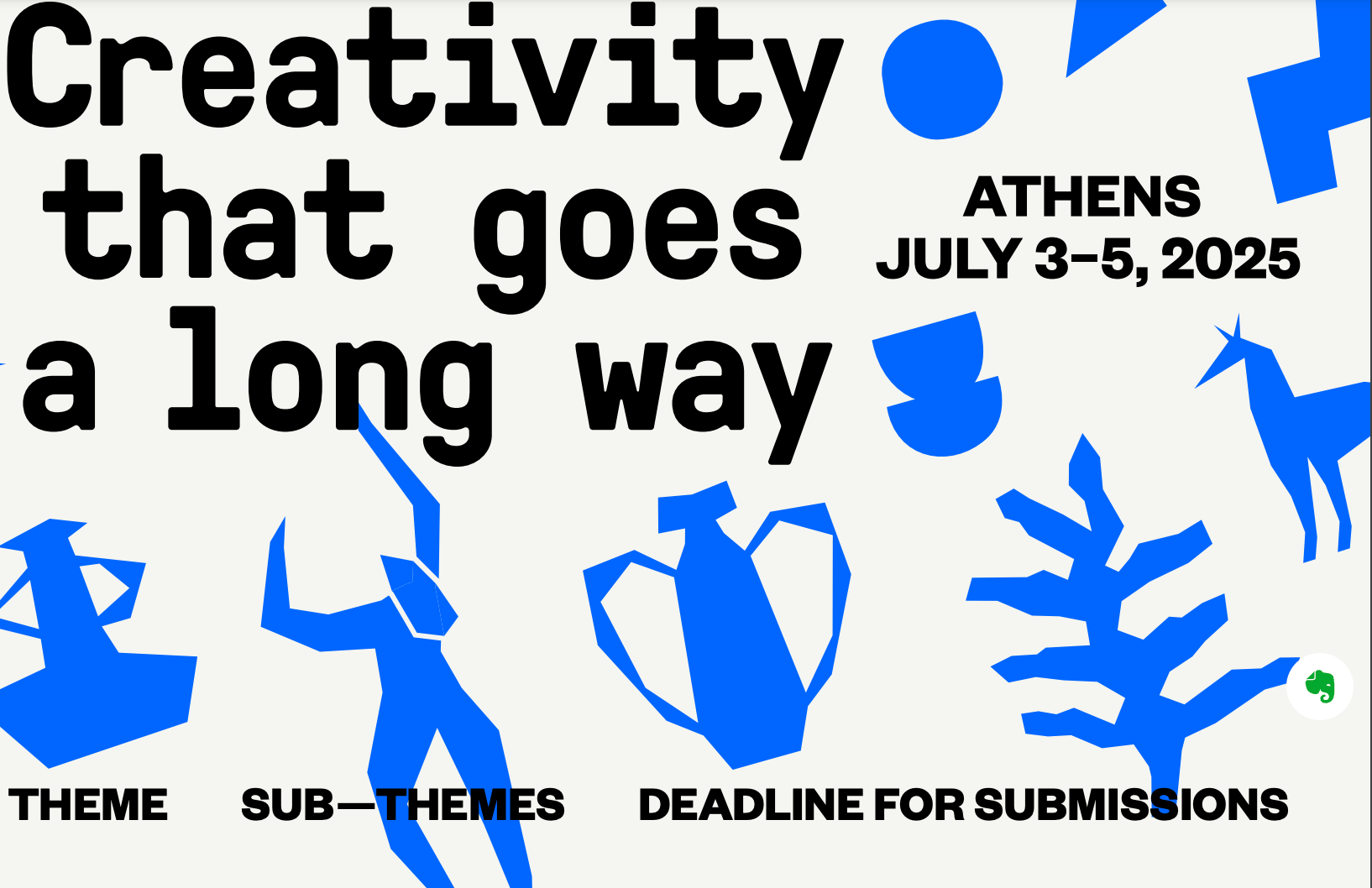
Sub-theme 41: Tracing the Past: Historical Methods for Studying Entrepreneurship, Imagination, and Innovationhttps://www.egos.org/2025_Athens/SUB-THEMES_Call-for-Papers Convenors: Elena Giovannoni University of Birmingham, United Kingdom Christina Lubinski Copenhagen Business School, Denmark Adam J. Nix University of Birmingham, United Kingdom Call for PapersExploring creativity that goes a long way requires an explicit engagement with temporality and the links between past, present, and future. Historical research has long offered a variety of methods and conceptual tools for researching creative works and organizations, and their impact on society (Bucheli & Wadhwani, 2014; Decker et al., 2023). These methods rely upon a rich variety of sources, ranging from archival documents, including textual, numerical, visual, and digital accounts (Clark & Rowlinson, 2004; Kipping et al., 2014; Nix & Decker, 2023), to recordings, memories, spatial traces, and material and embodied practices (Lipartito, 2014; Platts, 2023). By providing an inventory of traces that not only allow us to reconstruct the past but also inspires theoretical imagination, such sources enhance our understanding of diverse social phenomena and the lived experience of historical actors (see, e.g., Kostera, 2020). Indeed, recent research on historical imagination (Heller & Rowlinson, 2020), entrepreneurial imagination (Ram et al., Forthcoming), microhistory (Hargadon & Wadhwani, 2023), rhetorical history (Lubinski, 2023; Suddaby et al., 2023), and memory studies (Foroughi et al., 2020) have all successfully drawn on a variety of spatial, material, sensory, visual or oral sources to elaborate these themes. The traces of the past are an ideal vantage point from which to better understand the thoughts, imagination, perceptions, moral search, and experiences that make up the craft of creative composition within and beyond organizations. Nevertheless, there is significant scope to delve further into the aspirations, ambitions, creative thinking, morality, and the lived experience surrounding how creativity unfolds and eventually becomes innovation. For example, insights here could contribute to the history of ideas, science and technology (Juma, 2016), social movements (see, e.g., Crossley, 2003), new practices (see, e.g., Quattrone, 2009 on the spread of accounting, and the power of visual images, imagination, and memory), or objects (see, e.g., Daston & Galison, 1992 on photography). Additionally, the past allows appreciation of the darker sides of creative and innovative processes; for instance, when pushing the boundaries of entrepreneurial innovation crosses the line into wrongdoing (Nix, Decker, & Wolf, 2021), when ‘creative’ accounting or other professional practices undermine public trust and fiduciary duties (Gabbioneta et al., 2019), or when creative processes apparently fail, are left incomplete or ambiguous, but nevertheless continue to inspire imagination (Giovannoni & Quattrone, 2018). This agenda calls for new or adjusted approaches to historical sources and methods, innovating the way in which scholars look for the traces of the past to contribute to the understanding of creativity processes and phenomena. Far from being passive recollections of facts, sources are themselves part of the social texture that underpins past phenomena, explaining their dynamism and how they are, or can be, projected into long-standing innovation. This sub-theme will provide a space for organization scholars interested in innovating their research methods through historical approaches. Our aim is to discuss traditional and innovative ways of looking into the rich variety of historical sources, their nature, structures, fluidity, their absences and voids, as well as their material, spatial, sensory, and social properties that allow scholars to explore the historical roots of phenomena, or newly emerging phenomena, in nuanced ways. We welcome theoretical, empirical, and methodological studies addressing questions including but not limited to:
We are interested in submissions from different disciplinary perspectives and methodological traditions that directly address or speak to the points above, exploring challenges and opportunities for innovative approaches in using and tracing the past as a way to innovate theory, methods and practices for researching organizations and organizing. References
Elena Giovannoni is Professor of Accounting at the Department of Accounting, Birmingham Business School, United Kingdom. She was the founder and former co-director of CHRONOS (Critical and Historical Research on Organization and Society) research centre. Her work bridges critical and historical perspectives and methods for researching accounting, calculative practices and organizing, with a particular interest on visual, material, and spatial practices and methods. She has published her research in leading accounting journals – among others, ‘Human Relations’ and ‘Organization Studies’ –, and she has co-edited a handbook on historical research methods for management. Christina Lubinski is Professor of Entrepreneurship and Business History at the Department of Business Humanities and Law, Copenhagen Business School, Denmark. She is the principal investigator of the interdisciplinary research project “Rethinking Entrepreneurship in Society”, funded by the Carlsberg Foundation, supporting a research environment of ten PhD students and Post-docs from history, entrepreneurship, political sciences, law, and sociology. Adam J. Nix is a Lecturer in Responsible Business at the Department of Management, University of Birmingham, United Kingdom. His research employs historical approaches to management and organization studies, with a particular interest in understanding misconduct, corruption, and failure as organizational issues. Adam’s prior work has explored entrepreneurial failure in the dot.com era, market manipulation in deregulated energy markets, and the use of email as a source of historical insight into organizations. Organizational History Network is free today. But if you enjoyed this post, you can tell Organizational History Network that their writing is valuable by pledging a future subscription. You won't be charged unless they enable payments.
|
Friday, 20 September 2024
Submit your papers to the EGOS History Sub-theme 2025!








Subscribe to:
Post Comments (Atom)
'The Odyssey' and the Death of Romance
What Nolan's 'The Odyssey' reveals about love in a culture of endless choices. ͏ ͏ ͏ ͏ ͏ ͏ ͏...

-
Dear Reader, To read this week's post, click here: https://teachingtenets.wordpress.com/2025/07/02/aphorism-24-take-care-of-your-teach...
-
How i recognise psychosis and manage it in myself as an Autistic person ͏ ͏ ͏ ͏ ͏ ͏ ͏ ͏ ͏ ͏ ...


No comments:
Post a Comment