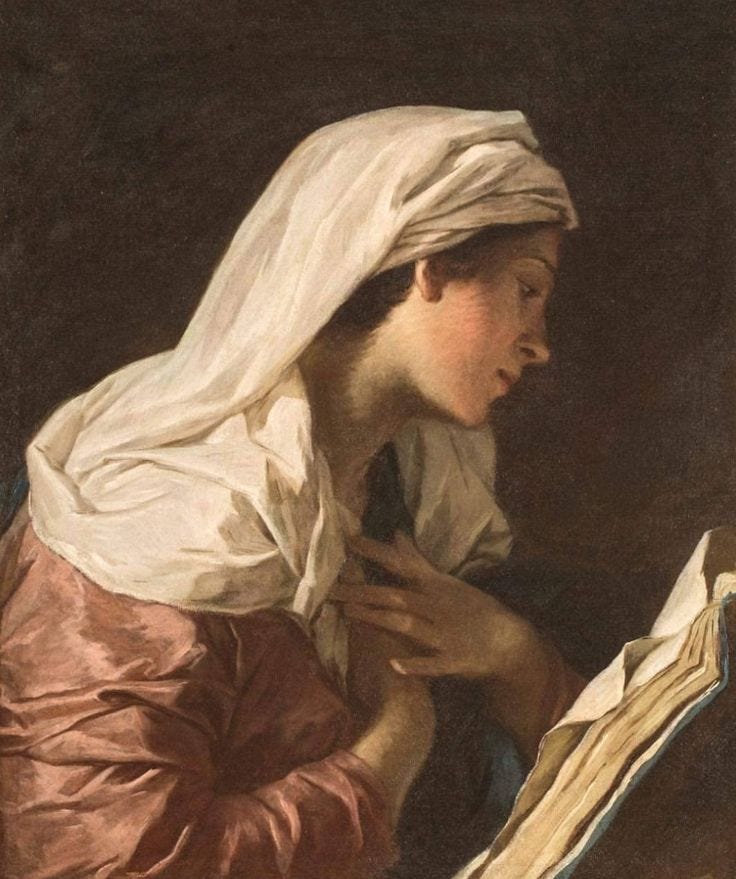
The Quiet Revolutionary Return of Women's SpiritualityWhy modern women are reclaiming their faiths and inner power in a world that's unstable.
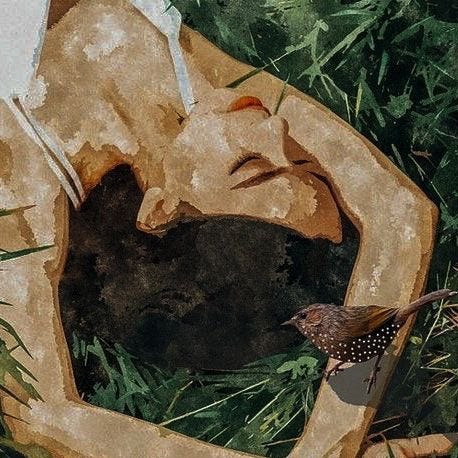
With the way the world is moving today, where everything seemed more chaotic, fast and often overwhelming, I’ve started to notice a quiet shift happening among women. Unlike decades ago, when life felt simpler and spirituality wasn’t openly discussed, many women now find themselves yearning for something deeper. There’s this collective turn inward, a desire to reconnect with faith, ritual or whatever form of spirituality that anchors their spirit. And for the first time in a long time, this yearning isn’t seen as something shameful or naïve. It’s becoming a source of strength, in these trying times. You can see it reflected in the media, as well. Like in Rosalía’s record-breaking album Lux, which pays homage to female saints and historic women around the world, celebrating the fierce devotion and spiritual power that guided their lives. Women today are beginning to draw from that same well. Perhaps it’s because the world feels so increasingly unstable, that many women are now turning toward something timeless. When the external world becomes unpredictable, the internal world becomes a refuge. And this pattern isn’t new. Researcher Sara Partek, in a study published in the Journal of Refugee Studies, found that displaced women relied heavily on their faith and spirituality in the face of violence and loss. Their beliefs, she noted, “allowed them to grasp a sense of purpose” and “move forward with their lives by accepting reality”. Spirituality, in all its forms, offers what modern life often cannot: grounding, meaning and a sense of being held by something larger than ourselves. I was raised Christian. And like many people navigating through their spiritual journeys, I always find myself returning to my faith whenever life begins to slip out of my control. I’d sit and pray, the way I was taught as a child, asking for guidance and hope for clarity. My spiritual journey has never been perfectly smooth, but the longing for it has always resurfaced, especially when times are tough. Much like the world we’re all living in today. But if you look closely, you’ll also notice that this shift isn’t just about seeking comfort. It’s also about reclaiming the small slivers of control that women have historically been denied.
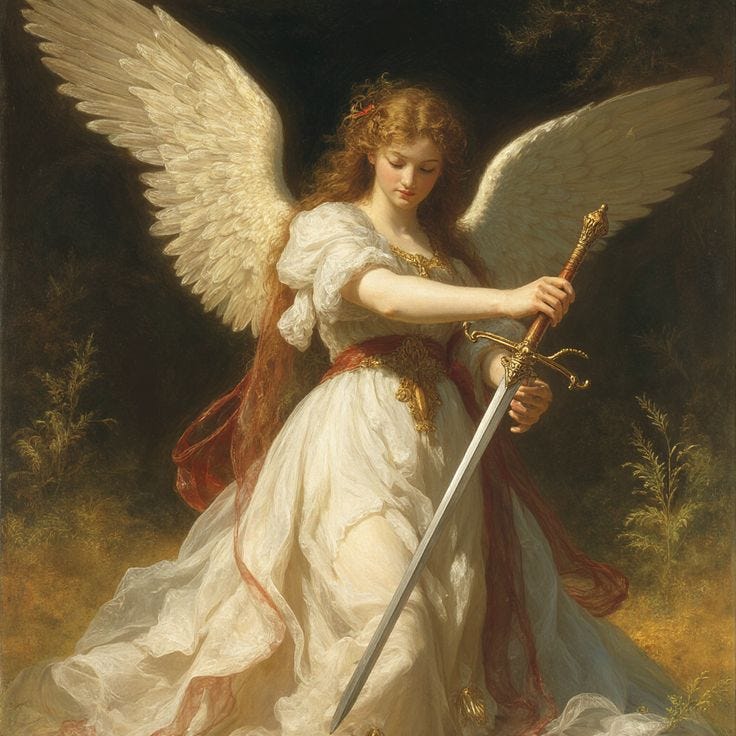
It’s about power. The quiet kind.The kind that allows us to stay rooted in our values. To withstand the storm, even when everything around us tempts us to abandon the core of who we are. Growing up in an Asian culture can be incredibly limiting, especially for young women. From childhood, we’re taught to be filial, obedient and respectful. To prioritize harmony, tradition and the needs of the men and elders in our families. Even though times have changed and the expectations aren’t as rigid as they used to be, the pressure still lingers. It’s woven into our customs, our languages, the way were raised. Sometimes, we’re so deeply embedded in our outdated ideals, that we tend to forget we have the right, and the power, to question them. For me, religion became the place where I first felt that freedom. When I hit my lowest point and began reconnecting with my faith, I started discovering parts of it that I had never truly seen before. I learned that God sees women as precious. Not burdens, not afterthoughts, not people who must shrink to make others comfortable. I learned that, in its essence, faith calls us to honor women, to uplift them, to see their worth clearly. This is reflected throughout Scripture, as well. In the Gospel of John, Jesus speaks to the Samaritan woman at the well, someone who is shunned by her own community, and treats her with dignity. Offering her “living water” and recognizing her worth (John 4:4-30, 39-42). ' Throughout the Gospels, women also appear as some of Jesus’s most steadfast followers. They traveled with Him from city to city and supported His ministry (Luke 8:1-3). They remained by his side during the crucifixion, when many of the male disciples fled (Matthew 27:55-56, John 19:25). And it was the women, with Mary Magdalene among them, who were the first to discover and proclaim His resurrection (Matthew 28:1-10, Mark 16:1-8, Luke 24:1-10 & John 20:1-18). In a world that often tries to tell women who they should be, what they should sacrifice and how small they should stay, that kind of truth feels really revolutionary.
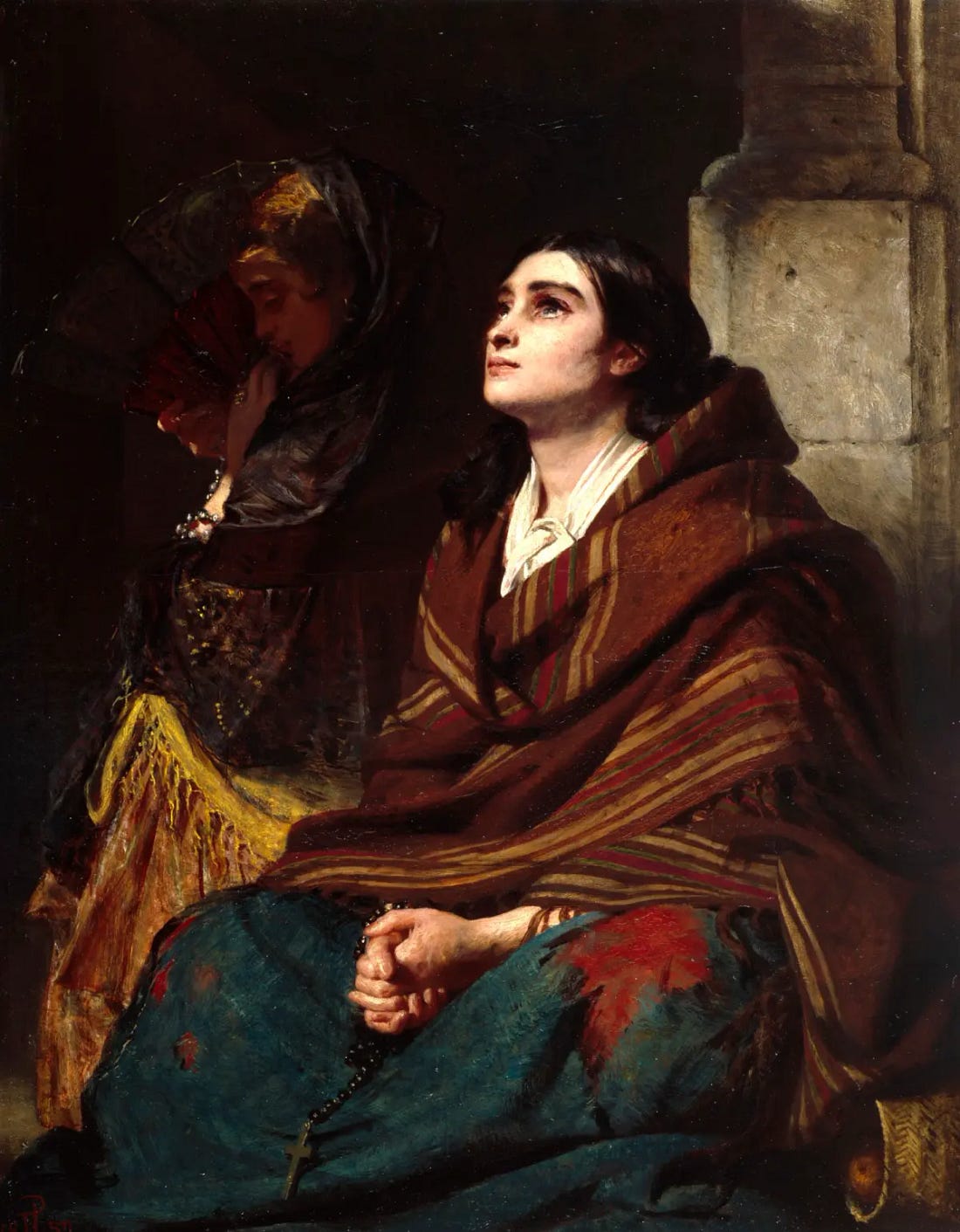
For so long, women were expected to keep their faith quiet. No one really spoke about their religious or spiritual beliefs as openly as they do now. And certainly not with the honesty or boldness we’re seeing today. We practiced our rituals politely, privately, almost discretely, as if they were something that had to be hidden rather than lived. In many societies, a woman who leaned too deeply into her religion or spiritual beliefs was quickly labeled ‘dramatic’, ‘naïve’, ‘close-minded’ or even ‘superstitious’. Her devotion was treated as something embarrassing, something that needed to be contained. And I’ve had really painful experiences with this as well, which was why I’ve always been hesitant in writing about how beautiful our religions can be. In the past, faith, for women, was something tolerated. Not celebrated. But today, that’s shifting. Women are no longer hiding that part of themselves, that feel connected to something bigger. They are now praying out loud. Meditating publicly. Carrying rosaries, tarot decks, crystals, prayer books or devotionals without shame. They’re speaking openly about the moments when spirituality held them together. Not because it’s a trend, but because it’s necessary.
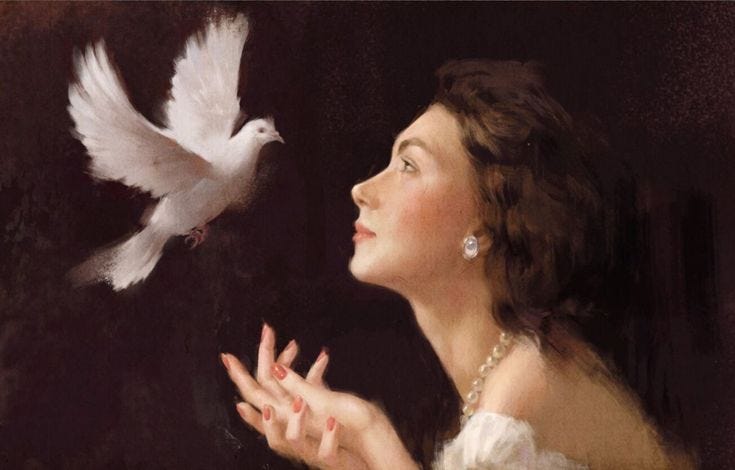
It’s no longer about aesthetics. It’s about survival.Women today are turning to their religion and spiritual practices because the world around them has become increasingly unpredictable, demanding and unstable. And this isn’t just a feeling. Research reflects it too. A study conducted by Sibel Öztürk and Nazlı Akar on the impact of spirituality among women during the COVID-19 pandemic found that women with strong spiritual beliefs showed significantly higher levels of psychological resilience. Even in moments of intense uncertainty, and for some even hospitalization, spirituality helped them stay grounded, develop ‘positive coping behaviors’ and maintain emotional stability throughout the ordeal. In other words, women didn’t just turn to spirituality as an escape. They turn to it as a way to endure the trying times. Spirituality offers an anchor when nothing else feels steady. It gives meaning when logic fails. It gives direction when life veers off-course. For many women like me, this return to faith is actually a return to themselves. Because in a world that constantly tries to tell women who they should be, what they must sacrifice and how small they must stay, choosing to seek the truth, grounding and strength outside of that system is nothing short of revolutionary. It’s not just a trend. It’s a quiet rebellion. And above all, it’a way of finally saying: my inner world matters just as much as my outer one. Sincerely, Cherie. The Whiffler is free today. But if you enjoyed this post, you can tell The Whiffler that their writing is valuable by pledging a future subscription. You won't be charged unless they enable payments.
|
Thursday, 27 November 2025
The Quiet Revolutionary Return of Women's Spirituality





Subscribe to:
Post Comments (Atom)
Exploring What NeuroHub Has To Offer
Watch now (6 mins) | A Guide By David Gray-Hammond ͏ ͏ ͏ ͏ ͏ ͏ ͏ ͏ ͏ ͏ ͏ ͏ ...

-
Dear Reader, To read this week's post, click here: https://teachingtenets.wordpress.com/2025/07/02/aphorism-24-take-care-of-your-teach...
-
How i recognise psychosis and manage it in myself as an Autistic person ͏ ͏ ͏ ͏ ͏ ͏ ͏ ͏ ͏ ͏ ...


No comments:
Post a Comment