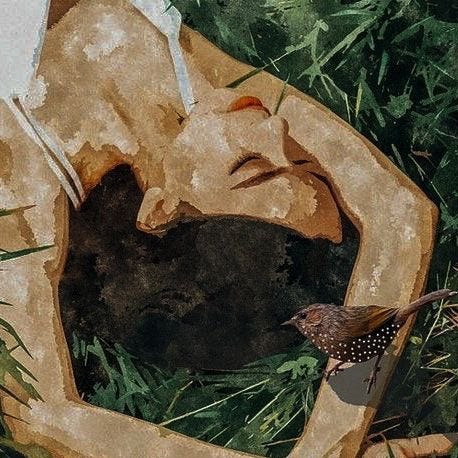
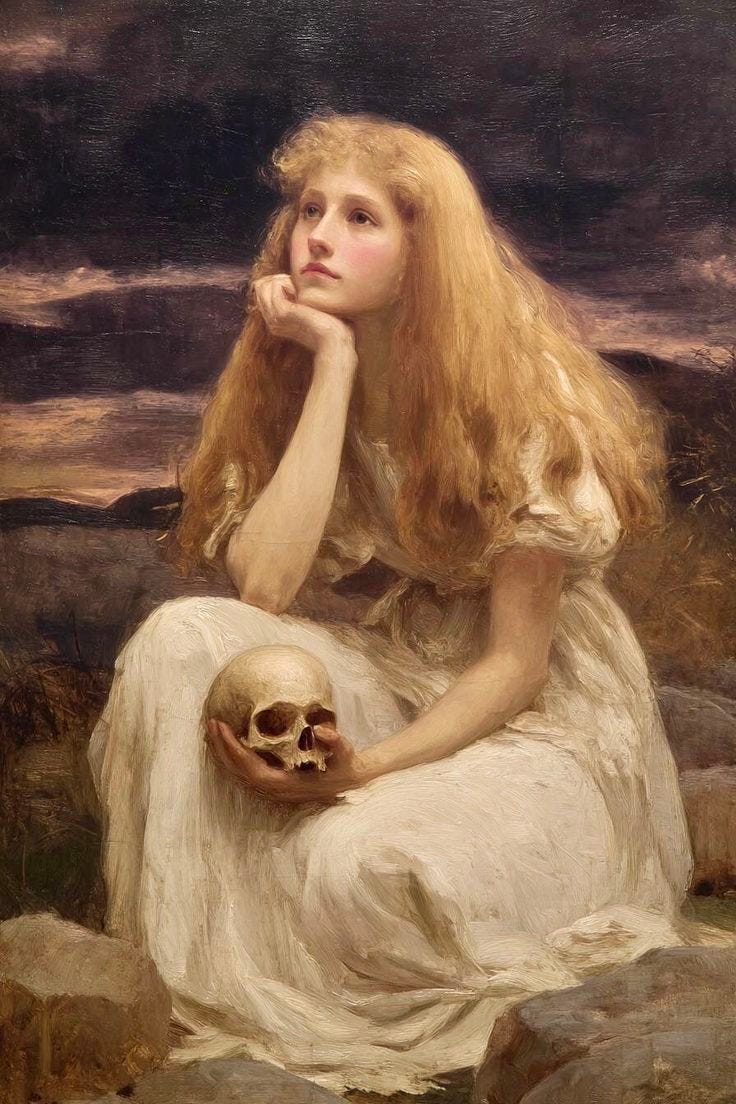
Why are we romanticizing sadness? Why do we believe that we have to be sad, in order to create something beautiful? When did pain become the standard for authenticity? We’ve build this image of the “tortured artist” on social media, but I’m willing to bet that those who were truly tortured by their circumstances would’ve done anything to escape it. In a world where sympathy is so easily sought, I’ve started noticing how people wield their sadness like a badge, or worse, a weapon to be seen. It’s as if we’ve come to believe that, as a society, only in sadness that we can be truly visible. Which, if you think about it, is a little messed up, isn’t it? But maybe that’s the thing, being happy doesn’t seem to earn the same kind of attention. People tend to listen more when you’re broken, not when you’re whole. They offer comfort when you’re crying, but fall silence when you say you’re finally okay. It’s as if happiness makes you invisible, while sadness turns you into a story that’s worth telling. But here’s the thing, after everything I’ve been through, after all the fighting I did just to feel alive, constantly finding reasons to keep going, doing everything right to feel better, I don’t want to be sad anymore. No one really does. After all, why would you willingly feel sad? ‘Cause that’s just…sad. As a society, we have misunderstood for so long, the idea that beauty can only be born from suffering. That unless we’ve struggled hard enough, bled enough, or broken enough, our success wouldn’t be real. Maybe that’s why so many people today romanticize suffering. Because somewhere deep down inside all of us, we’ve come to believe that pain is a proof of progress. That when someone is hurting, they must be on their way to something meaningful. But that’s not necessarily true. Some people manage to find success without ever walking through deep pain. And we may often look at them through envious eyes, for they truly love what they do. They are the ones who are fortunate enough to build a life around their passion, so their work never truly feel like suffering. You’d rarely hear them complain about late nights or endless projects, because to them, it isn’t a burden. It’s purpose. They found joy in their exhaustion, meaning even in the effort. And that, I think, is a kind of peace that’s worth romanticizing for. Lately, I’ve come to realize that peace bears its own kind of depth. One that’s often harder to reach than pain. Perhaps that’s why, when someone truly finds peace, despite their circumstances, it becomes difficult for others to relate to them. Because not everyone knows what it feels like to be genuinely content, to wake up grateful for what they have, especially in a world that glorifies chaos and excess. When people speak about the peace they’ve found, they’re often dismissed or even mocked. It’s as if calm must be earned through visible suffering. As if happiness without pain is somehow undeserved. Maybe it’s envy, or maybe it’s disbelief, but we tend to look at peaceful people as though their joy is a luxury we’ll never afford. Maybe that’s why we glorify pain so much in art, in stories, and in the way we talk about our lives. Because we, as a society, equate struggle with meaning. Heartbreak with beauty, and chaos with depth. Peace, on the other hand, feels too quiet to be profound. Too still to be interesting. But isn’t that the point, though? Peace doesn’t demand attention. It simply is. It’s found in the small, unnoticed corners of or days. Like the first sip of your morning coffee, of the way light filters through your curtains, in the quiet silence after forgiveness. When I was in my early 20s, I used to think that peace meant nothing was wrong. Now, I know it means that everything finally feels right, even when life isn’t perfect. It’s not the absence of pain, it’s the acceptance of it. The kind of calm that grows root only after the storm has passed. Maybe that’s what makes peace the most radical thing of all. Because it means we’re content to live gently in a world that thrives on noise. To choose stillness when everything tells you to chase the next big thing. As a society, we’ve spent so long chasing sadness, thinking it makes us deeper, wiser, more worthy of being heard. But maybe it’s time we stop romanticizing pain and start yearning for peace instead. The kind of peace that doesn’t come from escaping the darkness, but from learning to walk through it with light in our hands. Because real depth ins’t found in how much we’ve suffered. It’s found in how softly we can live after the storm. How gently we can keep choosing joy, even when the world keeps demanding for our pain. Sincerely, Cherie. The Whiffler is free today. But if you enjoyed this post, you can tell The Whiffler that their writing is valuable by pledging a future subscription. You won't be charged unless they enable payments.
|
Saturday, 1 November 2025
Yearning to be Sad





Subscribe to:
Post Comments (Atom)
Your Halloween hangout invite
A relaxed, neurodivergent-led Halloween event, free to attend and designed for connection on your terms. ...
-
Dear Reader, To read this week's post, click here: https://teachingtenets.wordpress.com/2025/07/02/aphorism-24-take-care-of-your-teach...
-
A slightly unconventional guide to your first time ͏ ͏ ͏ ͏ ͏ ͏ ͏ ͏ ͏ ͏ ͏ ͏ ͏ ͏ ͏ ...


No comments:
Post a Comment