The Quiet Revolution Inside Israeli OrthodoxyProfessor Adam Ferziger on Students, Teachers, and the Israelification of Modern Orthodoxy
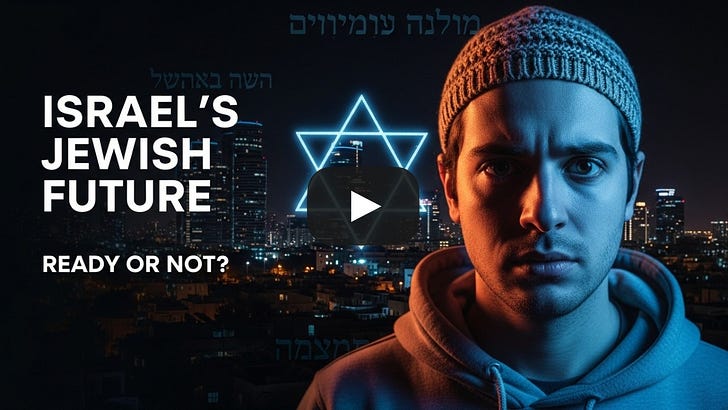 Beneath the surface, Israel is fighting for the soul of its religion. Not in the way headlines usually tell it — Haredim vs. secular, settlers vs. Supreme Court — but in a quieter, deeper struggle over what Judaism in a sovereign Jewish state is supposed to be. And, if you listen closely, you can hear a very unexpected accent shaping that fight: An American one. This week on Madlik Disruptive Torah, Rabbi Mintz and I sat down with Professor Adam S. Ferziger, author of the new book Agents of Change – American Jews and the Transformation of Israeli Judaism. We used Parashat Vayishlach and Jacob’s return from exile as our guide, and then followed that thread all the way to 1980s Riverdale, Bnei Akiva camps, Meimad, Rav Kook, Rav Soloveitchik, and something Ferziger calls Israeli “Moderate Orthodoxy.” What emerged is a story about students and teachers, exile and return, and how ideas born in American Modern Orthodoxy quietly migrated to Israel, simmered below the surface for a generation, and are now emerging as one of the most important forces in Israeli religious life. Jacob Comes Home With BaggageWe opened with Jacob.
Jacob’s journey in Vayishlach is, as we framed it, the Torah’s first fully developed story of return from exile:
Once you see that pattern, you start to notice it everywhere:
The rabbis push this further: exile, they say, isn’t only punishment; it’s productive. It “gathers sparks,” spreads Torah, builds new capacities gains new followers. What you gain out there eventually comes home. And that’s the bridge into Ferziger’s work: What if American Jews – and specifically American Modern Orthodox Jews – are Jacob coming back from Laban’s house? An Anglo Bubble in Kfar SabaFerziger and his wife, Dr. Naomi Ferziger, made Aliyah in 1987. They were, in his words, “typical Modern Orthodox” olim:
They settled first in Jerusalem and then in Kfar Saba, a very Israeli town adjacent to the more Anglo-friendly Ra’anana. Ferziger served as a communal rabbi for years, then moved into academia, eventually becoming a professor at Bar Ilan University and holding the Samson Raphael Hirsch Chair in the Israel and Golda Koschitzky Department of Jewish History and Contemporary Jewry. From the beginning, he felt like part of a small Anglo bubble – warm, idealistic, but peripheral. He tells a story from the 1988 Israeli election that crystallized this feeling. Back then there was a party called Meimad. It positioned itself as a moderate, traditional, religious alternative to the increasingly right-wing, settlement-oriented, stringency-focused religious Zionist party that had dominated for years. Ferziger talked to lots of people. Everyone in his circles seemed excited.
The party, he discovered, was essentially the political expression of a small cadre of Anglo immigrants. The world he came from – Modern Orthodoxy as he knew it from New York, Riverdale, Ramaz, Yeshiva University – was not just a minority in Israel. It was marginal. Even “deviant,” in some eyes. Modern Orthodoxy vs. Haredim vs. Kippah SrugahAt this point in the conversation, we had to clarify terms. If you ask most American Jews what religious movements have the potential to influence Israeli Judaism, they’ll talk about:
Ferziger’s big claim is that these “imports” have, for the most part, remained imports – visible, important in certain niches, but not structurally transformative. Modern / Moderate Orthodoxy, he argues, is different. To understand why, we needed a quick map:
When Ferziger arrived, this Hardal / Kookian camp was very much on the rise:
He contrasts this with his American upbringing:
Modern Orthodoxy, in this formulation, doesn’t deny the tension between tradition and secular culture – it lives inside it. It teaches you not to choose one over the other, but to balance, navigate, synthesize. Religious Zionism in Israel began as a derivative of that same integrative impulse. But by the time Ferziger arrived, the dominant strain had become much more nationalist-messianic, more stringent, and more culturally insular. Skirts at Camp and the Religious Zionist MainstreamFerziger tells a small story that captures this shift. His daughter was in Bnei Akiva, the main religious Zionist youth movement. Summer camps in Israel are short – a week, not seven – but they still have visiting day. When he and his wife came to visit, they noticed something: All the girls were wearing skirts (a marker of more religious modesty). It was a rule of the camp. As he sat with his daughter and wife, eating sushi on a dusty hill, he noticed a few girls walking by in jeans.
The message was clear: The center of religious Zionism had moved. The more open, modern, kibbutz or university-affiliated religious voices were pushed to the margins. Today, says Ferziger, that picture has changed. The religious Zionist community is far more diverse. The Kook/Merkaz Harav camp is still large and influential, but next to it has grown a broad, assorted ecosystem of rabbis, educators, academics, and activists who:
The question in Agents of Change is: How did that happen? Agents of Change: Eight American Teachers, Many Israeli StudentsThe heart of Ferziger’s book is a simple but powerful observation: The transformation in Israeli religious Zionism did not start with institutions, parties, or position papers. It started with teachers. Ferziger identifies eight figures, most of them direct or indirect students of Rav Soloveitchik, who began their careers in North America in Modern Orthodox settings and then made Aliyah between 1965 and 1982:
What they had in common:
At first, says Ferziger, these American rabbis and educators were regarded as Martians:
But something quietly remarkable happened over time:
Ferziger insists on that point. This is why he calls the phenomenon “Israeli Moderate Orthodoxy,” not “Israeli Modern Orthodoxy.” It is:
Good students don’t become clones; they become heirs. It took time. The “agents of change” arrive by the early 1980s. The visible impact begins, in earnest, only in the 2000s. Why? Because the students needed to grow up:
In other words, the real story is not just the eight original American imports. It is the second generation – the Israelis who took their Torah and made it Israeli. Starbucks, McDonald’s, and the Taste of TorahTo explain why these ideas eventually took hold, while other “imported” Judaisms (Reform, Conservative, Havurah) mostly stayed on the margins, Ferziger borrows a concept from globalization studies. Some global brands, like McDonald’s or Starbucks, used to simply copy-and-paste the same product into every country. Sometimes that worked. Often, it didn’t. More clever companies learned to localize:
This transnational model, Ferziger suggests, is what happened with American Modern Orthodoxy in Israel:
Israeli Moderate Orthodoxy succeeds not by remaining a foreign product, but by mixing:
The result is something new – not American, not European, not old-school Mizrachi – but distinctively Israeli. Rav Kook, Rav Soloveitchik, and the Problem of “Patronizing” Secular JewsAt one point I suggested that the story of this book is really the story of students of Rav Kook vs. students of Rav Soloveitchik. Growing up, I loved Rav Kook. He was poetic, mystical, visionary. He could watch a car drive by on Shabbat and say: Mazel tov, they must be bringing another Jewish baby into the world. He called secular chalutzim (Pioneers) who didn’t keep a single mitzvah the holiest souls in Israel. But as I put it, there is a kind of patronizing embrace in Rav Kook’s approach to secular Jews: they are “holy tools” – klei kodesh – instruments for a grand messianic project. The State of Israel itself becomes a tool to reach a spiritual and redemptive goal… the sens of “tool” as a derogatory slang term in English, meaning someone is foolish, foolishly being used by others, or unintelligent.. fits. Modern Orthodox figures in the Soloveitchik orbit often approached the secular world differently:
Ferziger brought a striking anecdote to illustrate this. The late Israeli writer Amos Oz, in his wandering essay-book about Israel, describes the religious use of the category Tinok SheNishba – the “infant taken captive” who doesn’t know any better, and therefore can’t be fully blamed for their sins. Oz’s response is classic:
One of Ferziger’s “agents of change,” Rabbi Aharon Lichtenstein, quotes this line approvingly in a 2016 volume. Lichtenstein, a son-in-law of Rav Soloveitchik and head of Yeshivat Har Etzion, explicitly distances himself from the Tinok SheNishba framing. He insists on respecting the agency of secular Jews. That difference – between “you’re a tool in my messianic drama” and “you are a moral equals I might profoundly disagree with” – is not just theological. It ripples out into politics, education, and culture. And it’s at the heart of the alternative Religious Zionism Ferziger describes. Immigrant Rabbis as Bridge-Builders, Not ReactionariesWe often assume that immigrant rabbis and priests are the guardians of “the old ways,” standing in the way of integration. Ferziger, drawing on research about a Catholic Italian priest in Philadelphia, flips that assumption. Immigrant religious leaders, he suggests, often serve as bridges, not barriers:
The American Modern Orthodox rabbis in Israel did exactly that:
But—and this is key—they did not own the outcome. Their Israeli students did. Those students took the tools and radicalized them in ways their teachers might never have imagined: in feminism, academic Talmud, engagement with secular Israeli culture, new models of rabbinic authority, and more. Kippah Srugah, Kippah Shekufah, and Israeli JudaismToward the end of our conversation, I made a prediction: If I had to guess where Israel’s next generation of leaders will come from, I suspect many of them will be:
Or, as Ferziger added with a grin, a “kippah shekufah” – an invisible kippah. That term is used in Israel by young people from religious homes who still keep Shabbat, still live deeply Jewish lives, but have stopped wearing a kippah publicly:
This, Ferziger argues, is part of something larger that scholars Shmuel Rosner and Camil Fuchs have called “Israeli Judaism” – #YahadutYisraelit – one word. It is:
This Israeli Judaism has its own music, liturgy, street culture, and political instincts. You can hear it in the playlists of IDF soldiers, in the piyutim sung in stadiums, and in the way Jewish holidays bleed into national civic life. And it is increasingly shaped by a religious population that is not Haredi and not purely secular, but a broad, varied religious-traditional middle – the very milieu Ferziger is describing. Why This Matters Far Beyond the Dati-Leumi WorldIt would be easy to file Ferziger’s book under “niche interest”:
But the stakes are much larger. If Israel’s political and cultural future is increasingly shaped by:
then understanding this movement becomes crucial for:
Ferziger insists that his book is not just for specialists. It is for anyone who wants to understand where Israel is going:
Jacob, AgainWe started with Jacob returning from exile, and we might as well end with him. Jacob leaves home terrified, alone, unsure. He comes back changed – and his return changes the land he returns to. We have, as a people, gone out and come back many times:
Each time, we bring back something new: Professor Adam S. Ferziger’s Agents of Change tells one chapter of that ancient story in a very contemporary key:
It’s a story not just about rabbis and parties, but about how ideas travel — and how, in Jewish history, exile has never just been a tragedy. It’s also been a curriculum. 📚 If you want to go deeper: And yes — the book is absolutely worth reading.
|
Thursday, 4 December 2025
The Quiet Revolution Inside Israeli Orthodoxy



Subscribe to:
Post Comments (Atom)
The Work Is Not The Writer
Learning to separate criticism of the page from criticism of the person behind it. ͏ ͏ ͏ ͏ ͏ ͏ ͏ ͏ ...

-
Dear Reader, To read this week's post, click here: https://teachingtenets.wordpress.com/2025/07/02/aphorism-24-take-care-of-your-teach...
-
CALL FOR APPLICATIONS: AOM 2025 PDW ͏ ͏ ͏ ͏ ͏ ͏ ͏ ͏ ͏ ͏ ͏ ͏ ͏ ͏ ͏ ...


No comments:
Post a Comment