When government invokes the word “emergency,” normal process changes. Timelines accelerate. Environmental review can narrow. Procurement pathways can shift. Public participation can compress. The word carries weight because it is designed for moments when delay risks harm. On July 8, 2024, an emergency demolition order was issued for the Roosevelt Island Steam Plant. That fact alone is not controversial. Buildings age. Infrastructure deteriorates. Safety matters. But emergency authority is reserved for imminent danger. It is meant for collapse risk, structural instability, fire damage, conditions that require immediate stabilization to protect life.
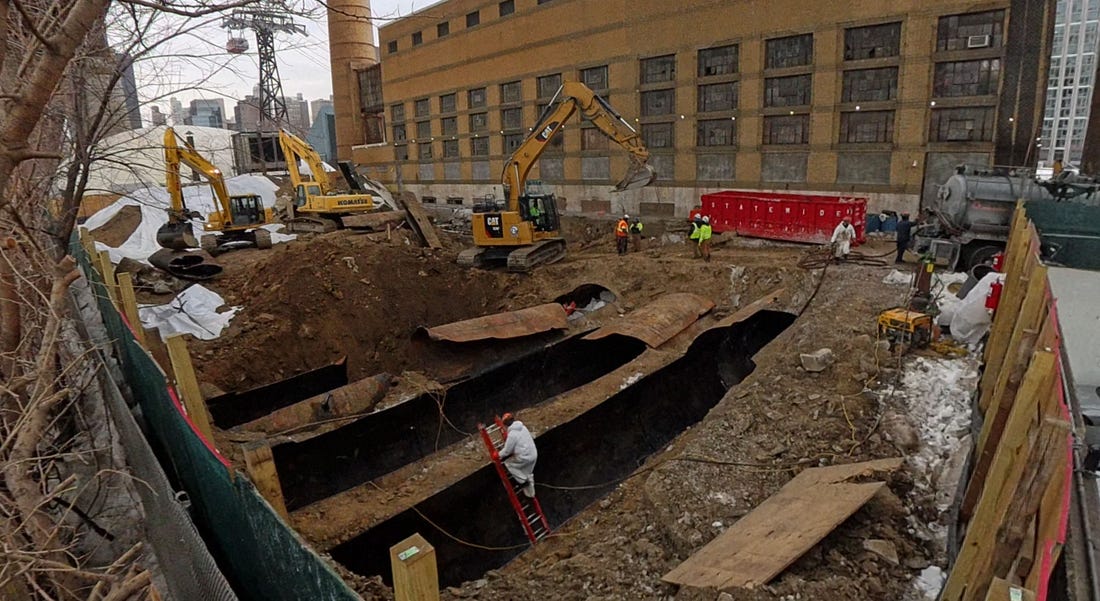
The Timeline and the TensionNearly two years have passed. In that time, there has been no publicly produced forensic structural report demonstrating imminent collapse. No detailed engineering assessment with measurements, load analysis, mortar testing, or steel evaluation has been shared with the community. What residents have seen instead is oil tank removal, soil disturbance, and an open DEC spill case involving No. 6 fuel oil affecting soil and groundwater. If a building posed imminent structural danger in July 2024, standard protocol would typically prioritize shoring and stabilization. Perimeters would be secured. Engineers would reinforce compromised elements. Immediate collapse risk would be addressed first. That sequence matters. The local Community Board recently voted unanimously to request that demolition be paused until sufficient documentation is reviewed. Community Boards do not have the authority to halt demolition. Their votes are advisory. But unanimity signals concern, especially when the question is not preservation for nostalgia’s sake, but documentation for public safety. Emergency authority is an extraordinary tool. It bypasses ordinary review precisely because time is presumed to be short. Which raises a simple question: if time was short, why has stabilization not been the visible priority? The public record so far does not include a detailed structural report supporting imminent collapse. Focused requests have been filed seeking clarity on when the term “emergency” first appeared in writing and what documentation supported its use. Those answers will matter.
Emergency Power and Long Term PlanningThis issue is not about opposing growth. It is not about freezing Roosevelt Island in time. It is about process. In a recent joint announcement extending the Roosevelt Island master lease, state and city officials described a future of continued investment and planning. The release stated: “The city and state will work together to plan for possible redevelopment of the defunct Roosevelt Island Steam Plant site, which is on land leased to the state. The steam plant previously provided heat to hospitals on the island but was decommissioned in 2014. The city’s demolition of the steam plant will commence shortly, facilitating potential redevelopment of the site.” In that same announcement, David Kramer, President of Hudson Companies, said:
Growth is not inherently controversial. Redevelopment is not inherently suspect. Investment in the island’s future is something many residents support. But when emergency authority and long term planning occupy the same physical geography, documentation becomes even more important. Residents deserve to know that the use of emergency power was grounded in detailed engineering evidence. They deserve to know that environmental risks are being addressed with full transparency. They deserve to know that process was followed before demolition became irreversible. A Call for ClarityRoosevelt Island was conceived as a planned community. Deliberation was built into its DNA. Emergency power is the exception, not the rule. If the documentation exists, it should withstand scrutiny. If it does not, that is not a preservation debate. It is a governance question. Community Board 8 has asked for a pause. It does not have the authority to impose one. Residents do have the authority to lend their names to a call for clarity. If you believe that emergency authority should be supported by transparent documentation before demolition proceeds further, you can add your name to the petition requesting a pause until full structural and environmental documentation is publicly reviewed.
The word emergency carries weight. So should the proof behind it. If one person came to mind while you were reading this, consider forwarding it to them. Subscribe for free to receive updates on new posts and support our work.
|
Friday, 13 March 2026
Emergency Without Urgency






Subscribe to:
Post Comments (Atom)
Grace Under Scrutiny
The quiet discipline of not correcting every lie. ͏ ͏ ͏ ͏ ͏ ͏ ͏ ͏ ͏ ͏ ͏ ͏ ...

-
Dear Reader, To read this week's post, click here: https://teachingtenets.wordpress.com/2025/07/02/aphorism-24-take-care-of-your-teach...
-
CALL FOR APPLICATIONS: AOM 2025 PDW ͏ ͏ ͏ ͏ ͏ ͏ ͏ ͏ ͏ ͏ ͏ ͏ ͏ ͏ ͏ ...


No comments:
Post a Comment