
Chair Fay Christian opened the Operations Advisory Committee on February 12th, reading out member names from a prepared sheet that omitted Melissa Wade. It didn’t feel intentional, but it struck me as odd precisely because it came from something prepared. Lydia Tang gently corrected her, noting that Wade was, in fact, a member of the committee. Wade met the moment with grace, or perhaps she simply wasn’t bothered by it. Either way, the evening moved on. Fay continued, her eyes fixed on the page, reading through the names of staff, some present, others expected to join later, all drawn from the same prepared list. Fay was trying so hard to be fair that she accidentally became inaccurate. It’s like watching someone carefully pour water… next to the glass. I found myself recognizing the improvement from the last meeting, and in that moment, adjusting my own lens in return. Then CEO Benjamin Jones entered the room and offered a greeting. What stayed with me was that none of the board members or staff turned to meet it. Leadership had entered, and the room did not respond. It suggested a growing distance, not spoken, but felt.
When the discussion turned to the steam plant demolition, Jones took over as the slide deck came into view and moved through a structured overview of agencies and responsibilities: the Department of Buildings, HPD, the New York State Department of Environmental Conservation. He spoke with confidence, the kind that settles a room, at least at first. Where the Attention WentAs Jones continued, the room drifted. His remarks moved through process and coordination, outlining a high-level timeline through March. The details were there, but they leaned more toward who he knew and how the work would move than toward what had brought people into the room. The presentation had everything except the one thing people came for, which, in fairness, was only the entire reason they were there. The questions that had drawn island residents there remained untouched. Most eyes followed politely at first. Then, as it became clear that no substance would arrive, they wandered. Melissa Wade maintained eye contact the way you do during a long story you already regret asking for. It felt less like courtesy, as he seemed to direct much of his attention toward her. On the screen, Tibor Krisko, attending remotely, turned briefly to his dinner. At some point, Jones handed the meeting back to Fay. By the time Jones finished, the room had learned a great deal about who he knows, and absolutely nothing about what anyone needed or wanted to know. Lydia Tang stepped in before Fay could fully reclaim the floor, redirecting the meeting away from its prepared rhythm and toward the gallery. She called on Kalin Kresnitchki, who had been documenting the process in detail. The moments Before the CutKalin’s images were brought up, not as argument, but as record. Snow marked in ways that did not belong to winter. Black soil exposed beneath it. Nothing clarifies a situation faster than snow that looks like it has secrets. Work advancing without anything that resembled visible protection. He spoke carefully, staying close to observation, letting the details hold their own weight. Zora Boyadzhieva spoke again, and this time I found myself watching her more than listening. Her words were measured, familiar, grounded in questions the room already knew by heart. But her eyes stayed on Benjamin Jones in a way that felt different from the rest of us. There was no accusation in them, only a quiet expectation, as if she still believed he might step into the role the moment required. While others had already begun to disengage, she remained with him, holding that possibility a little longer. It was not naïve. It was deliberate. But it carried a cost. Hope, in that room, had nowhere to land. She then asked him directly whether he would introduce her to the head of the agency he had just referenced, someone he had described as accessible, someone he had met with. It was a simple request, grounded in the very relationships he had placed at the center of his remarks. At moments, he attempted to acknowledge her as she spoke, but the shift in his tone was difficult to miss. Her tone never changed. His did. That’s usually where the answer is. Where her voice remained steady, even kind, his carried the edge of someone increasingly aware of the position he was being pulled into, and unwilling, or unable, to fully step into it. Rick O’Connor chose his moment carefully. Where others had circled the issue, he moved directly into it, raising a doubt that had been sitting in the room without being named. If this was truly an emergency, he asked, how had an order signed two years earlier only now become urgent enough to justify demolition. The question did not carry force, but it carried clarity. He followed it with something more practical, asking whether RIOC’s legal staff would be willing to help reach out, to explore whether the work could be paused or delayed until more information was made public, until an environmental report existed not in theory, but in hand. It was a measured offer as much as it was a question, an indication of how far he himself was willing to go. The room held it for a moment. Then it passed. No response formed. And Benjamin Jones, who had struggled with questions far less direct, did not find one here. Before the moment could fully settle, another voice entered. An environmental attorney, introduced through his work representing victims of 9/11, spoke with a familiarity that came not from theory, but from consequence. He did not raise his voice. He did not need to. The room shifted toward him almost instinctively. I noticed Rick first, a small, unguarded “oh” escaping him, not performative, but genuine, as if something had just widened beyond the bounds of the meeting itself. Lydia Tang and Melissa Wade leaned forward at the table, so far it felt as though they might cross it. The air changed. Rick’s question had not been designed to force RIOC into action, but to mark where he stood. Yet this was different. This suggested something forming outside the room, or perhaps already formed. And as I sat there, I found myself wondering, as I still do, who had invited him, and what it meant. Whether this was a signal, or simply a coincidence. Whether RIOC had just been put on notice, or whether this, like so much else, would pass without acknowledgment. The question did not resolve. It stayed. Whatever had been unfolding inside the meeting, it was suddenly clear it might not stay there. When Words Stopped WorkingFay Christian tried to bring the meeting back to the agenda. After the long stretch of public testimony, there was a visible shift toward order, toward something resembling the structure the evening had begun with. As the public finished, Lydia Tang asked for one more question, or perhaps framed it as a request, but instead of directing it to Benjamin Jones, she turned to COO Mary C. Cunneen. Lydia did not speak for long. She simply asked whether Mary could coordinate air monitoring across RIOC-controlled land adjacent to the steam plant, so that the community, and she herself, could sleep knowing independent measurements were in place. Before she could fully finish, Benjamin Jones stepped in. He apologized as he did, still searching for footing, but aware that as CEO, the answer had to come from him. He spoke for a long time, but there was nothing to hold onto. The words came one after another, referencing agencies, processes, possibilities, but they did not connect. They did not build. They never arrived anywhere that could be understood as a complete thought. It is difficult to follow an answer that is trying not to arrive. What did come through, slowly, was something else. He was trying to move the weight elsewhere, toward other agencies, away from RIOC. He needed to avoid saying no, but could not find a way to land without revealing it. And at some point, quietly, the room stopped trying to understand him, because it had already understood what he was trying to do. Everyone understood. That was the problem. Lydia waited through it all, patiently, long enough for the words to begin collapsing under their own weight. Lydia did not meet his language with more language. She waited until it exhausted itself, then returned with something smaller, clearer, and impossible to misinterpret. She restated the request, shorter this time, without framing, without reference to agencies, just the action itself. Install air monitors around the site. She directed it to Benjamin Jones. It was the same question, stripped of everything that had allowed it to be avoided. What had taken him minutes to circle, she reduced to a sentence that could only move forward or be refused. He began to answer, and for a brief moment it seemed the pattern would repeat. The same opening words, the same turn toward process. But before the sentence could form, the room broke. The room had decided it was done listening. The laughter came quickly, not with him, but at him. It was not cruel, but it was honest. The kind of laughter that arrives when something has been seen too clearly to continue pretending otherwise.
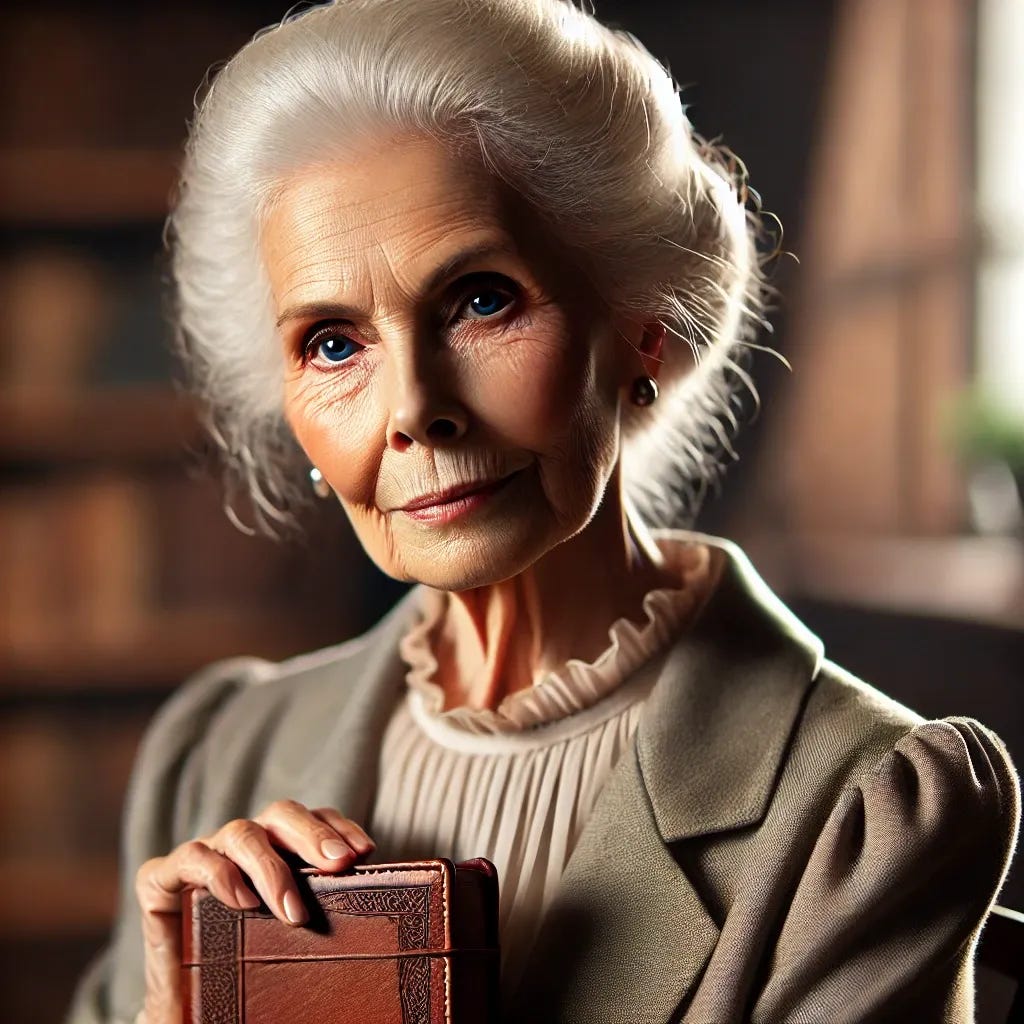
The Air We Carry HomeAs the meeting drew toward its end, I found myself thinking less about what had been said and more about Fay Christian. She let the room breathe. She was not standing with the community, nor fully with her peers, but she was not blocking either. Near the end, she spoke about her granddaughter, about breathing issues that had been getting worse. It was a small admission, almost folded into the larger conversation, but it stayed with me. The air has changed for me as well. In that moment, I saw Fay again as I had known her before. She has always carried herself with a certain elegance. I remember her from years ago, when she taught my granddaughter. There was care in her then, a real care, but also something else I could never quite name. A restlessness, perhaps. A sense that she was not entirely at ease in the role she held. This newer role seemed to have given her a shape she had been searching for. And yet, for a moment, it was no longer about agencies or reports or timelines. Not for her, and not for me. It was about what enters our granddaughters’ bodies without permission. And still, she remained where she was, between the room and the institution. At times, a buffer. At times, something closer to a shield. Loyal, it seemed, to the structure that had elevated her. I did not see indifference in her. I saw conflict. The kind that does not resolve in a meeting. The kind that follows you home, in the same air our granddaughters breathe.
Subscribe for free to receive updates on new posts and support our work.
|






No comments:
Post a Comment