
Romance, Ritual & The Dinner BillWhat the awkward moment when the bill arrives reveals about modern romance, gender roles and emotional investment.
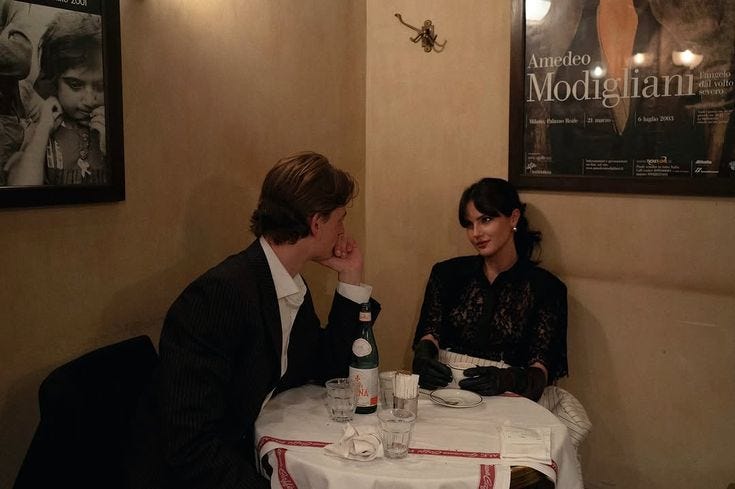
As a woman, I believe that men should pay on the first date. Now, before you roll your eyes or accuse me of setting feminism back 50 years, hear me out. I absolutely believe in gender equality. I believe women should have equal pay, equal opportunities, and be taken just as seriously as men in every room they walk into. But then again, dating isn’t a corporate boardroom. It’s romance, ritual and yes, a little bit of tradition. So personally, I’m still all for chivalry. That means I firmly believe that the guy should pick up the check on the first date and honestly, every date after that. Here’s the thing: I hate dating. I’m more of an introvert than an ingénue. My nervous system can’t tell the difference between a first date and a job interview on a rollercoaster. So you can imagine how painfully awkward it gets when the check arrives after a lovely dinner, and we end up locked in a silent standoff like two cowboys at high noon, armed with nothing but our credit cards. Obviously, I would usually tuck mine somewhere deep inside my purse. I was just looking, testing the waters to see if he would take the initiative to pay. This was the part I dreaded the most. Not because I can’t afford dinner. I work hard, I earn, and I manage my own life just fine. But that moment, when the check hits the table, says more than what people realize. It’s not about the money. It never is. It’s about what the gesture represents. There’s a kind of unspoken weight to it, the simple act of saying, “I’ve got this,” can mean so much more. It shows intention. That he’s not here just for a good time, but maybe for something real. It feels like he’s someone who is willing to invest, both literally and figuratively, in the idea of us. In the study, “Who Pays for Dates? Following Versus Challenging Gender Norms” by researchers Rosanna Hertz and David Frederick at Chapman University, they looked at a national group of adults to see where people stand on who pays on dates. What they found was pretty telling. When men insist on paying, it often reinforces the traditional stereotype of the man being the provider throughout their courtship. But when women push back against that norm, it can sometimes lead to awkward power dynamics or even highlight gender inequalities in the early stages of dating. What was instilled from our parents’ time is still there, the old-school chivalry and all. The idea that men are breadwinners, the providers, the one who pays the bill and opens the door. They cling to us, even as we swipe through dating apps and live in a world where women lead companies, out-earn their partners and manage their own wealth. Sure, we’ve come a long way in terms of gender equality, and yet, some old-school traditions are still deeply embedded in the way we date, and sometimes, there’s nothing wrong with wanting that.
When I brought this up with my mother, she offered me an interesting perspective. Her generation believes that many successful women today are either waiting longer to settle down, or choosing not to at all, because they’re holding out for someone truly worth their time. “These women are earning well, they’re used to living independently, traveling when they want, shopping when they please, doing life on their own terms,” she had said. “So why would they rush to settle down? And even if they do, they would have to meet a certain standard, career-wise and lifestyle-wise. They’re not going to settle for less, and there’s nothing wrong with that. But how many men, today, are actually at the same stage in life as they are, who are single, and realistically dateable?” Her take got me researching, wondering if this was truly a thing. Then I encountered a study published by the Harvard Business Review, they found that single women would sometimes avoid actions that could advance their careers. They would hesitate in applying for promotions or taking high-profile assignments in their careers, out of concern for how those choices might affect their marriage prospects. The researchers suggest that marriage prospects may be the one reason behind the persistent differences in today’s labor market. That’s telling. It shows that even today, while many women do push forward and succeed, they’re also aware, consciously or not, of how their ambitions might limit their dating pool. My mother’s theory was correct, in a way, as the study also points out to a large reality: for women who’ve worked hard for their independence, the decision to settle down isn’t just about finding love, it’s about finding the right partner who matches the life they’ve built. So when they do consider settling down, it’s not out of necessity, it’s about finding someone who adds value to the life they’ve already created for themselves. Which, I believe, correlates back to the idea why I believe that men should pay on their first date, and every dates after. Because how else would we know? If a man is unwilling to pay for a single meal, or an activity that normally wouldn’t have required much effort to do, what does that say about the guy? Sure, there are exceptions to this as well. Maybe he’s genuinely tight on cash, or maybe he believes in splitting the cost to keep things balanced. But in general, consistently avoiding a simple gesture of paying can signal a lack of investment or seriousness. Again, it’s not about the money itself, it’s about what that willingness to pay represents: respect, commitment and a readiness to contribute to build something together. Even the research mentioned earlier, conducted by researchers from Chapman University, claimed that men who pay for dates were seen as “more serious and invested in pursuing the relationship than men who insisted on splitting the bill”. According to a Forbes article, a ‘whopping’ 78% of survey respondents still believe that men should pay on the first date. Even after that, many men still reportedly feel guilty accepting money from women, as if doing so somehow undermines their masculinity or their role in the relationship. Psychologist Dr.Wendy L. Patrick, writing for Psychology Today, echoed this sentiment: in today’s dating landscape, while both men and women acknowledged that either party could pay, many still believed the man should pay for the first date. Reading this made me realize that modern dating isn’t just about who can afford the bill. It’s about this quiet persistence of old scripts: who pays, who leads, who provides. Those small gestures often speak volumes about how someone will show up in a relationship. Traditional roles, where the man provides, may seem outdated to some, but they haven’t disappeared for a reason. In fact, they continue on to hold meaning because they symbolize appreciation, generosity and clear intention. When a man says, “I’ve got this,” it’s not about money, it’s about effort. It says, “I value your time, and I’m willing to invest in getting to know you.” For every modern woman out there, who’s spent years building independent, full lives, that simple act itself, can mean everything. It tells us that he’s not just showing up, he’s showing up with a purpose. The Whiffler is free today. But if you enjoyed this post, you can tell The Whiffler that their writing is valuable by pledging a future subscription. You won't be charged unless they enable payments.
|






No comments:
Post a Comment