
Newsround: Congrats! You have another male-only panel - and then some less depressing stuff.Indigenous Entrepreneurship CfP in BH - New BAM MBH Publishing Historical Research webinar announced
It’s like Groundhog Day – it feels like it was only yesterday (actually it was 2024) that the AOM Management History Division featured three men-only panels. And they are at it again – not sure why I am even surprised; same cast of characters. (Just to be clear, I admire the work of these individuals, which frankly makes this way more disappointing.) I‘m sure they tried (I was asked, but I’m not going – see the FT) and many people are not going to AOM this year, especially from overseas. But this also suggests that there are apparently barely any senior women in the field in the US. Let that sink in and what that says about this field. Because it is all nice and well that I am (yet again) the only one making a point of calling out what is a largely unacceptable practice elsewhere in academia. (I know that some male colleagues in sociology refuse to join male-only panels as a matter of course. At BAM, we have clear policies on this, and a PDW like this would simply not have been accepted.) But it’s not about me being pissed off. It’s about historical research in management looking to all intents and purposes like a retrograde field where you go when the modern world is a bit too much for you. Anyway, info under point 1, and I added a Hoff for you. More excitingly, we have a new CfP on Indigenous Entrepreneurship in Business History, and the next BAM MBH Publishing Historical Research seminar has been announced for 1 October – this time we are talking to Dr Anastasia Sergeeva, University of Bath, about her work on Magnum Photos.
Contents
1. Another Manel at AOMCALL FOR APPLICATIONS: AOM 2026 PDW Developing Theory from Historical Research Sponsors: MH, OMT, TIM, STR, RM Saturday, Aug 01, 2026 from 8:00 AM to 10:30 AM ET Submission Deadline: Friday, July 17, 2026 Who is this PDW for?If you are: engaged in (or interested in) conducting research with historical data, and doing inductive/abductive (i.e. theory-building) work, and hoping to publish your work in top management journals then this is the PDW for you! OverviewThis PDW brings together a distinguished panel of scholars to stimulate an interactive and developmental exchange on conducting inductive research using historical data. Our core focus will be on the theory-building / theoretical contribution part of the research process – how do we understand the past to inform the present? How do we move from the setting being studied to higher-level conceptualisations, while maintaining a balance between generalisation and contextualization? Importantly, our aim will be to focus on these questions from a practical standpoint, taking away useful advice that scholars can adopt in their research practices. And for those of you who have the opportunity to discuss ongoing projects with the panelists, you will also get tailored advice for your specific projects. Panelists
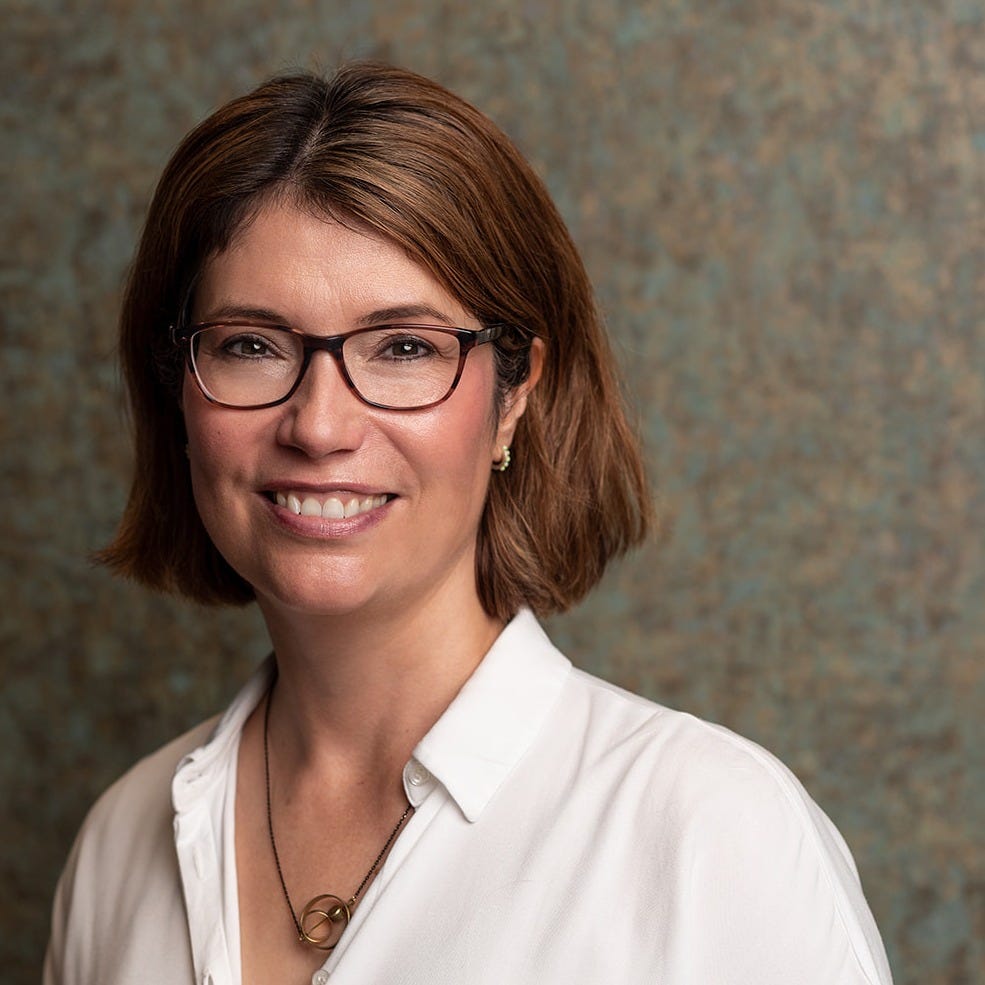
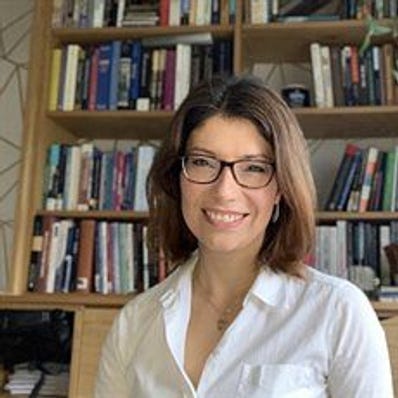
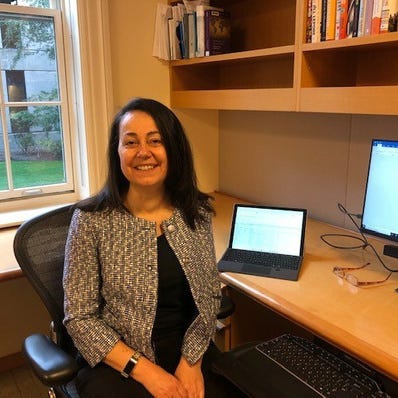
Organizer: Rohin Borpujari, University College London Structure1. Panel Talk and Group Q&A: For the first part of the PDW, our panelists will lead exchanges around topics such as which research questions are best suited to historical case studies; how to balance the needs for contextualization vs. generalization in theorizing; how to write up a historical case study for publication in management journals, etc. 2. Roundtables and Individual Feedback: Pre-selected participants will have the opportunity to engage in quick, entrepreneur-style “pitches” to the experts (separated into 4 different roundtables), with a view to receiving developmental feedback specific to their projects. Each participant will have 20 minutes in total – 10 minutes to describe their project (or project idea) and what areas they would like feedback on, and 10 minutes to receive feedback / engage in discussion with the expert. How to ApplyPart 1 is open to all attendees and does not require any application in advance. For Part 2, in order to ensure quality interactions with panelists, we are limiting the number of “pitches” to 16 (i.e. 4 per panelist). If you are interested in receiving feedback on a project that you are currently working on, please submit your interest to r.borpujari@ucl.ac.uk by 11:59 pm ET (Eastern Time) on Friday July 17, 2025. Specifically, please submit an abstract or overview of your project, including two questions that you would like to ask the panelists to receive feedback about that project. Please keep this document limited to 1 page, single-spaced, in PDF format. In addition, in your email, please rank order your preference for which panellist roundtable you would like to be a part of (with the number “1” referring to your first choice panellist and “4” referring to your fourth choice panellist). Note: In addition to the 1-page abstract, you may, if you wish, submit a theoretical model or diagram that you are working on in case your project is at a more advanced stage and you would like comments on the theoretical model you are building. If you have any questions about the PDW or the application process, please feel free to reach out at r.borpujari@ucl.ac.uk ------------------------------ Rohin Borpujari UCL - University of London LONDON 2. Special Issue for Business HistoryIndigenous Entrepreneurship under Colonialism and Beyond: Institutional Negotiation, Exclusion and Resilience CFP Launch Date: 1 June 2026 Overview This Special Issue examines Indigenous entrepreneurial agency under colonial rule, treating colonial institutions as both economic constraints and sociopolitical structures that shaped market access, legal standing and accumulation strategies. Defining Indigenous peoples is challenging given their diversity and presence across every continent. Scholars have nonetheless identified a number of broadly shared characteristics, including prior inhabitation of a territory before the arrival of later settler or dominant populations, some form of subjugation by those populations, the retention of distinct socio-cultural practices and institutions, a deep attachment to ancestral lands and resources, economic arrangements that are often, though not always, oriented around subsistence, and an association with distinctive languages (Peredo et al., 2004, pp. 5–6).
We invite business historical accounts of how entrepreneurs in colonised societies navigated, contested and reworked the rules of commerce, especially where access to courts, licensing, property rights, banking and credit markets was restricted or selectively enforced. Building on recent scholarship calling for a rethinking of entrepreneurship (Lubinski et al., 2025), growing attention to Indigenous and social entrepreneurship in the Global South (Colbourne, Peredo, & Henriques, 2024; Prouchet, 2025), and calls to engage more directly with colonial and postcolonial contexts and legacies in business history (Austin, Dávila, & Jones, 2017; MacKenzie et al., 2021, 2023; Decker, 2022), the Special Issue brings institutions and agency into the same analytical frame. Objectives and Scope Submissions should engage one or more of the following questions:
Methodologically, we welcome submissions grounded in business historical approaches, including archival research, oral history, biography, microhistory, and comparative or connected history, that make clear empirical and interpretive contributions to the Special Issue’s themes. Engagement with postcolonial scholarship, subaltern studies, and critical perspectives on firms, markets and institutions is welcome, but not required. We particularly encourage contributions that draw on a wide range of primary sources to recover Indigenous actors, experiences and strategies, such as company records, court records, licensing files, banking archives, trading accounts, petitions, newspapers and vernacular-language materials. Authors wishing to discuss unconventional sources or strategies for overcoming archival silences are warmly invited to contact the guest editors. Timeline Informal enquiries welcome: June-September 2026 Abstract / proposal deadline (800–1,000 words): 1 October 2026 Decisions on abstracts: 1 November 2026 Paper-development workshop(s): Newcastle Business School, Northumbria University Full paper submission deadline: 1 May 2027 First-round peer-review decisions: September 2027 Revised paper deadline: 1 February 2028 Final revision deadline: 1 May 2028 Final acceptance target: June 2028 Expected online publication and launch: Autumn 2028 Expected print publication: Early to mid-2029 References
Submission Requirements Authors are invited to submit an extended abstract or proposal for initial consideration. Submissions should be approximately 800–1,000 words and clearly set out the article’s research question, historical scope (including timeframe and location), sources and methodology, and anticipated contribution to the literature. Please also provide a tentative title, author name(s), affiliation(s), and contact information. Proposals should be sent by 1 October 2026 to himadri@xlri.ac.in, with the other editors copied in: marktadajewski@gmail.com, andrew.perchard@otago.ac.nz, and zpittaki001@dundee.ac.uk. The email subject line should read: “CFP – Indigenous Entrepreneurship under Colonialism and Beyond Special Issue.” Formatting and Length: Final papers should adhere to Business History guidelines (typically in the range of 8,000–10,000 words, including notes and references). Authors will be provided detailed instructions for manuscript preparation upon acceptance of proposals. We welcome informal inquiries if you have questions about the fit of a topic or the preparation of your proposal. All articles will be submitted through the Submission Portal for the journal in order to be peer-reviewed before acceptance for publication. Guest Editors Himadri Roy Chaudhuri, Ph.D. in Marketing (University of Calcutta, India) is Professor of Marketing and Consumer Culture at the Xavier School of Business (XLRI), India. Dr. Chaudhuri has published widely in leading international journals, including the Journal of Business Ethics, Journal of Business Research, Journal of Macromarketing, Journal of Consumer Affairs, Journal of Homosexuality, and the Journal of Public Policy & Marketing, among others. His scholarship contributes to critical perspectives in marketing, often bridging cultural theory, ethics and policy concerns. Mark Tadajewski, Ph.D. in Marketing (University of Leicester), is Honorary Professor of Marketing at the University of York, Visiting Professor at the Open University, and Visiting Professor at Royal Holloway, University of London. His research critically interrogates the foundations of marketing theory and practice, with particular attention on how geopolitics shape the discipline. In business history, his work has examined alternative forms of business education and their influence on sales and managerial practice. Andrew Perchard, PhD in History (University of Strathclyde) is Honorary Research Professor at Otago Business School, Ōtākou Whakaihu Waka / University of Otago, Dunedin, Aotearoa–New Zealand, and Visiting Professor, Birkbeck, University of London, and Honorary Visiting Professor, Newcastle Business School, Northumbria University, both UK. His research has focused particularly on the subject of business–government relations and corporate political activity, deglobalisation and globalisation, as well as regional development and energy and industrial policy. Zoi Pittaki, PhD in Economic History (University of Glasgow) is a Senior Lecturer in Entrepreneurship and Innovation at the University of Dundee School of Business. Her research interests include entrepreneurship and institutions, entrepreneurship and growth, social entrepreneurship and historical institutionalism. 3. Publishing Historical Research in Management Journals 4Staged by the BAM Management and Business History Special Interest Group 10am – 11.30am BST1 October 2026 Description Join us for our next MBH webinar on publishing historical research in top journals in management and business history! This interactive event will feature scholars who share their experiences of successfully positioning their historical work for key journals. Participants will have the opportunity to learn more about how to develop approaches and strategies for publishing in top journals and build knowledge and skills around how to position historical research in management and business history journals. We will be joined by Dr Anastasia Sergeeva, whose research focuses on entrepreneurial reasoning and value-laden aspects of innovating and organizing. Her co-authored article in the Strategic Management Journal is available open access here: https://sms.onlinelibrary.wiley.com/doi/10.1002/smj.3727 Please read the article in advance of the webinar for an in-depth discussion with the author and other participants. Provider Information BAM Management and Business History Special Interest Group Who Should Attend? The event speaks to Sections A1 and A2, as detailed in the BAM Framework. Speakers
Senior Lecturer (Associate Professor), University of Bath School of Management
PhD Student, University of Birmingham Facilitator
Professor of Strategy, Birmingham Business School
SIG Co-Chair
SIG Co-Chair Benefits of attending
Contact Please contact the BAM Office at eventsandcommunications@bam.ac.uk with any queries. Event Fee BAM Members and Student Members: Free If you are booking multiple paid events as a Non-Member, it may be cheaper for you to purchase a BAM Membership as nearly all BAM Events are free or at a discounted rate for Members. For more information about Becoming a BAM Member, please visit BAM Membership Registration closes on 30th September 2026 at 23:59 BST You're currently a free subscriber to History in Organizations. For the full experience, upgrade your subscription.
|










No comments:
Post a Comment