
When we talk about Autistic mental health in mainstream spaces, we are almost always talking about Autistic people. There is a panel, there are experts, there are frameworks, diagnostic categories, intervention models, and evidence bases. And somewhere, barely audible beneath all of that, are Autistic voices. Present by permission, consulted rather than centred; included enough to legitimise the proceedings. That is not a conference; that is a performance of inclusion. What We Mean When We Say “Resistance”Resistance is not a dramatic word. It does not require barricades or manifestos, sometimes, resistance is simply the refusal to accept the terms you’ve been handed. The terms we have been handed are these:
We have refused those terms. The NeuroHub Community Autistic Mental Health Conference is rooted in the core belief that neurodivergent voices should lead the conversation about neurodivergent lives. That sentence is doing more work than it appears to; “Lead” is not the same as “contribute”. “Should” is not tentative; it is a statement of principle. “Neurodivergent voices” encompasses not just the articulate, the credentialled, or the already-platformed, but the full breadth of people who have been pushed to the margins of a conversation about their own existence. That is a political position; it always has been. Epistemic Injustice And The Conference FormatThere is a concept I return to repeatedly in my work; epistemic injustice. The idea, developed by philosopher Miranda Fricker, describes the harm done when someone is wrongfully excluded as a knower; when their testimony is dismissed, when they lack the conceptual tools to make sense of their own experience, when the structures of knowledge production systematically delegitimise what they have to say. Autistic people experience epistemic injustice at every level of the mental health system. We are told our self-knowledge is unreliable, our distress is reinterpreted as symptom, our frameworks for understanding ourselves (monotropism, double empathy, the Ecosystemic Model) are treated as informal hypotheses rather than paradigm-challenging theory. The conferences that claim to address Autistic mental health reproduce that injustice in their very architecture: here are the experts, there is the audience, this is what is known. A conference that centres lived experience is not just a different kind of event. It is a direct challenge to that epistemic structure. The Theme Is Not IncidentalThis year’s conference explores ecosystemic causes of mental health issues. The Ecosystemic Model of Distress and Wellbeing, which has developed over several years of research and practice, holds a foundational position; distress is not located inside the individual. It is not a malfunction of the Autistic nervous system, it is an ecosystemic consequence; produced at the interface between a person and an environment that was not designed for them, within systems that actively work against their wellbeing. When Tanya and I present at this conference (speaking on ‘The Ecosystemic Model of Distress: An ecological approach to Autistic and monotropic wellbeing’) we are not offering a clinical update. We are making an argument, the argument is that you cannot address Autistic mental health by treating Autistic people, you have to address the ecosystem. That reframe (from individual pathology to systemic consequence) is itself a political act. It shifts responsibility, demands accountability from schools, employers, mental health services, and the broader neuronormative infrastructure of modern life. It does so from a platform built by Autistic people, for Autistic people, grounded in the theory and research of those who know this from the inside. 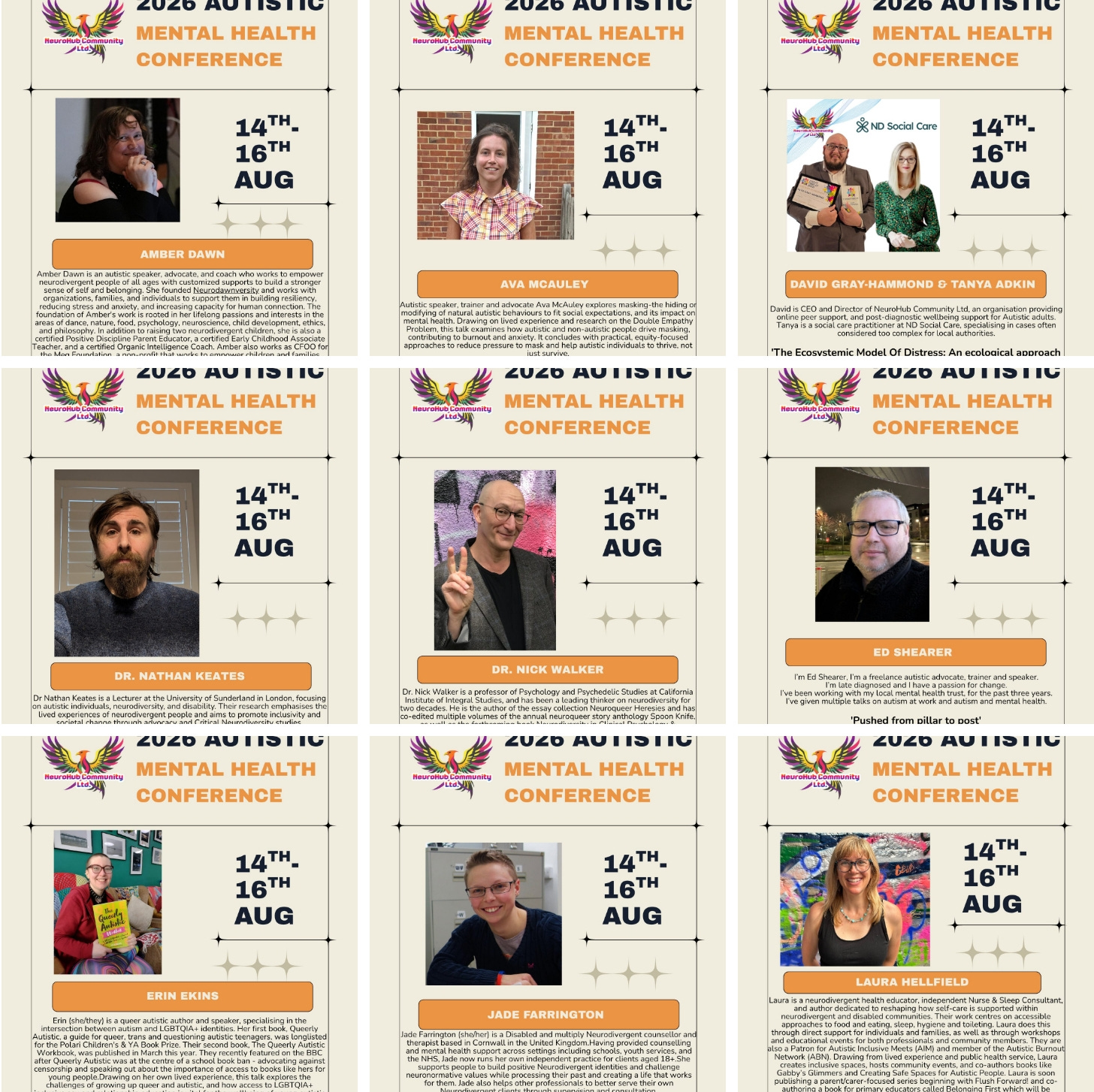
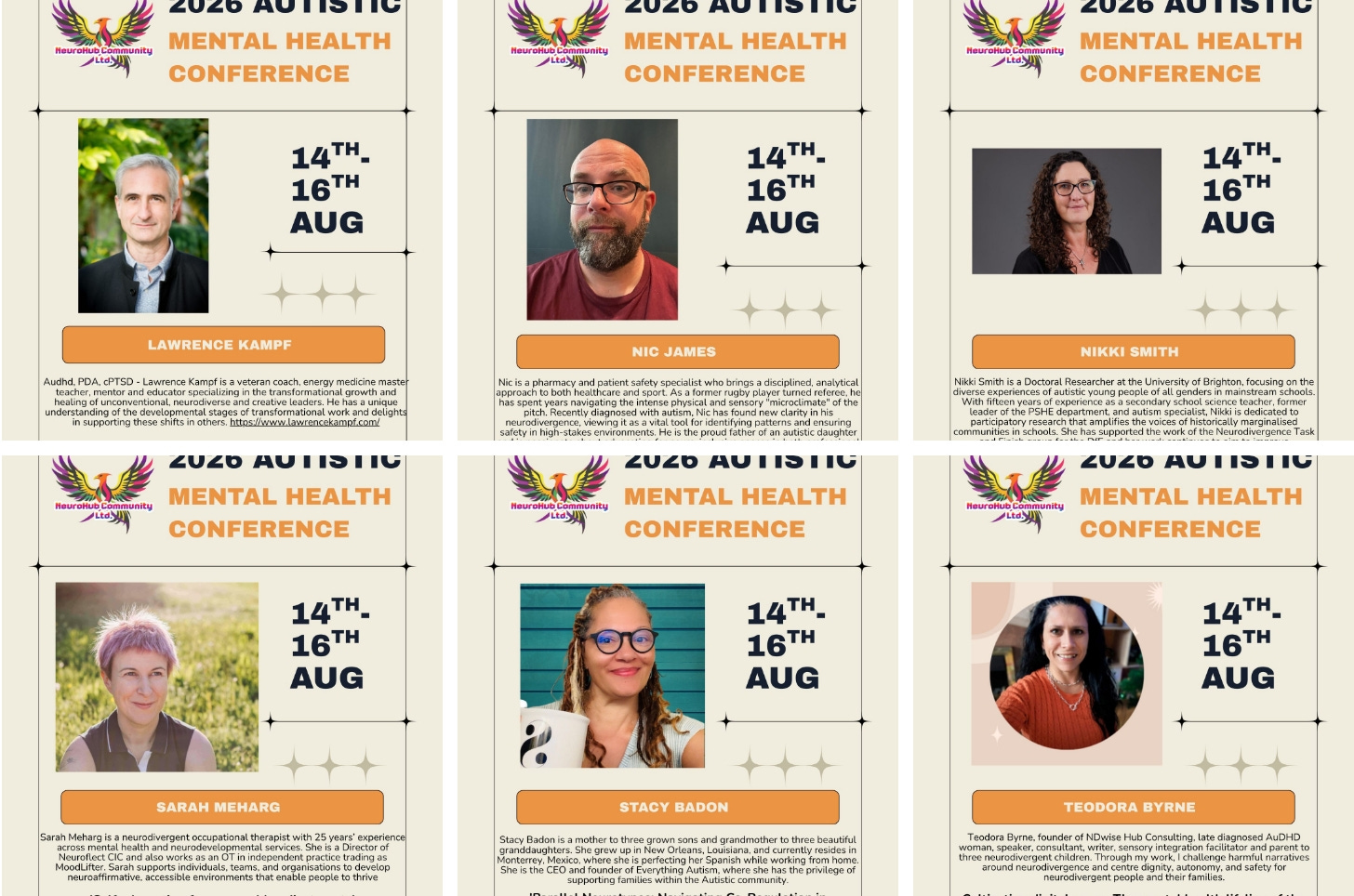
Accessibility as PoliticsI want to say something about the format of the conference that often gets treated as a logistical detail rather than what it actually is; a political commitment. The 2026 Autistic Mental Health Conference is fully hybrid. Online access is available for all three days, so attendees can join from anywhere in the world. All talks will be recorded and made available to ticket holders, so sessions can be revisited or caught up in your own time. For many Autistic people, access to knowledge has historically been gatekept by geography, energy, sensory environment, economic means, and the demand to perform neurotypical presence in order to participate. A hybrid, recorded, accessible conference with a price point starting at £50 (with a 33% discount for community members - Se below the paywall on this article for your code) is not just convenient, it is a statement about who this event is for. Neurodivergent individuals, whether diagnosed, self-identified, or still unsure, are welcome. Not as curiosities, nor as subjects of study; as participants in a conversation about their own lives. Why Now?We are living through a moment of profound political hostility to the kinds of frameworks this conference embodies. Rights-based approaches to disability are under pressure, the neurodiversity paradigm is being contested; not by better evidence, but by those who find it politically inconvenient. Lived experience is routinely weaponised; presented when it validates existing narratives, suppressed when it challenges them. The Autistic Mental Health Conference does not exist outside that context. It exists inside it, deliberately. Every time we build a platform that centres neurodivergent voices, we are doing two things simultaneously.
Those two things are inseparable. An InvitationIf you are Autistic, this conference was built with you in mind. Not your diagnosis, not your challenges, your deficits, or your burden on the system. You; your insight, your experience, your right to a conversation about your own life conducted in your own terms. If you are a professional who works with Autistic people, this conference offers something you will not find in most CPD environments; the chance to encounter Autistic knowledge on its own terms, without the translation and softening that usually mediates it. If you are simply someone who believes that the people most affected by a problem should lead its solution, then you already understand why this matters. The 2026 Autistic Mental Health Conference runs from Friday 14th to Sunday 16th August. The in-person day is in Brighton and Hove (but can still be accessed online) everything can be reached from wherever you are. Tickets start from £50. NeuroHub Community members receive a 33% discount (Code below the paywall). Subscribe to NeuroHub Community Journal | Newsletter | Announcements to unlock the rest.Become a paying subscriber of NeuroHub Community Journal | Newsletter | Announcements to get access to this post and other subscriber-only content. A subscription gets you:
|


No comments:
Post a Comment