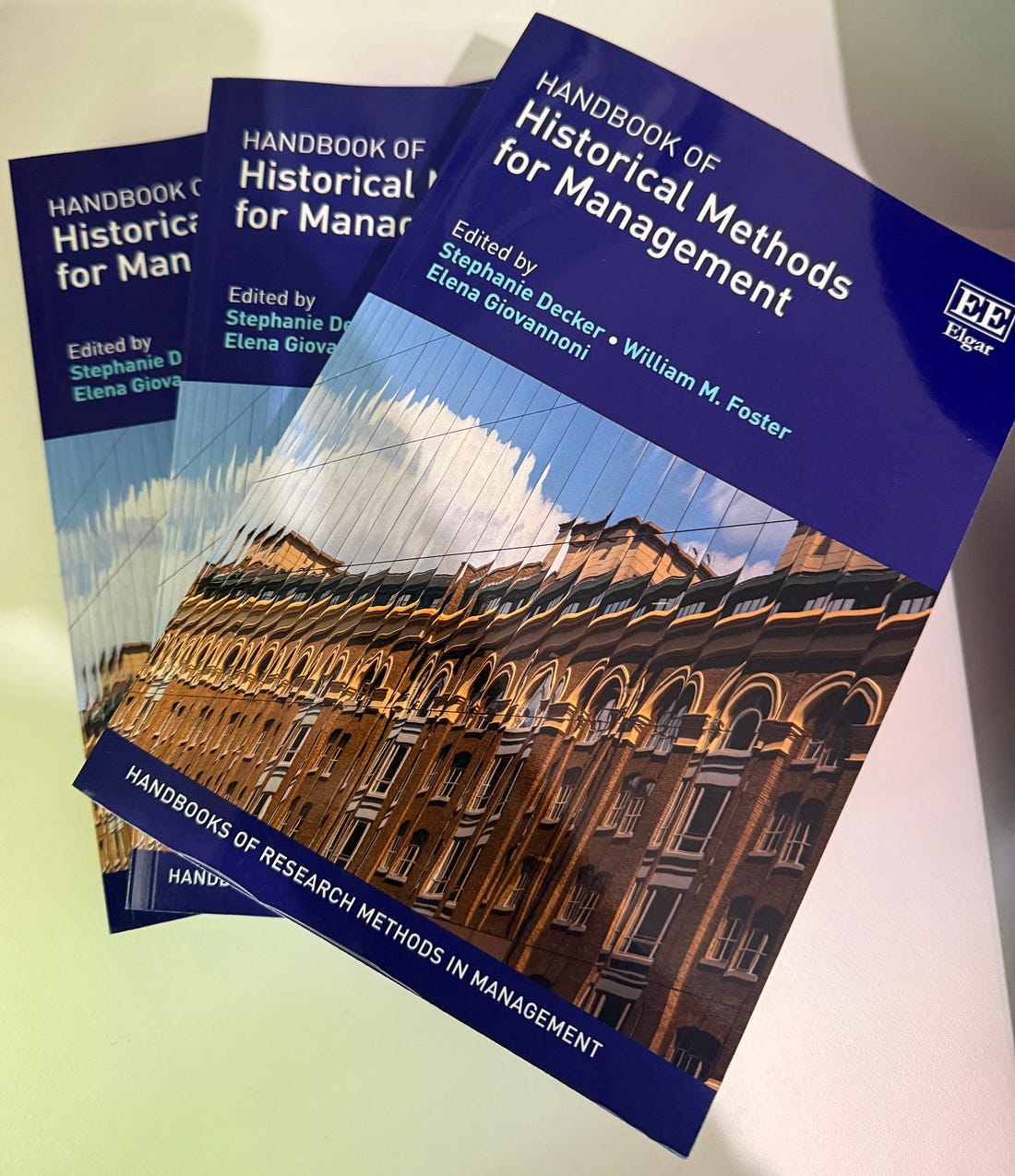
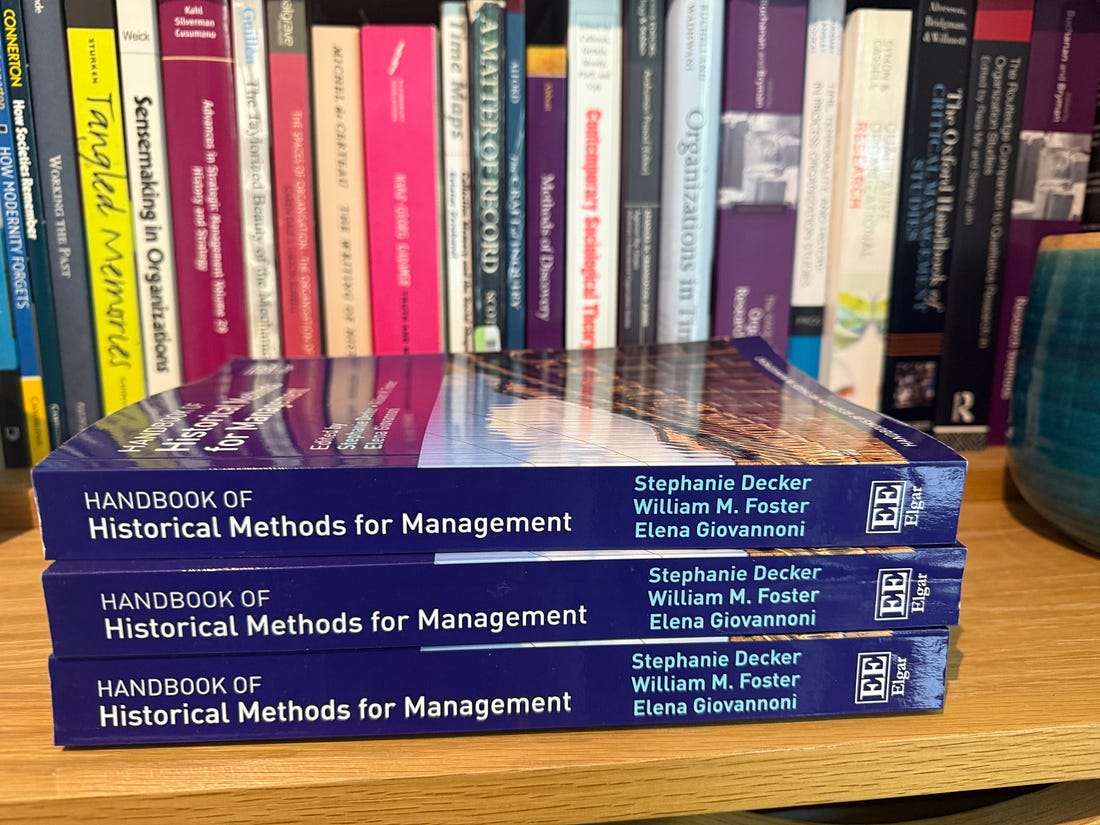
Historical Methods Now More Accessible Than EverHistorical approaches in management research are increasingly recognised as important additions to scholars’ methodological and conceptual toolkit. One of the most comprehensive volumes introducing key approaches, methods, and authors is the Handbook of Historical Methods for Management, published by Edward Elgar. And it is now available in paperback format at a significantly reduced price, making contemporary historical methodology accessible to a broader community of scholars and practitioners.
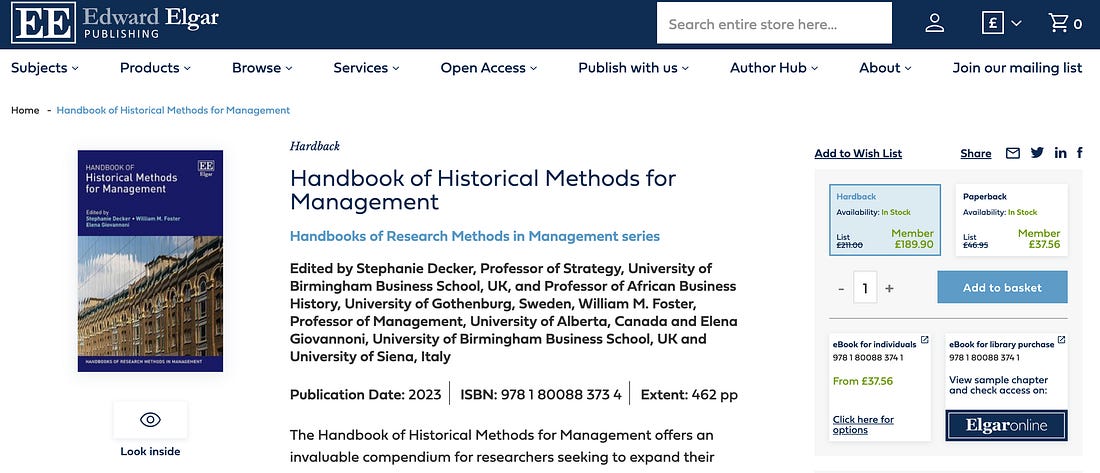
Why Historical Methods Matter More Than EverIn an era of rapid organizational change and digital transformation, the temptation to focus solely on the future is clear. The Handbook introduces a wide variety of topics, such as archival research, organizational memory, materiality, and ANTi-history, offering insights into the complexity of this broad field. These methodological approaches reveal patterns, precedents, and lessons that purely contemporary analysis might miss. Consider the current challenges facing modern organizations: remote work transformations, sustainability imperatives, and evolving stakeholder expectations. Each of these "new" challenges has historical precedents that can inform better decision-making. Historical methods provide the tools to uncover these connections and apply past wisdom to present challenges. One Heck of a Great Editorial Team! (Even if I say so myself)Edited by Stephanie Decker, Professor of Strategy, University of Birmingham Business School, UK, William M. Foster, Professor of Management, University of Alberta, Canada and Elena Giovannoni, University of Birmingham Business School, UK and University of Siena, Italy, this handbook brings together three distinguished scholars who have shaped the field of historical management research. The editors have carefully curated contributions from leading experts worldwide, creating a resource that bridges theoretical rigour with practical application. What Makes This Handbook EssentialComprehensive Methodological CoverageAuthored by leading experts in the field, this timely Handbook provides practical examples that explain the different processes involved in historical methods of enquiry. The 462-page volume encompasses a range of methodologies, from traditional archival research to cutting-edge digital approaches, ensuring that researchers have access to both time-tested and innovative methods. Interdisciplinary ExcellenceOne of the handbook's strengths lies in its interdisciplinary approach. The chapters revitalise historical methods in management and organizational studies through careful, interdisciplinary methodological guidance. This cross-pollination of ideas from history, archaeology, digital humanities, and management studies creates a richer, more nuanced understanding of how to conduct historical research in organizational contexts. Practical Guidance for Real ResearchThis volume stands apart by providing both practical guidance and conceptual insights. Each chapter includes concrete examples, step-by-step methodological guidance, and real-world applications that researchers can immediately implement in their work. Praise from a leading scholarPaolo Quattrone from Alliance Manchester Business School notes: "This Handbook is a great addition to the wealth of studies showing the importance of historical approaches to management and organization studies. The editors and authors of this volume make it clear that studying organizations means history. They mark a turning point in understanding how organization and historical studies are interlocked." This endorsement highlights a crucial point: historical research isn't just an interesting sideline for management scholars—it's becoming central to understanding how organizations function and evolve. Perfect Timing: Paperback Edition Now AvailableOriginally published in July 2023 as a hardcover edition, the Handbook is now available in a more affordable paperback format. This represents a significant opportunity for individual researchers, graduate students, and institutions to access world-class scholarship at a competitive price — so get your copy now!!
Whether you're building a personal research library or considering the handbook for course adoption, the paperback format provides excellent value. Who Should Read This HandbookAcademic ResearchersIf you're conducting research in management, organization studies, business history, or related fields, this handbook provides essential methodological foundations. The diversity of approaches covered means you'll find relevant guidance regardless of your specific research focus. Graduate StudentsDoctoral students and advanced master's students will find the handbook invaluable for thesis and dissertation research. The practical examples and detailed guidance can help navigate the often-intimidating world of historical research methods. Management PractitionersPractising managers who want to understand their organizations' historical context or conduct internal historical analysis will find practical tools and frameworks. EducatorsFor professors teaching research methods, business history, or organization theory courses, this handbook provides both comprehensive coverage and teachable examples that can enhance any curriculum. The Future of Historical Management ResearchThe chapters revitalise historical methods in management and organization studies through careful, interdisciplinary methodological guidance. This revitalisation comes at a crucial time when organizations are grappling with questions of identity, purpose, and continuity in an age of disruption. The handbook doesn't just preserve traditional methods—it points toward the future of historical research in management. Digital archives, computational text analysis, and other emerging methodologies are covered alongside established approaches, ensuring that readers are prepared for the evolving landscape of historical research. Your Next StepThe Handbook of Historical Methods for Management represents more than just another academic publication—it's a gateway to a deeper understanding of how organizations have evolved and continue to change. The new paperback edition makes this essential resource more accessible and a good opportunity to add this handbook to your research toolkit.
The Handbook of Historical Methods for Management, edited by Stephanie Decker, William M. Foster, and Elena Giovannoni, in its new, affordable paperback edition, is available now from Edward Elgar Publishing, and published as part of their Handbooks of Research Methods in Management series. You're currently a free subscriber to Organizational History Network. For the full experience, upgrade your subscription.
|
Wednesday, 18 June 2025
Handbook of Historical Methods for Management







Subscribe to:
Post Comments (Atom)

-
Dear Reader, To read this week's post, click here: https://teachingtenets.wordpress.com/2025/07/02/aphorism-24-take-care-of-your-teach...
-
CALL FOR APPLICATIONS: AOM 2025 PDW ͏ ͏ ͏ ͏ ͏ ͏ ͏ ͏ ͏ ͏ ͏ ͏ ͏ ͏ ͏ ...


No comments:
Post a Comment