Lost in Translation: How Hamas Fooled the World“Do They Really Speak with One Voice?” Yigal Carmon on the Arab Street
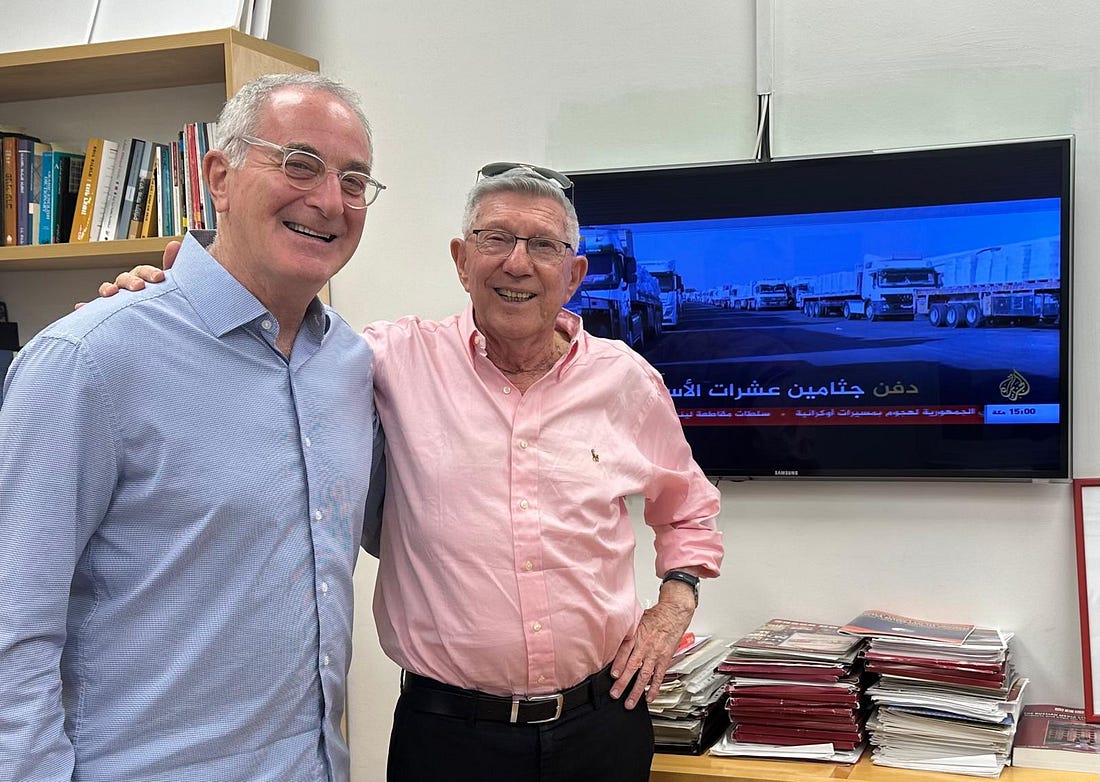
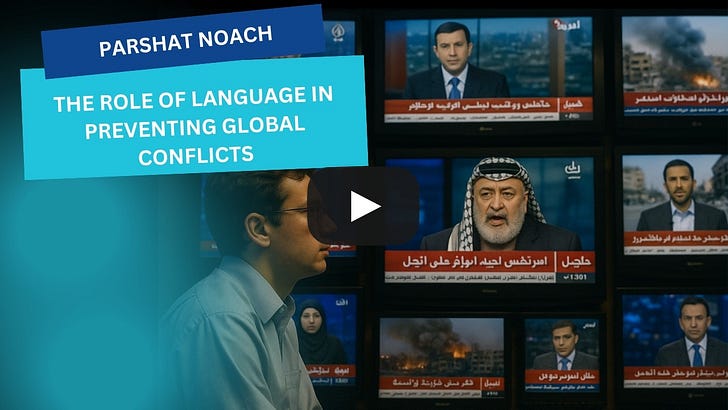 This week while in Israel, I had the privilege of interviewing and visiting Yigal Carmon, founder of the Middle East Media Research Institute (MEMRI). Those of you who follow the Madlik Disruptive Torah Podcast, know that we like to keep the conversation positive and that in general we are optimists. Especially, when it comes to Israel, I suppose we follow the adage of Ben Gurion, that “In Israel, in order to be a realist, you need to believe in miracles”.
If you listen to my interview of Yigal, you will note how many times I ask for an upside. I have listened to the recording a number of times and actually do believe that there are moments of light, but this week’s conversation is definitely about realism. Like the prophets of old, Carmon does not tell us what we want to hear but what he believes we need to hear. Yigal has been monitoring, translating and sharing the media of Israel’s enemies and neighbors for the last 27 years. His bio is below:
Yigal Carmon is president and founder of the Middle East Media Research Institute (MEMRI). He combines four different areas of expertise – intelligence, counter-terrorism, diplomacy, and research. Carmon is a colonel (ret) in the Israel Defense Force (IDF) intelligence corps. He was counter-terrorism advisor to two Israeli prime ministers heading governments from both Likud and Labor, overseeing the national deployment against terrorism. He participated in the 1991-1992 peace talks in Madrid and Washington as deputy head of the Israeli delegation negotiating with Syria. In 1998, he founded MEMRI, which bridges the language gap between the Middle East and the West by monitoring, translating, and analyzing the media of the Arab and Muslim world, in Arabic, Farsi, Urdu-Pashtu, Dari, Turkish, Russian, and Chinese media. Mr. Carmon has briefed Congress, the State Department, the Pentagon, the Department of Homeland Security, and the Department of Justice, in addition to the FBI, the National Security Council, and the Library of Congress. He has briefed the European Union, European Parliament, the UK Parliament, OSCE, NATO, and participated in conferences on counter-terrorism and diplomacy.
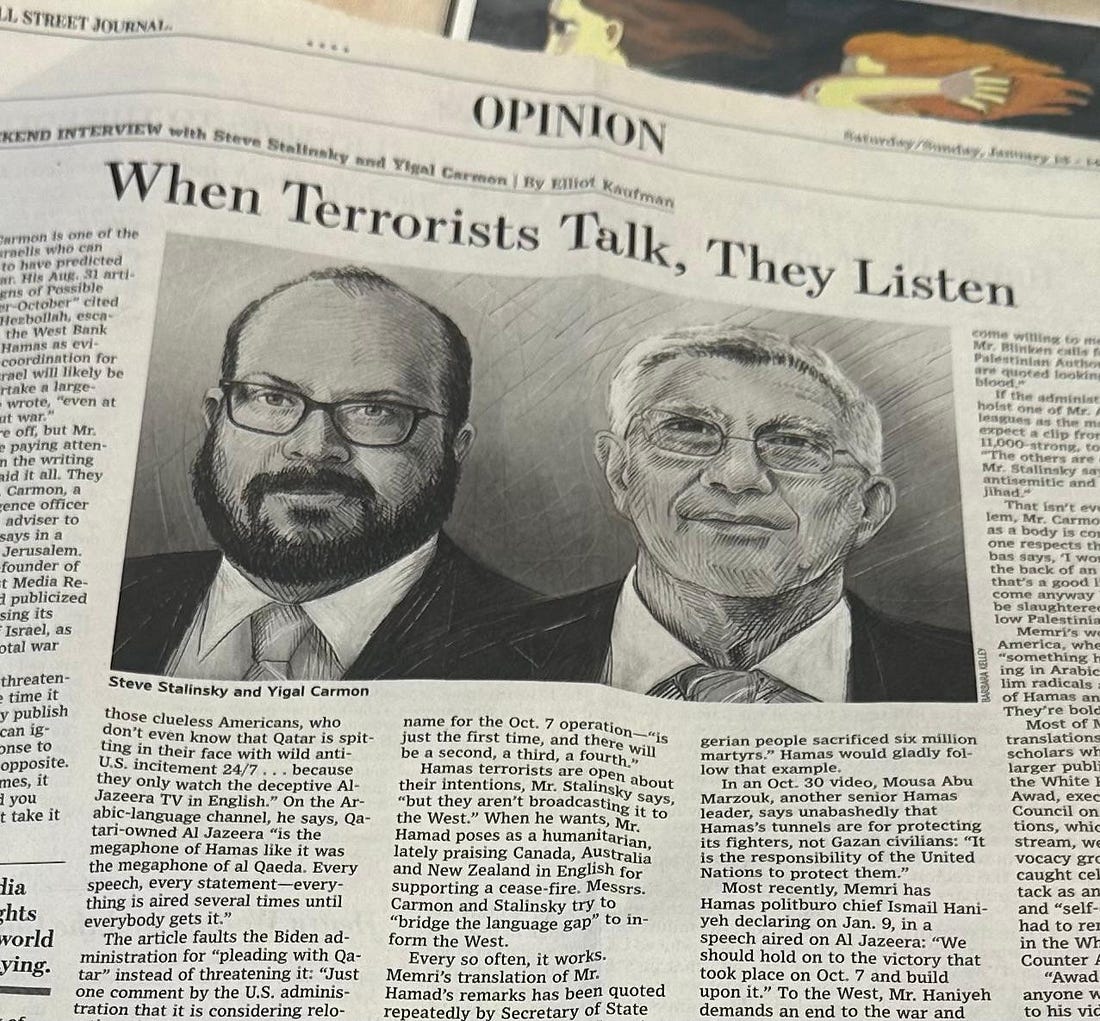
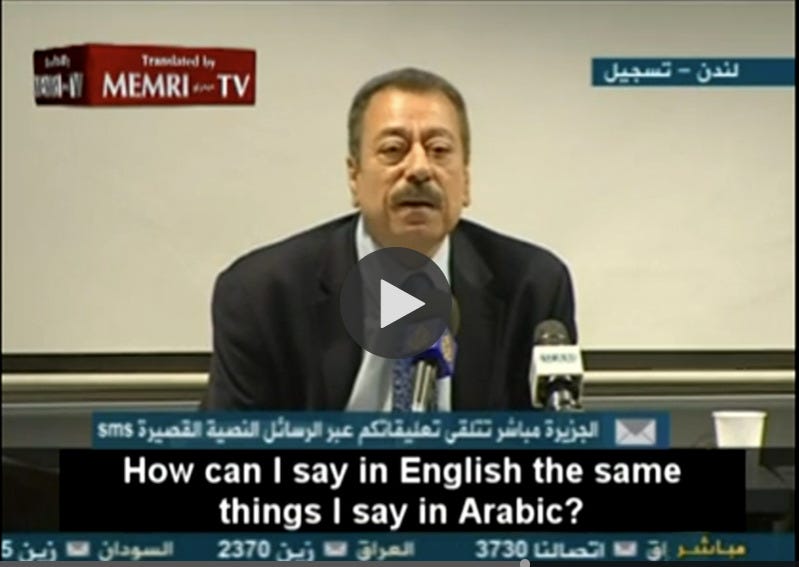
According to an article published one month before the October 7th War: “Carmon, ... wrote an August 31st 2023 article titled “Signs Of Possible War In September-October,“ in which he argued a “confrontation could result from an uncontrolled deterioration on the ground or from the use of new and unusually deadly weapons by these movements [Hamas and Hezbollah].” So he essentially predicted the Oct 7th War. See: Will Iranian Proxies Target Israel In September Or October? This week’s Torah portion, Parashat Noach, tells the story of the Tower of Babel — and we suggest that it is not so much about a tower as about the origin-myth of languages. Everyone on earth had the same language and the same words. Genesis 11:1 וַיְהִ֥י כׇל־הָאָ֖רֶץ שָׂפָ֣ה אֶחָ֑ת וּדְבָרִ֖ים אֲחָדִֽים One of the commentaries on the sin of the Tower of Babel writes that the sin was that these bad players wanted to give the impression that they spoke in one voice and wished to repress any difference of opinion and knowledge of their individual ulterior motives. Yigal shared with me a screenshot of Arab TV where the spokesman asks how he can say in English what he says in Arabic?
Yigal reflected that much of his career has been dedicated to giving our enemies and neighbors the respect of listening to what they actually say, in their own language and to their own audience, rather then listen to what they would have us believe they say. But in our conversation, Carmon describes his early naïve belief that translation alone could prevent conflict. That if the West could simply understand what was being said in Arabic, Farsi, or Turkish, then peace would follow. But he quickly learned otherwise.
He recalls how Putin’s 2021 essay, which denied Ukraine’s right to exist, was published and translated long before the invasion — and ignored. How Hamas broadcast its plans for the October 7th attack in plain sight — maps, training videos, and all — and still, the world looked away. The problem, Carmon insists, isn’t language. It’s ideology. It’s blindness by choice. Listening Beyond WordsIn the show notes, I make the case that translation (Targum), in the Jewish imagination, has always been sacred. We are told to read the weekly portion twice and the (Aramaic) translation once. שְׁנַיִם מִקְרָא וְאֶחָד תַּרְגּוּם (Berachot 8a). The Greek translation of the Torah is called the Septuagint because of a myth that 72 scholars were put in 72 separate rooms and all made the same (sanctioned) translation (Tractate Sofarim 1:8). According to Sanhedrin 17a members of the Sanhedrin must know all seventy languages in order that the Sanhedrin will not need to hear testimony from the mouth of a translator. According to the Rabbinic commentators, Mordechai was, like Yigal, able to uncover the bad players in his day; Bigthan and Teresh, because he was a member of the Sanhedrin and understood their language (see Ibn Ezra on Esther 2:21). Carmon takes that same principle into the modern world.
Listening — real listening — is not agreeing. It’s respecting the complexity of the other. And it’s not only about translating but also placing what one hears in context and appreciating the culture and religion and ideology of the speaker. Carmon accuses most of us of projecting our Western values and mind set on the Arab and Muslim world. We believed what Hamas wanted us to believe. That the two-year quiet before October 7th was that Hamas had turned a page and wanted to invest in it’s own people’s living standards by increasing Israeli work permits, rather than just exploiting our misguided projection of our values onto our enemies. It is a sobering picture. And yet, amid the disinformation and despair, Carmon still finds rays of light. He points to Abu Dhabi’s Abrahamic Family House — a shared space of mosque, church, and synagogue standing side by side — as a radical symbol of reform within Islam. He notes that Arab Israelis, in contrast to the outside world’s expectations, largely refused to join violent demonstrations after October 7th — an unspoken testimony to coexistence that few acknowledge. There are voices of moderation, he insists. Voices of courage. A Final WordIn our conversation’s final moments, Carmon looks back at Europe’s own dark centuries of tribalism, religious war, and empire. And he reminds us that peace once seemed just as impossible there — until it wasn’t.
The Torah teaches that God shattered language to save humanity from autocracy and group-think. Carmon teaches that the act of translation — and of contextual listening — remains our best defense. Sefaria Source Sheet: https://www.sefaria.org/sheets/682911 Link To MEMRI: Transcript: Geoffrey Stern: Picture a man watching television, not for entertainment, not for news, but for warning signs and maybe rays of hope. The studio lights flicker across his face as an anchor in Beirut, Cairo, or Tehran delivers a message to millions. To most Western ears, it is unintelligible, but to Yigal Carmon, it is a window that exposes a signal, a clue, a bridge, or a flashing siren. For over two decades, Carmon has listened more closely than almost anyone alive. As founder of MEMRI, the Middle East Media Research Institute, he understands that our neighbors and enemies do not speak with one voice, as they would have us believe when they speak to us in English. His analysts monitor sermons, speeches, and media across the Arab and Muslim world and decode them. What they uncover can warn of catastrophe or occasionally provide hope. And the Torah knew this. In the story of Babel, bad actors wished to speak in one tongue and use it to build a menacing tower. God’s response was not destruction but diffusion, to break the illusion of unity, to protect us from a single voice that could silence all others, and most of all, to discourage group think. This week in Parashat Noach, we read the Biblical origin myth of language. And in the process, we acknowledge Judaism’s infatuation with accessing language in the original and treating translation as a holy mission. Welcome to Madlik. My name is Geoffrey Stern, and at Madlik, we light a spark or shed some light on a Jewish text or tradition. Along with Rabbi Adam Mintz, we host Madlik Disruptive Torah on your favorite podcast platform. And now on YouTube and Substack, we also publish a source sheet on Sefaria, and a link is included in the show notes. This week, we read Parashat Noach. We are also honored to be joined by Yigal Carmon, founder of the Middle East Media Research Institute. Welcome to Madlik, Yigal. Yigal Carmon: Thank you. Thank you so much, Geoffrey. And thank you, Adam. Rabbi Adam, thank you. Geoffrey Stern: So I’m going to ask you to tell us a little bit about yourself, but because I’m afraid you might be a little bit humble, first I’m going to give your bio bio and then you can tell us about your personal journey. So you are the president and founder of the Middle East Media Research Institute called MEMRI. You combine four different areas of expertise: intelligence, counterterrorism, diplomacy, and research. Carmon is a colonel, retired in the Israel Defense Forces Intelligence Corps. He was a counter-terrorism advisor to two Israeli prime ministers, heading governments for both Likud and Labor, overseeing the national deployment against terrorism. He participated in the 1991-92 peace talks in Madrid and Washington. As deputy head of the Israeli delegation negotiating with Syria in 1998, you founded MEMRI, which bridges the language gap between the Middle East and the West by monitoring, translating, and analyzing the media of the Arab and Muslim world in Arabic, Farsi, Urdu, Dari, Turkish, Russian, and Chinese media. You have briefed Congress, the State Department, the Pentagon, the Department of Homeland Security, and the Department of Justice, in addition to the FBI, the NSC, and the Library of Congress. You’ve briefed the European Union, European Parliament, the UK Parliament, OSCE, and NATO, and participated in conferences on counterterrorism and diplomacy. It is an absolute honor and pleasure to have you. And now that I’ve given the official bio, Yigal, why don’t you tell us your personal story? Yigal Carmon: Thank you so much, Geoffrey, for inviting me and for giving me the chance. In fact, and this has to do a lot with what we will be talking about. I’m a child of Holocaust victims. I’m not calling it survivors but victims, although part of the family survived from Hungary, Transylvania. And my family, my grandparents perished in Auschwitz. My aunt, who was a beautiful woman, was not killed; she was used. And later on, she came to Israel and she actually took her life. Yigal Carmon: We were three kids in a village near the sea—Givat Olga. Some ministers came from there, but anyway. It was the 50s, and there were no hospitals for mental problems. So my aunt, she grew. We grew with her at home. There was no food. So my parents sent my older brother to a kibbutz. He went to Kibbutz Gesher. He went to the army with his girlfriend. Together they were already in a home. And he was in the air force. In April 62, he crashed. Yigal Carmon: They thought about the worst idea, that whenever he’s in the air, she will be in the control tower. Including that horrible day. So this is my background. I went to the army. I studied Arabic at the university and then the history of the Middle East. And from there in the military, it was the route to intelligence. And there I occupied several positions, also partially in the territories. I was an instructor in our National Defense College, teaching about the Arab and Muslim world. Yigal Carmon: My last office job was as an advisor to Shamir and to Rabin on countering terrorism, which I can say in two words, and everybody will understand what it is. The targets of terrorists are countless and in every country, in every place, including Israel, while the number of those who are fighting it, police, military, and intelligence, everything is minuscule. And how do you bridge this huge gap? This is the story of countering terrorism. So I go back to our. This is my brief story. Yigal Carmon: If you want to ask something about it, I’m ready to answer. If not, I will move to our Parasha. Geoffrey Stern: So I think you give a wonderful background to the Parasha because we are going to talk, as I said in the introduction, about the origin myth of language. And I think when you say that the enemies against us are infinite and our tools to fight the enemies are very finite and small, I think language is ultimately the tool that you found that enables us to understand. Understanding our enemies and potential friends is more important than any weapon. So, as we all know, the story of the Tower of Babel, what we might forget is because we focus so much on the tower that the tower is only a sideshow. The real story is language. It says “Vayehi kol ha’aretz devarim achadim,” that the whole land was one language. And “devarim achadim,” they were just single ideas, you might even say, and they were combining to create this tower because when you can pretend to be all one, you can do good, but you can also do terrible things. God felt threatened by this, and what he did, we’re not gonna get into the details, but he confused them by creating multiple languages. And one of the commentaries that Adam and I discovered in a previous episode is the Netziv. And the Netziv writes that really what the participants wanted to do was to give the impression that they spoke in one voice and they actually wished to repress any difference of opinion and knowledge of individual ulterior motives. When I was telling you that we were going to have this discussion, you shared with me a screenshot. And the screenshot, because I said we had no video on our podcast, it says it has a talking head, maybe an anchor of an Arabic news show. And it says, “How can I say in English the same things that I say in Arabic?” And I think that’s the essence of your discovery and insight. And maybe you can tell me the importance of piercing the veil that us outsiders believe exists, that the whole Arab world speaks in one voice. And they ultimately say what we want to hear. And how that group think can lead to all sorts of problems. In fact, the most important tool that we have is to open the hood and to give our enemies and potential friends the benefit of listening to what they really think and what they really say. Talk to us a little bit about the power of language. Yigal Carmon: Thank you. Because you opened the door for what I wanted to say. You know, we began our long travel with the idea of breaching the language gap. The idea was that if we only provide the information that is there in the Arab world into languages that people understand, then everything will be fine. We just have to give it in that language that they know. Little did we know. I will relate to history and to the present time. It is not enough for people to understand what is being said, and it’s said in deceiving ways. One in Arabic, one in English. But even when they get it right in their language, from the Arabic, do they listen? This is actually. It will turn to be a discussion of the limitation of language to impact people’s minds. I want to begin with something that the late renowned authority on the Arab and Muslim world, Professor Bernard Lewis, told me once: if only MEMRI existed when Hitler wrote his Mein Kampf, things would have been different. And this sentence could be also regarding other examples. And I’ll bring them in a moment. And he was wrong. He was wrong. Even when you give it to people into their face, they don’t listen. I want to move from our mission to history, but also to others. Four months before the war in Ukraine, Vladimir Putin wrote an essay himself. 4,000 words. We translated it in which he said, Ukraine is a historical fiction. There is no such thing as Ukraine. The kingdom of Russia in the 9th century was in Kyiv. So it’s nothing. Anyone in his right mind would understand what’s coming. Indeed, in four months, it came an invasion. If Ukraine is a historical fiction, this is what’s coming. No one listened, no one looked at it, no one wanted to. Geoffrey Stern: Let’s fast forward for a second. I believe that I read in the press that Hamas published their plans and actually were practicing the ultimate attack in plain sight. And I believe there was a great scholar from MEMRI who published an article a month before the attack, pretty much predicting it. His name was Yigal Carmon. Why don’t we talk about present time? Because I don’t think we need to go back that far. Yigal Carmon: Well, because had I known the past at the time, I would have done much more. But I did issue an early warning. On August 31, 2023, I published an early warning titled Sign of Possible War. In September and October, I was faced with attacks by colleagues, former colleagues, who told me, Yigal, stop with this racism. You cannot be defended anymore. When we did school books, we analyzed, translated, and analyzed school books in the Muslim world. People told me, is this. What nonsense are you dealing with? This is what you do in MEMRI. You know, I want to say, Geoff, we tend to think, and this is what I thought in ‘98 when we began, that the only thing you need to do is to provide it. We provided for years all the information about the planning in 2018. They provided a map with the routes to the settlement—not settlement, the communities—with the number of minutes to each one of them. They showed various videos of their training and how they attack communities. And those who didn’t want to listen simply closed their eyes and their ears and wouldn’t see anything. Geoffrey Stern: So, Yigal, is there a solution? You say that sometimes we see the writing on the wall right in front of us, and even if we translate, which is what you guys do, it still doesn’t help. Or we just have to learn the lessons of history and get the word out. Or is there a solution for this? Yigal Carmon: Well, I think that the problem is political or ideological in reason and not the problem of language. In my naiveté at the time, I thought it’s a problem of language, and if only we provided. Adam Mintz: Can I ask a question? Why is it that our enemy—who will be the enemy in each of these situations, why would they give these signs? If I was preparing for October 7, I would think that I would try to keep it a secret. Why would Hamas give these signs? I know you’re saying that Israel missed them, but I want to know what was Hamas thinking? Yigal Carmon: Yes. Well, on the one hand, they thought that by doing so, they are deceiving; there was a huge deception plan. And that they are saying, well, the Israelis, the Jews, that’s the case. The Jews would think if we do that, it’s not serious, it won’t happen. That’s one idea. They had this deceptive plan, but also because this is their ideology, because this is what they believe in, because they thought that this is the time to move ahead. And the idea that they are like anybody else, namely modern, Westernized, they would not launch something that has no hope to succeed. They don’t have an interest in it. I will quote our former head of military intelligence. On October 7, it was already in the inside. He said there is no need for signs, early signs. It’s enough to look at the interests. Well, and you were head of intelligence. Your life is signs. Early signs. But the interest. Let’s go back to the interest because this is what you are asking about. Their interests are different than our interests. Who told you that it’s one interest for all human beings? No, it’s not the same interest. Who told you that it’s the same situation for them and for us, and that all that they want is to flourish? You know, there is a big, huge, huge, huge line about Gaza before October 7, and we published it in abundance, that there was a humanitarian crisis. There’s hardly a bigger lie than that Gaza was flourishing. We showed it in videos, BBC, Al Jazeera, influencer. The son of Haniya said, and Gaza was the most beautiful city. You couldn’t believe this is Gaza; that’s the son of Haniya. But our people said, oh, all they want is a good life, good life, because this is what we want. Well, there is a difference. And for that, you have to take in a different ideology, a different set of beliefs. And if you don’t do that, you don’t understand that no translation will help. Geoffrey Stern: I think what you’re saying, Yigal, is it’s not enough to listen to language, even if it’s the language spoken in its original. You have to look at the context. You have to look at the contents of the culture, of the religion, the whole person. You have to look at the tics, you have to look at their expressions. And that actually is how you and I talk. We’re looking at each other now. It’s not the same as if I was reading a transcript of this conversation. So I think it really means that we have to look deeper. We can’t say that translation by itself is worthless, but it is only the beginning of a window into the other. And I think at the end of the day, another way of saying what you’re saying is for those who will really are concerned about the Palestinians and about our neighbors, to give them due respect, you have to listen to them first. And projecting our Western values on them is the ultimate crime. You could even call it colonialism. If we project our own Western ideas, we have to listen to them. And I was looking through your site. I want to segue into something a little bit more positive now. I saw on your website where you had recent snippets that were on TV around the Arab world, where the interviewer would say to somebody from Hamas, do you regret what happened two years ago on October 7? Do you feel that the casualties that were incurred are your fault? And you run the whole clip. In one of them, the Hamas spokesman says, this is the end of the interview. Turn off the camera. Have you no respect? In another, he mumbles something. And I think probably the intent of these clips is to show that Hamas is really bankrupt, as if we didn’t know it. But what interested me was the way the questions were asked by the reporters. They were saying, the Arab street is asking. We are asking, was this worth it? And I’m wondering if there is any silver lining that you can find and uncover as you listen to broadcasts and social media where the Arab world is looking at 70 years of conflict with Israel that has produced nothing except death and resources thrown away that could be spent on their own people. Do you find the beginning of a sentiment where they’re starting to ask these types of questions of Hamas and the Muslim Brotherhood? Is there any light at the end of the tunnel? Yigal Carmon: Of course there is, Geoff. And it is with those who are moving to Westernization. Take the Emirates. The Emirates have established in Abu Dhabi a compound with a mosque and a church and a synagogue. I spoke to this synagogue. This is in total contradiction to Islam. Muhammad said, no two religions, Yigal Carmon: and then they put three, not two. There are liberals and reformists. We are exposing all the, quote, unquote, bad guys, but we are exposing all the good guys. And there are many. And they live more safely in Abu Dhabi and in Saudi Arabia than in Paris or Berlin or any country in the West. London, which is Londonistan, Yigal Carmon: which is ruled by the Islamists. So there are people, there are voices. Unfortunately, the west gives more voice, more importance, more legitimacy to those who pretend to represent the Palestinians more than they do themselves. Look, Hamas took over by force on June 2007 in Yigal Carmon: a coup. They threw people from the windows. Now I want to say something about the difficulty in accepting Israel. The problem is huge. This was our land, and this was the kingdoms and the Temple and its Temple Mount to this very day. The name and even the Mufti. Haj Amin al Husseini, in 25 did a Yigal Carmon: tourist publication and he said, this is the place of Haikal Suleiman, the Temple of Suleiman, that is Shlomo, King Solomon. So it is a situation that it was what it was. And then we went to the Diaspora and other people came, and gradually, and especially in the Yigal Carmon: last hundred years, 150 years, many came from many places. It’s obvious by their names that relate to the city or country where they came from and this became their homeland. So it’s very difficult for them, as much as it is difficult for us to give it up. Geoffrey Stern: Does it work both ways? Do our neighbors get to see Israeli TV or Israeli media? Do they get to see, with all its imperfections, our democracy in action? The debates held in the Knesset? Do they need a MEMRI as well? And is there in, but behind closed doors, do they ultimately respect the fact that Israel is the only democracy in the Middle East and the only really functioning government with elections and all of the other dirty parts of being a democracy, but nonetheless a democracy, well, they. Yigal Carmon: See it and they learn it. And the Arabs in Israel, who know very well what is Israel and how it can impact their life. We have to mention that they did not take part in the big celebration of Palestine from the river to the sea. There were no demonstrations, there was no violence. There were those who are connected to the jihadis or others in the Arab world who wrote in the social media, but there were no demonstrations. Geoffrey Stern: I think that’s the story that doesn’t get told. I think we talk about translation. What didn’t happen amongst Arab Israelis during the last two years is one of the stories that does not get told. I want to close with some quick questions. Iran. We always hear that the people of Iran have a deep history of the West and of democracy. Is there any chance of regime change? Or is this just another example of us Westerners projecting our hopes and aspirations on another culture? Yigal Carmon: The story of Iran is complicated. Iran is made up of 50%, 52% of Farsis Persians and 48%, almost 50% are of different ethnic minorities. Baluchis in the east, Arabs, Ahwazis south of with all the oil resources. Then Yigal Carmon: you have the Kurds in the west, and then in the north, the Azeris. And they make up 48% or more, a little more so. And they are looking, the first three are looking for their own autonomy, even independence, even they want to have their own life as a call it minority, call it an ethnic group, especially the Yigal Carmon: Kurds that have others in Iraq and in Syria and in Turkey. Now the hope, our hope would only be if these minorities, ethnic groups are given their rights and diminish the dreams of the Persians that are now covered with Islamism, with Shia to take Yigal Carmon: over their place in the world. The way they perceive it, the Persians are the problem. You know, some Persians in America, they are for democracy in Iran, but not for those ethnic minorities. They are for freedom from the Ayatollahs. But these ethnic groups should stay with us, even if they don’t want to. Yigal Carmon: It’s very complicated, Geoff, extremely complicated. But for Israel the best and for America the best solution is to grant these ethnic group support and have the Farsis, the Persians, struggle with the status of not an empire. From the time of Cyrus, where he controlled Yigal Carmon: also Yehuda and the land of the Jews and gave them the permission which we celebrate to go back, this is over. They have to adapt to being like all the empires of the West. Britain, France, Spain, Portugal, who wasn’t an empire, the Austro-Hungarian, they were all empires. They gave it up. They simply gave it up to be their Yigal Carmon: own home culture, nationality. Then they united as a the European Union, but voluntarily and with benefits. This should be the fate of Iran and only through this we will have peace. Geoffrey Stern: In terms of Lebanon, there’s obviously been a sea change there. With Hezbollah seemingly not in control and the potential for the great society that existed beforehand. It used to be Beirut was the Paris of the Middle East. Are you monitoring? I’m sure you’re monitoring their media and their press too. Are they finding their old voice again or again? Am I projecting? Yigal Carmon: No. When the colonial powers left, they created an impossible political structure. In 1911, the Italians united Tripoli and Benghazi and Fezzan. You cannot unite them. You could through a dictatorship, the King, Sanusi, and then Gaddafi. It doesn’t work anymore. They are Yigal Carmon: split and nothing can unite them. In Iraq, at the time of the Ottoman Empire, there were three vilayets, three main districts, Basra for Shiites, Baghdad for Sunnis and Mosul for the Kurds. But the British united them by force. What happened? All crumbled down. Except at the time Yigal Carmon: of Saddam Hussein, he held them with fire and blood and sword, and they held as long as they could. And then it crumbled down. The Iranians helped and it became, whatever it is, a non-entity political nonentity. Now in Lebanon, they brought together Shiites and Christians and Sunnis into a mishmash of one state. Yigal Carmon: It crumbled down. There was the war in 75, and now. And of course, the Shiites got support from Iran and became the strongest power. Now, because there is an Israel that fights Hezbollah, they have to adapt somehow to a different structure where they are not the power. And it seems Yigal Carmon: to be working, but it doesn’t really work. And the American ambassador in Turkey and in Lebanon, Tom Barak, is trying his best to appease Hezbollah, just to have a situation that the President will not have to struggle with an insagration of violence. This doesn’t help. Speaker A: Hezbollah has to be finished off. Otherwise, there will be no Lebanon, no Lebanon of the others, of the Christians, and the Shiites, the Hezbollah. The Shiites will not come together because they feel they have the support of Iran, and they will have it one way or another, back like it was in ‘82. So you don’t see what you hope to see. Unfortunately, Job, Yigal Carmon: you don’t see it. It’s a situation on fire. Sometimes it blows up against Israel, sometimes against, well, the Syrian terrorist is trying to enter. Sometimes this thing that the colonialists did, the French, to bring together, like the Italians in Libya, like the British in Iraq, Yigal Carmon: it is forced on people and it cannot work. Geoffrey Stern: So you don’t see a light at the end of the tunnel. I guess we just live in a very bad neighborhood that was really, I guess, ruined, as you have it, by the colonialists who sliced and diced it in a way that every country almost was divided by different ethnic groups to ensure that there would be no stability. It was almost designed like the Tower of Babel to fall from the get-go. And that. That’s a very, I think, depressing picture. Is there any hope at the end? Yigal Carmon: There is hope. Europe a few centuries ago was all battling each other. Were there any better? All tribes, all empires, they were fighting each other. The Germans, the French, who didn’t fight internally and between each other. This was the face of Europe. And then after World War II, they decided that enough is enough. The culture allowed for it. The Christian situation, the role of the Pope, who at some point in the past was sending armies to the Holy Land. Armies? No, not anymore. There are soldiers there to protect, and they are assured that tourists are watching and no more. Europe was in no better situation. It was enough fighting. Look at France, all kinds of galleys. Every country, Italy, is divided between so many elements, and yet they are together. They prefer now life and good life over anything else. And the religion helps them. In our case, the religion of Islam doesn’t help. To the contrary, it is fighting. So they have to go through a process of Westernization, of giving less importance to religion. It is tough, but it will happen. We just have to live and see 200, 300 years. Geoffrey Stern: Okay, well, at least we’ll be on record. They’ll look up the podcast and they’ll say that you were right, and please God, it’ll come sooner rather than later. But thank you for joining us and thanks for the important work that you do. You know, sometimes the truth doesn’t sound so good, but it has to be said. And I think that you, like the ancient prophets, are telling, have a message that might not be that optimistic in the short run and is sobering, but is important to hear. And thank you for sharing it with us and keep up your important work. Yigal Carmon: Thank you, Geoffrey.
|
Wednesday, 22 October 2025
Lost in Translation: How Hamas Fooled the World




Subscribe to:
Post Comments (Atom)
The 'Hear Her' Training workshop is back!
We will be running an online training workshop in March for women who want to learn more about running for election ...

-
Dear Reader, To read this week's post, click here: https://teachingtenets.wordpress.com/2025/07/02/aphorism-24-take-care-of-your-teach...
-
A slightly unconventional guide to your first time ͏ ͏ ͏ ͏ ͏ ͏ ͏ ͏ ͏ ͏ ͏ ͏ ͏ ͏ ͏ ...


No comments:
Post a Comment