High on the Dust That LandedInside Roosevelt Island’s newest contradiction: a doctor’s office becomes a dispensary while the state agency next door pays rent to its own landlord—and residents choke on the dust of “progress.”
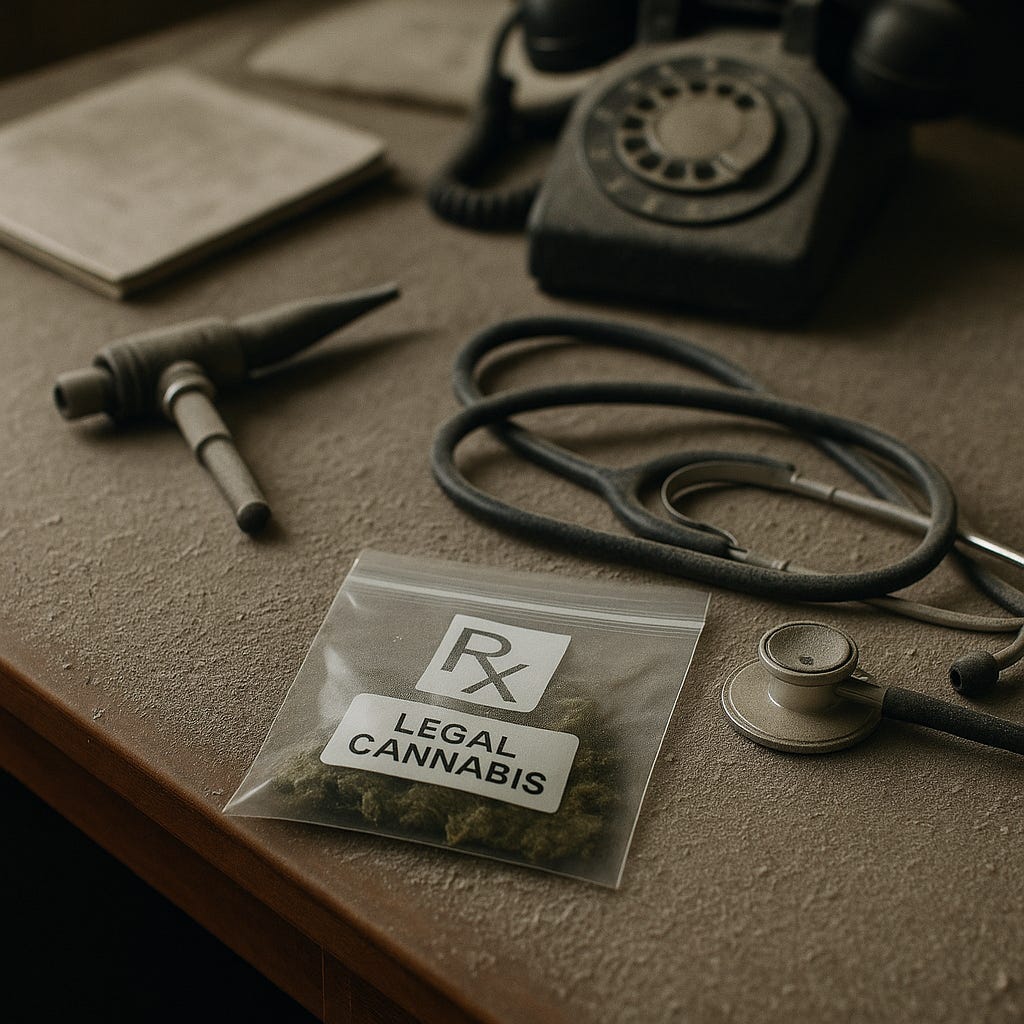
The dust drifts quietly across Main Street, pale as ash and just as unsettling. It clings to the benches outside the library, to the swings in Blackwell Park, to the fingertips of children who play where no one seems to clean anymore. Residents call it “foam dust” from renovation work at the Roosevelt Landings complex—bits of insulation blown loose, flecked with fire retardant and whatever else keeps cheap material from burning too fast. One neighbor wrote RIOC and Council Member Menin about it. No reply. This is where Roosevelt Island’s newest “wellness” story begins. The doctor’s office that healed the island—until it didn’tFor decades, 520 Main Street was where people went to get better. Dr. Jack Resnick practiced medicine here long before Roosevelt Island’s skyline learned to glow blue at night. His partner, Dr. Grimm, stayed on longer—an island loyalist, part clinician, part confessor. When Resnick retired in 2023, the door closed quietly. The island lost its doctor, but Hudson-Related, the developer that controls Main Street’s retail under a state lease, promised a replacement. David Kramer himself told RIOC’s Real Estate committee they’d restore a proper medical office. RIOC offered to help; Kramer declined. “We’ll handle it internally,” he said. Two years later, that same address is slated to become a cannabis dispensary. A legal one, allegedly. Except it probably isn’t. State law forbids dispensaries within 200 feet of a house of worship and 500 feet of a school. The Chapel of the Good Shepherd sits less than half that distance across the street. The playground behind it hosts Island Kids programs. The library garden next door still glitters with foam dust. To lease a dispensary here requires more than a permit. It requires pretending geography doesn’t exist.
The landlord next doorNext door at 524 Main, the Roosevelt Island Operating Corporation is unpacking boxes. After years of staff complaints about mold, leaks, and dead air inside Landings, RIOC moved its headquarters into this freshly renovated storefront. The rent: $75,000 a year, paid to Hudson-Related. RIOC staff are understandably relieved to breathe cleaner air, but the deal raises its own questions. Will this rent simply wash out against Hudson-Related’s payments to RIOC? Or will it serve as a quiet adjustment to the totals—another internal ledger shuffle disguised as progress? Inside the agency, few know for sure. Outside, the tenants of Landings are still breathing the dust RIOC left behind. Who gets a deal, who gets the dustThe Main Street “renaissance” was sold as a cure for economic stagnation. In 2011, Hudson-Related promised a $900,000 base rent to RIOC, escalating 2% for five years, 2.5% thereafter. By 2025, that math lands around $1.24 million a year. RIOC’s own audits confirm the formula. But inside those numbers hides a different equation: who matters enough to be saved.
Hudson-Related’s stewardship has never really been about retail success. Main Street was a chess piece in the game of Southtown development: control the corridor, control the narrative. Whether a store sells anything is secondary to whether it behaves. The renovations that make people sickMeanwhile, back at Landings, the foam keeps falling. The management company—same orbit of ownership—has ignored resident complaints for months. The white dust coats playgrounds and library gardens. No one has tested it. No one has cleaned it. RIOC employees who endured years of mold in those buildings are grateful to have escaped, but their new comfort doesn’t change what the rest of the tenants breathe. Renovations that should have healed the complex are now poisoning the air, literally and politically. The dust ties everything together: the uninspected construction, the shuttered clinic, the silent landlord, the agency paying rent to its own sub-landlord. All part of the same neglect cycle that Eleanor Rivers called out last week in The Absent Landlord. Her writing is usually where exhaustion meets grace—measured, observant, sometimes almost wistful. This time there was no charm left to spend. Just precision and grief. She wrote like someone tired of forgiving the same failures. And she wasn’t alone. The small poll we tucked at the end of her piece showed it clearly—not one reader supported turning the doctor’s office into a dispensary. Zero. Yet RIOC, as it did with the infamous “RI” sign, will likely pretend the numbers don’t exist. The hope, faint as it is, is that this time indifference isn’t just immoral—it’s illegal. The 200-foot law still means something, even here, beneath the dust. The new “wellness” economyHudson-Related’s first great pitch was civic revival. The second, if this dispensary proceeds, is pharmacological irony. The developer once promised medical care; now it promises retail therapy. No doctor to treat the coughs from foam dust. No nurse for the seniors still in Landings. But soon, perhaps, a budtender across from the church. Main Street will glow green instead of sterile white. The dust will settle, as it always does—into lungs, ledgers, and memories. If you can taste the dust, you deserve to know who’s stirring it up. Subscribe for free to receive updates on new posts and support our work.
|
Friday, 7 November 2025
High on the Dust That Landed






Subscribe to:
Post Comments (Atom)
The Steam Tunnel Repair That Disappeared
RIOC studied it, designed a repair, called it a public-safety problem and repeatedly placed millions of dollars into its capital plans. T...

-
Dear Reader, To read this week's post, click here: https://teachingtenets.wordpress.com/2025/07/02/aphorism-24-take-care-of-your-teach...
-
A slightly unconventional guide to your first time ͏ ͏ ͏ ͏ ͏ ͏ ͏ ͏ ͏ ͏ ͏ ͏ ͏ ͏ ͏ ...


No comments:
Post a Comment