
The Torah introduces one of its strangest ideas in the book of Leviticus: tzara’at—often translated as “leprosy.” We tend to think of it as a disease of the skin. But that’s only part of the story. Because tzara’at doesn’t stop at the body. It spreads. To clothing.
🧱 A House That Becomes AfflictedIn Leviticus 14, the Torah describes a case where the walls of a home begin to show signs of affliction. The כהן is called. And if the condition persists:
On its face, it sounds like destruction. A “Glad Tiding”But the Rabbis read the same verses—and see something radically different. Rashi, quoting Midrashic sources like Vayikra Rabbah and the Sifra, makes a startling claim: This was an announcement to them that these plagues would come upon them (Sifra, Metzora, Section 5 4; Horayot 10a), because the Amorites concealed treasures of gold in the walls of their houses during the whole 40 years the Israelites were in the wilderness (in order that these might not possess them when they conquered Palestine,) and in consequence of the plague they would pull down the house and discover them (Leviticus Rabbah 17:6). ונתתי נגע צרעת. בְּשׂוֹרָה הִיא לָהֶם שֶׁהַנְּגָעִים בָּאִים עֲלֵיהֶם; לְפִי שֶׁהִטְמִינוּ אֱמוֹרִיִּים מַטְמוֹנִיּוֹת שֶׁל זָהָב בְּקִירוֹת בָּתֵּיהֶם כָּל אַרְבָּעִים שָׁנָה שֶׁהָיוּ יִשְֹרָאֵל בַּמִּדְבָּר, וְעַל יְדֵי הַנֶּגַע נוֹתֵץ הַבַּיִת וּמוֹצְאָן (ויקרא רבה י"ז):
Why? Because the Canaanites who lived in the land before Israel:
And when the walls are broken open—
A House With a PastLater commentators deepen the idea. The Kli Yakar notes that this law applies specifically to houses that are inherited, not newly built. עַל פִּי שֶׁלְפִי פֵּרוּשׁ רַשִׁ״י שֶׁפֵּרֵשׁ שֶׁהָאֱמוֹרִיִּים הִטְמִינוּ מַטְמוֹנִיּוֹת כוּ׳ אֵין זֶה קוּשְׁיָא, כִּי נָקַט ״אֲחֻזַּתְכֶם״ לְמַעֵט הַבָּתִּים שֶׁיִּבְנוּ שָׁם יִשְׂרָאֵל שֶׁאֵין שַׁיָּכוּת לְטַעַם זֶה Only a house with a past can become afflicted. The message is clear:
One Rabbi suggests a progression:
One who speaks lashon hara—first, the walls of his house begin to change. If he repents, the house is purified. If he persists in his wickedness until the house must be demolished, then the leather items in his house—those on which he sits and lies—begin to change. If he repents, they are purified. If he persists in his wickedness until they must be burned, then his garments begin to change. If he repents, they are purified. If he persists in his wickedness until they must be burned, then his skin changes—he becomes afflicted with צרעת, and is set apart and publicly marked, alone—so that he will no longer engage in the conversation of the wicked, which is frivolity and lashon hara. Birkat Asher Leviticus 13:1:6 As if to intuit an English phrase from the 19th century:
🏺 The Wall as ArchiveArchaeologists have a word for this: spolia. Fragments of earlier buildings—stone, sculpture, everyday objects—reused and embedded into new construction. What was once dismissed as rubble is now understood as:
Proof that buildings are not built from scratch—
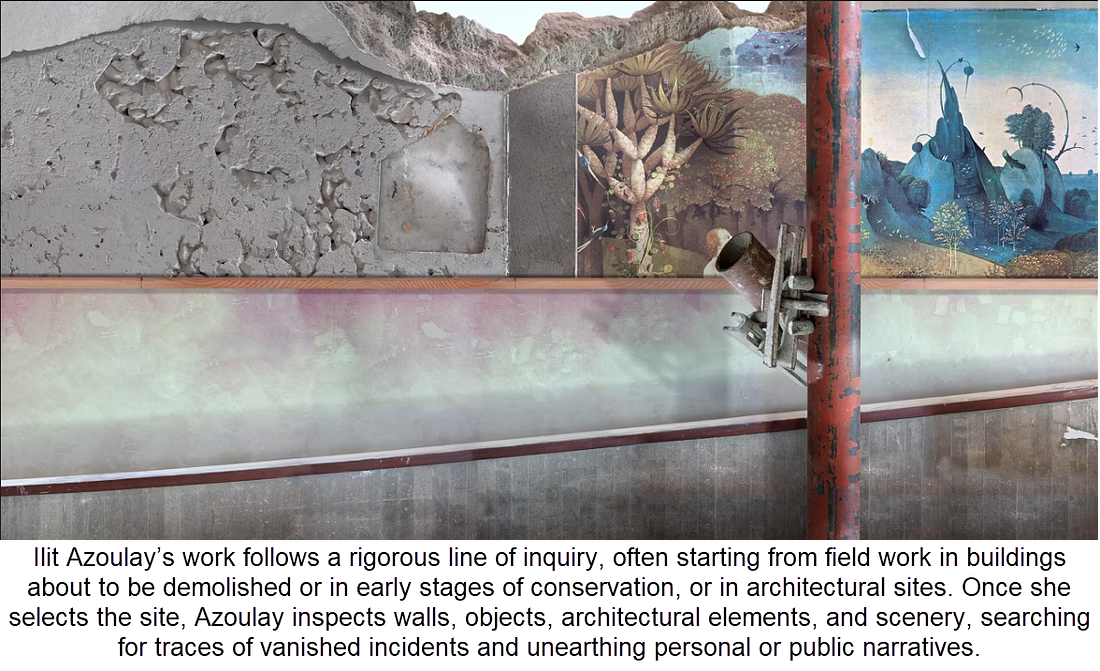
The Land of Israel is the one place where: History matters more Memory is not optional Ownership is theologically charged So when Israel takes possession of the land, the Torah insists: You don’t just move in. You reckon. Biblical leprosy of houses is not about disease. It’s about historical consciousness. Ilit Azoulay and the Discipline of LookingThis is where the ancient intuition of the Rabbis meets the work of Israeli artist Ilit Azoulay.
Azoulay doesn’t photograph buildings. She photographs what buildings are made of. Using a macro lens, she captures thousands of fragments— Not a building as we see it.
Tel Aviv: Walls Built from FragmentsIn a conversation in her studio, she told me about exploring demolition sites in Tel Aviv. Buildings from the 1930s and 40s— Materials were limited. So builders used whatever they could find:
Mixed into the cement. Hidden בְּקִירוֹת בָּתֵּיהֶם.
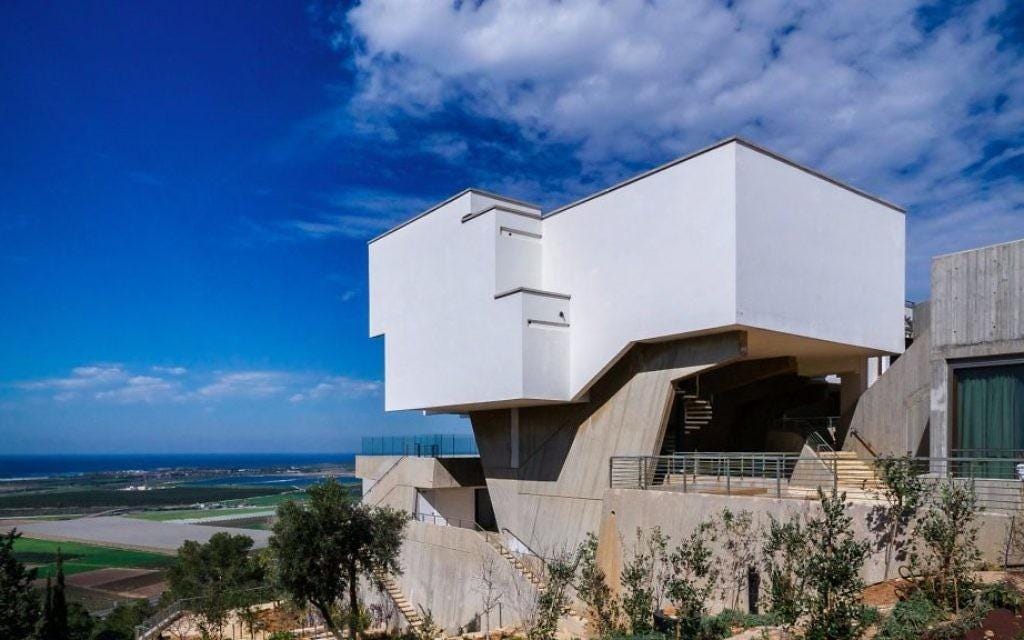
Zichron Ya’akov: A Darker LayerHer series Imaginary Order follows the renovation of a Brutalist structure in Zichron Ya’akov—the Elma Arts Complex.
A building with many lives:
No visible trace of those interrogations remains. No sign on the wall. And yet:
I actually had a very negative and visceral experience in this building with an amazing vista of a view and, in classic Brutalist fashion, no windows. I came there for a concert and broke into a sweat and couldn’t wait to leave. When I described my experience to Azoulay she explained the dark history of the building and disclosed that the photo I had purchased years before was from that building.
Breaking the WallThe Torah’s כהן and the modern archaeologist—and Azoulay the artist—share a method: They open the wall. They remove surfaces.
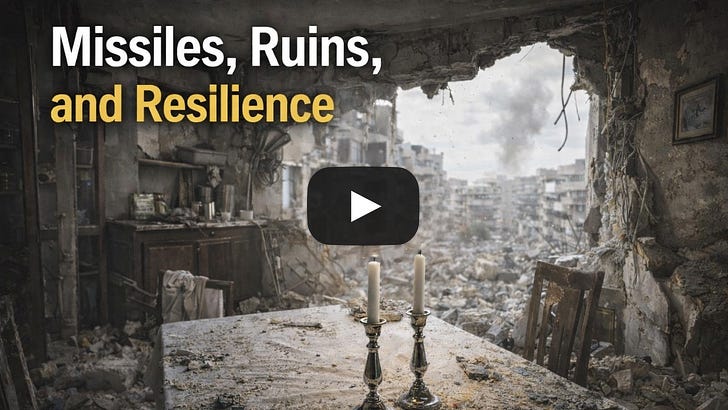
A Different Kind of RuinToday, across Israel, we are confronted with images of homes torn open by war. Walls exposed. It is hard—almost impossible—to speak of a message (besurah) let alone a good message (besurah tovah) in such a moment. A Different Kind of TreasureAnd yet, the Rabbis challenge us to look again. Not for gold. But for something deeper. For the evidence of those who came before:
Final ThoughtThe Rabbis called it a besurah—a message. Not because the breaking isn’t real. But because sometimes:
Madlik NoteThis essay accompanies this week’s episode of Madlik Disruptive Torah on Parshat Tazria–Metzora.
|







Really enjoyed reading this, thanks for sharing your thoughts! register pvt ltd company
ReplyDelete