
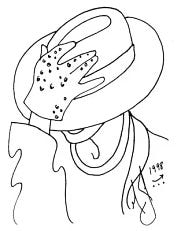
Envy. Now that’s an ugly word, isn’t it? When we think of envy, all things green, ugly and almost appalling comes to mind. It is one of those feelings we would rather not admit to having, and yet I couldn’t help noticing just how prominent it has become, especially in this day and age. We have all been guilty of it. We watch someone else get the promotions we wanted. We see someone living the life we believe they don’t deserve. We’d scroll through our phones and find ourselves wondering why they have what we don’t. Sometimes, it is even worse when we convince ourselves that they haven’t worked nearly as hard for it as we have. Envy brings out the worst in us, but it’s such a human feeling. It’s so human, that I believe there are times when we think that we’re above that feeling. We don’t even bother acknowledging it. We simply sit there in denial, convincing ourselves that they simply can’t be all that. That they aren’t as talented as we thought. That their success isn’t quite as impressive as everyone makes it out to be. That maybe they didn’t really deserve what they got. Anything really, to make ourselves feel a little less inadequate for wanting what they have. For feeling envious. Envy is hardly a new human feeling, either. It has been discussed for centuries, even in religion and literature. Dante Alighieri, in The Divine Comedy, places envy among the seven deadly sins being purged in Purgatorio. On the second terrace of Mount Purgatory (the fact that I had to research this after finishing this after so long), the souls guilty of envy have their eyes sewn shut with wire. A particularly gruesome punishment of a sin so closely associated with what we see in others and yet, I couldn’t help but notice something almost poetic about that. Envy is such an ugly feeling, but it imperative to remind ourselves that it’s also an extraordinarily human one. One I couldn’t help but think a lot about, lately. But what if envy doesn’t always have to bring out the worst in us? What if we could use that ugly feeling, and turn it into something…useful instead? After all, if you can’t beat ‘em, join ‘em, right? We just have to figure out what they’re doing that makes us wish we were them in the first place. Logically and evidentially, not emotionally. So I recently finished Michael Jackson’s autobiography, Moonwalk, which was edited by Jacqueline Kennedy Onassis—yes, the great Jackie O herself. She also wrote the foreword. Now, that’s aura. Imagine having Jackie O as your editor. I actually picked up the book because my sister persuaded me to read it, insisting that it would change the way I think. Naturally, I was skeptical at first since my sister is a very devoted Michael Jackson fan, so I assumed that she was simply recommending it because she loved him and wanted someone to discuss the book with. But I was wrong. One of the things that struck me most about the book was the way he seemed to think about his own work. Even someone as extraordinarily successful as Michael Jackson could look at everything he had accomplished so far and still feel that there was more he could do. More he could learn. More he could become. And mind you, he wrote this during his Bad era. After Thriller had become a worldwide phenomenon, after it was established that he is the one of the biggest stars in the world. Literally after he had turned the moonwalk into one of the most iconic dance moves in popular culture, to this day. Yet somehow, he still didn’t seem to be satisfied with simply being great. He was still looking for ways to be better. There was this constant desire to improve. To look at other artists, past and present, and study what they were doing. What worked and what didn’t. What he could learn from them and do it differently. And that made me think about envy in a different way.
Because perhaps, the feeling itself isn’t always the problem. It is what we actively choose to do with it. The reason why envy hurts so much in the first place is because it touches something insecure within us. Someone else’s success becomes a reminder of what we don’t have, and suddenly, their happiness feels like an indictment of our own lives. In other words, that insecurity causes us to be bitter, as we look for ways to diminish their success instead of celebrating them. But after reading Moonwalk and probing a little into the way Michael Jackson thought about his own work, I began to realize that perhaps there is another version of envy. One that, if we’re simply honest with ourselves, can be incredibly revealing. Instead of diminishing someone’s success or fixating on their downfall, we should simply ask ourselves: Okay. What can I learn from them? Because there will be days when I look at the people around me and feel that familiar sting (I’m only human, after all). I’ll see people who can write and publish book after book at an age when I’m still figuring out what writing route I’m taking. People who can sit down at a piano and improvise so naturally, as though the music simply appears beneath their fingers. People who have found the loves of their lives, gotten married somewhere around my age, thrown these beautiful, lavish weddings surrounded by their loved ones, as if they’ve had all their lives figured out while we’re still here, reading the instructions. Sometimes, I admit, I do envy them. I could pretend I don’t. I could tell myself that their books aren’t that impressive, that I’m not interested in marriage yet anyway, that their wedding was unnecessarily extravagant, or that being able to improvise on the piano isn’t really that important. These things would certainly make me feel better, for a short period of time. But it certainly wouldn’t make me better. So instead of dwelling on my insecurities and allowing myself to become bitter, I’ve been trying to do something healthier with that ugly feeling. I’ve been asking myself, “Okay, what can I do about this? What is actually within my power? How can I improve?” Because I certainly don’t want to be bitter. I’m old enough now to start thinking about the legacy I want to leave behind, the kind of impression I want to make on the world. And being someone who is unkind, insecure and thrives on making other people feel like they have to tread carefully around me, is not the kind of person I want to become. I want to try as hard as I can to achieve the things I want. I want to write and publish the books I’ve been trying to write, one day. I want to learn the things I still don’t know. I want to become better at the things I care about. And if I fail, then that’s okay. Because at least I’ve tried. I would rather live with the disappointment of having tried my best and failed than sit on the sidelines, watching everyone else move forward and grow increasingly bitter that their lives aren’t mine. At least, this is what I’ve learned from envy: I don’t have to hate someone for having what I want. I can simply let their success show me what I want for myself, then actually do something about it.
And that’s what innocence is. It’s simple and trusting like a child, not judgmental and committed to one narrow point of view. If you are locked into a pattern of thinking and responding, your creativity gets blocked. You miss the freshness and magic of the moment. Learn to be innocent again, and that freshness never fades. - Michael Jackson, ‘Dancing the Dream’. Sincerely, Cherie. The Whiffler is free today. But if you enjoyed this post, you can tell The Whiffler that their writing is valuable by pledging a future subscription. You won't be charged unless they enable payments.
|








No comments:
Post a Comment