
Welcome to saigonsays
Don’t recognize this sender? Unsubscribe with one click
Tim Bishop recently imported your email address from another platform to Substack. You'll now receive their posts via email or the Substack app. To set up your profile and discover more on Substack, click here.
My daughter, Flo, is currently reading The Bell Jar. She’d seen that a movie adaptation is in the works for 2027 and, being a bookworm as well as a Billie Eilish fan, this was the perfect storm. We chatted about the book and its author, Sylvia Plath, over a coffee yesterday. Plath was a poet before she became a truly iconic writer. Her Collected Poems won the Pulitzer in 1982, the first time it had been awarded posthumously. However, it’s her one novel that made her a household name. Generation after generation of eighteen-year-olds have picked up The Bell Jar and been gifted lifelong memories from doing so. Me included. The flashback I got, chatting to Flo, was when I re-read the book’s opening line and became instantly transported back to when I was a teenager, and the specific time my English teacher used those 23 words as the perfect example of how to write an opening line of a story:
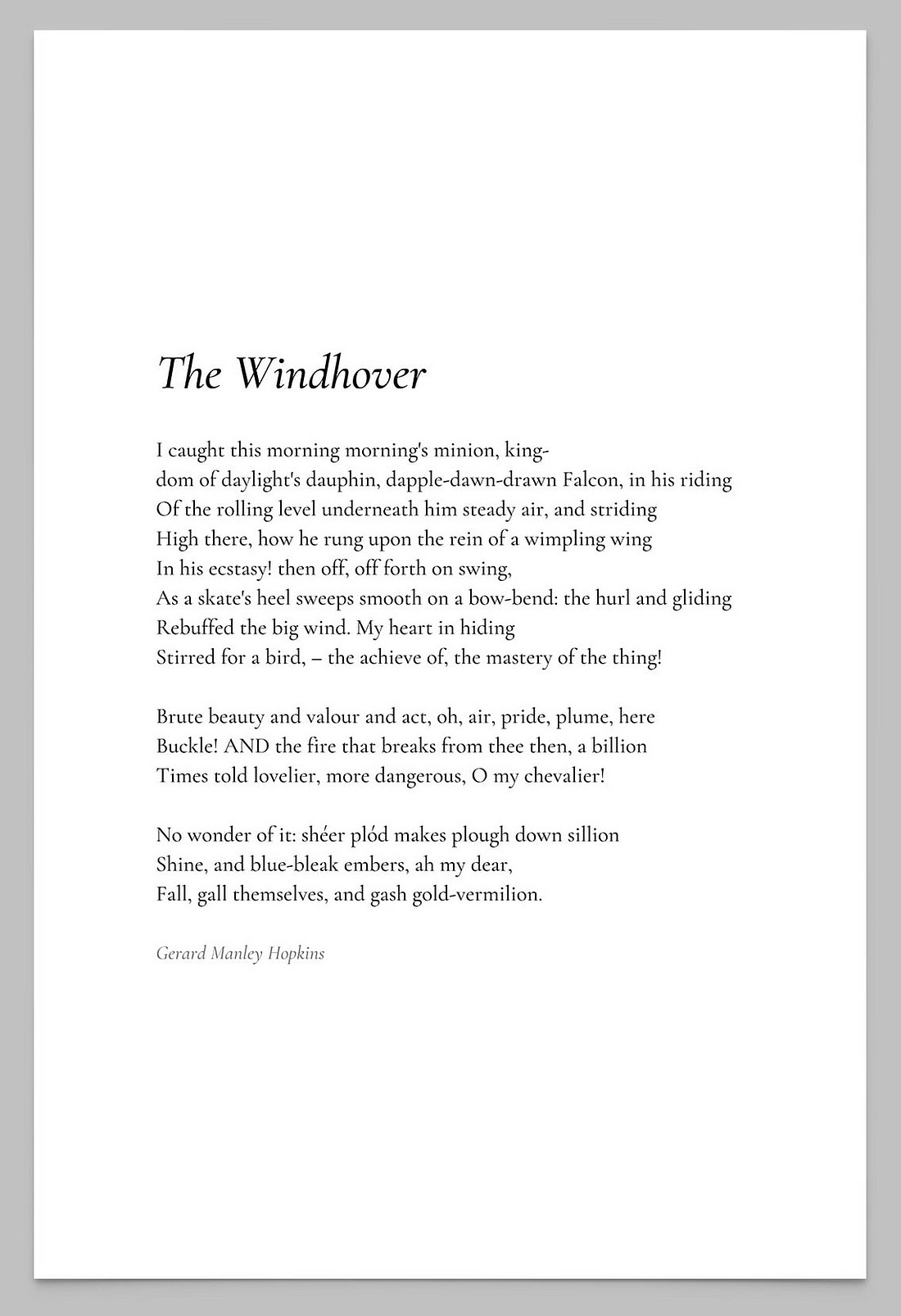
I can still recall that moment, and that line, precisely. Same goes for the class in which we read The Windhover by Gerard Manley Hopkins out loud (full excerpt below) and I felt the force of his poetic flair smack me between the eyes. It didn’t matter that what Hopkins was trying to say in his poem was lost on me, only that I understood the sound of it. How the words tumbled over each other. During these formative school years I was also fortunate enough to go up to London and watch Hamlet, Richard III and Medea, with Kenneth Branagh (1988), Ian McKellen (1990) and Diana Rigg (1992) respectively playing each lead. Much like Hopkins’ lyrical poetry, those theatre experiences left their mark on me - the palpable, skin-tingling effect of words and meaning, folded into what remains the most sacred of art forms.
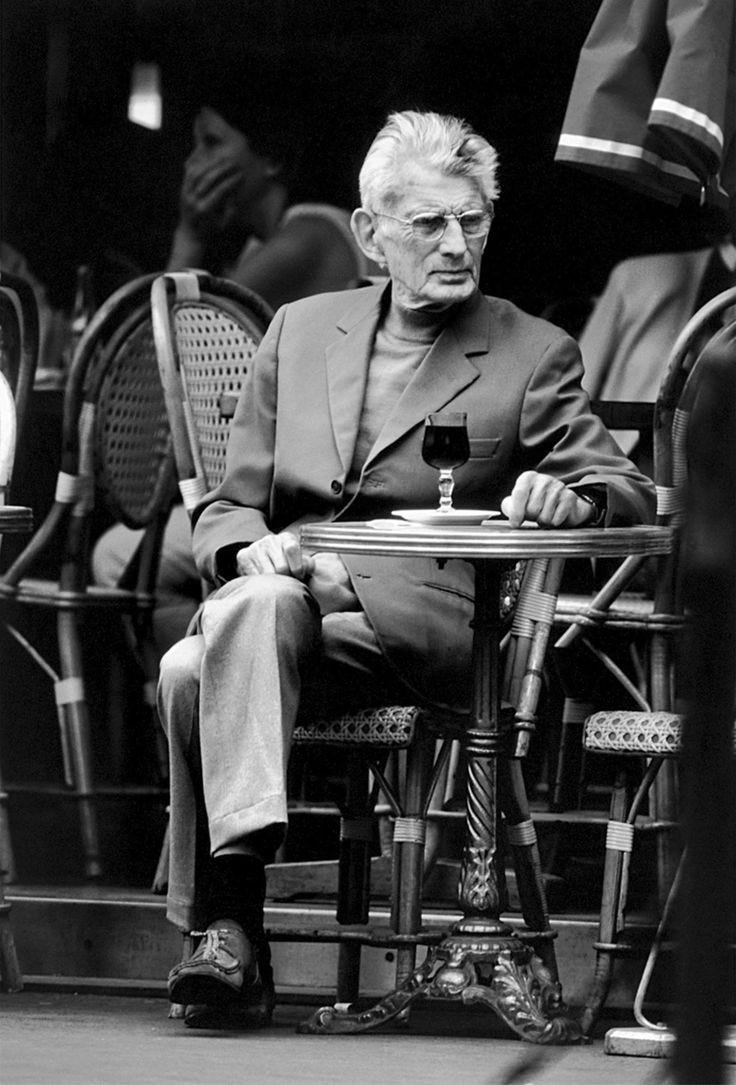
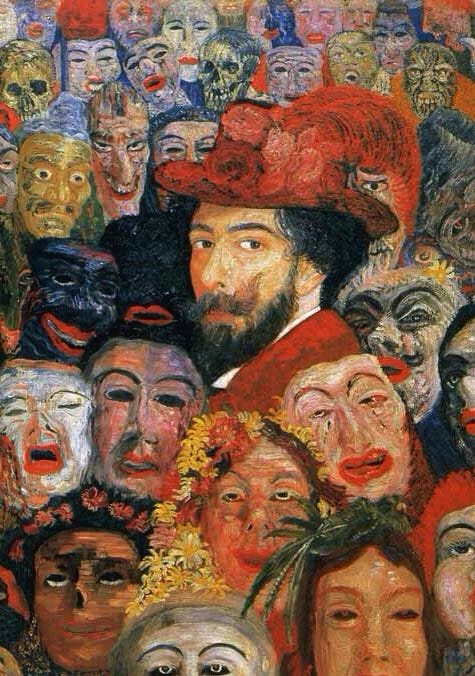
When Samuel Beckett’s Waiting for Godot first reached London in the mid-1950s, audiences were treated not only to a great piece of theatre, but to one that came with a twist: the idea of creating so much out of so little. It was a radical offering at the time. And still is. We currently live in a world of more: bigger launches, faster feeds, the most-watched, the most-liked, the biggest ever. Everything is optimised to grab us by the collar. Godot does the opposite. Not a lot happens in the play, famously. It’s 90% about two men on a bare stage, keeping each other company. And this set-up, in turn, forces its audience to insert their own imaginations into the protracted state of what’s happening in front of them. Beckett’s genius was to remove any assumptions from the play, ensuring that his audiences would have to take on the task of seeking answers to the very simplest of the philosophical questions that Godot hints at, and which besiege us all. And I don’t think it’s any coincidence that it is when immersed in the grip of art like this that I feel most like myself. Disconnected and free. Conversely, we all spend a lot of each day very much connected. Locked into the various roles that we adopt from dawn ‘til dusk - dealing with work colleagues or clients, messaging our friends or drinking a coffee with our children. We show up for all of it primed for interaction. We’re hard-wired to behave. Taught skills we can deploy. All that connecting and energy-spending is seemingly OK, but can also sometimes feel too formulaic. Too oppressive. In The Bell Jar, the protagonist, Esther Greenwood, is uncomfortable with the roles expected of her, and that anxiety sits at the heart of the novel. Plath’s powerful examination of that very struggle - something she viscerally felt herself - is in part what made the book so popular and timeless. Some 64 years before Plath’s novel came out, another artist, James Ensor, gave us a self-portrait (below) which alludes to a similar theme. The image shows an artist hemmed in by eerie masks, and has often been seen as Ensor’s way of saying he never quite fitted in.
These same anxieties about roles and ‘fitting in’ persist today, and many of us are all too prone to them through our phones, clogged as they are with apps that each want a slightly different version of us: the professional, the friend, the parent in the group chat, the person with opinions. None of these roles are necessarily fake, but they’re not quite the whole thing either. Art, in whatever form, asks for none of that. It doesn’t need or necessarily want your reaction, just that you pay attention. And really good art actually forces us to transcend our assigned roles, and the comfortable paradigm we inhabit. Good art requires us to detach, momentarily. This coming weekend marks six months since I slipped and tore my Achilles. Half a year of quasi-purgatory, stuck in my own body and my own head. And yet where it truly counts, I’m fine: I wake up every day, earn a living, raise my kids, try to be a decent husband, see my friends, and live in an interesting country. Just not on the terms I’d known for 51 years. You could say the injury did to me what Beckett does to an audience: it took away the props. No running, no rushing around between things, no filling every gap. Life this year ended up getting smaller, slower, and more repetitive. Which wasn’t what I’d have chosen, but it has made me detach more, notice the small stuff, and in doing so find some self-connection in those ‘disconnected’ moments. In Godot, the waiting never ends. The company is what gets them through it. Which is a terrific sentiment to land on for this week. We should embrace the daily humdrum of life, and the chances we give ourselves and each other to slow down, hear the rise and fall of our breathing, and sit briefly in the calm chamber of the self - because these chances may matter more than the final act, or any higher power we’re waiting on. On Sunday, I’ll raise a glass to my six-month milestone, and to all the characters, books and art forms that have kept me company along the way. See you next week!
saigonsays is free today. But if you enjoyed this post, you can tell saigonsays that their writing is valuable by pledging a future subscription. You won't be charged unless they enable payments.
|








No comments:
Post a Comment