
Still Yours? Writing with AI Without Losing Your Voice or Your CredibilityAn unanticipated part 3 to a loose series, pointing out the pitfalls of using AI to write, and not disclosing it
Calling this part 3 of a series is a stretch. Basically, this is me backtracking substantially on what I wrote before. Not everything, but still a lot. If you haven’t read the first two parts, check them out here: Not sure if you saw this one?
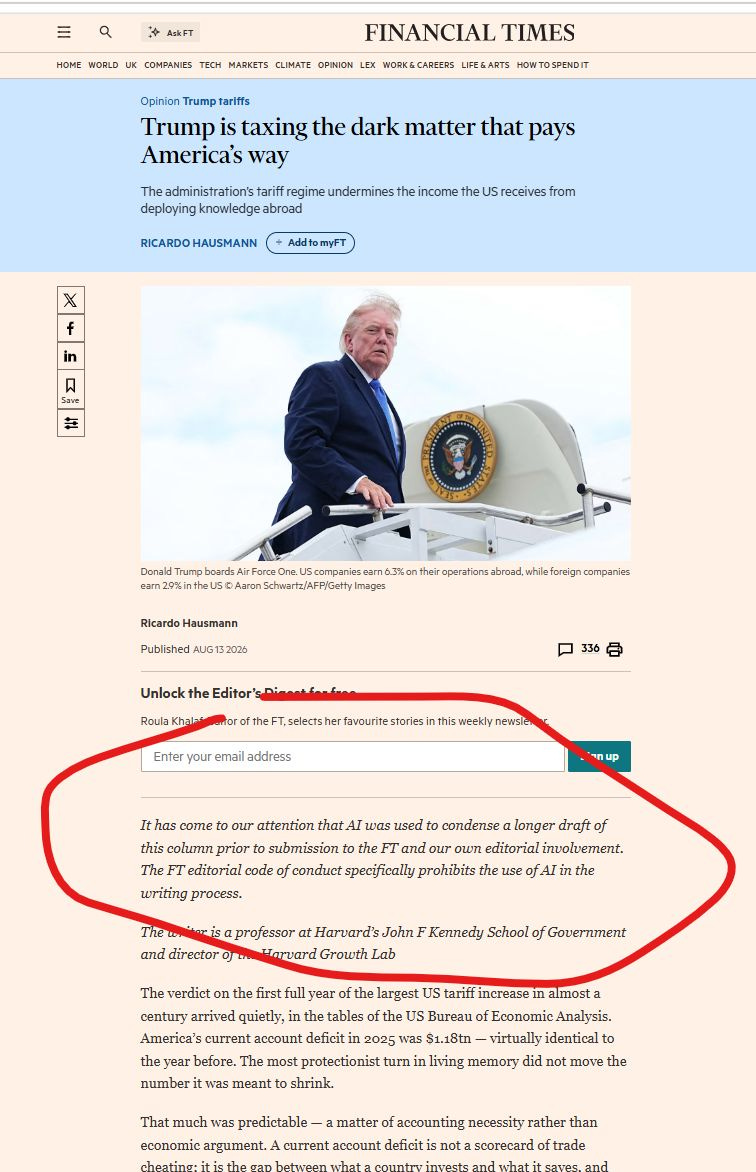
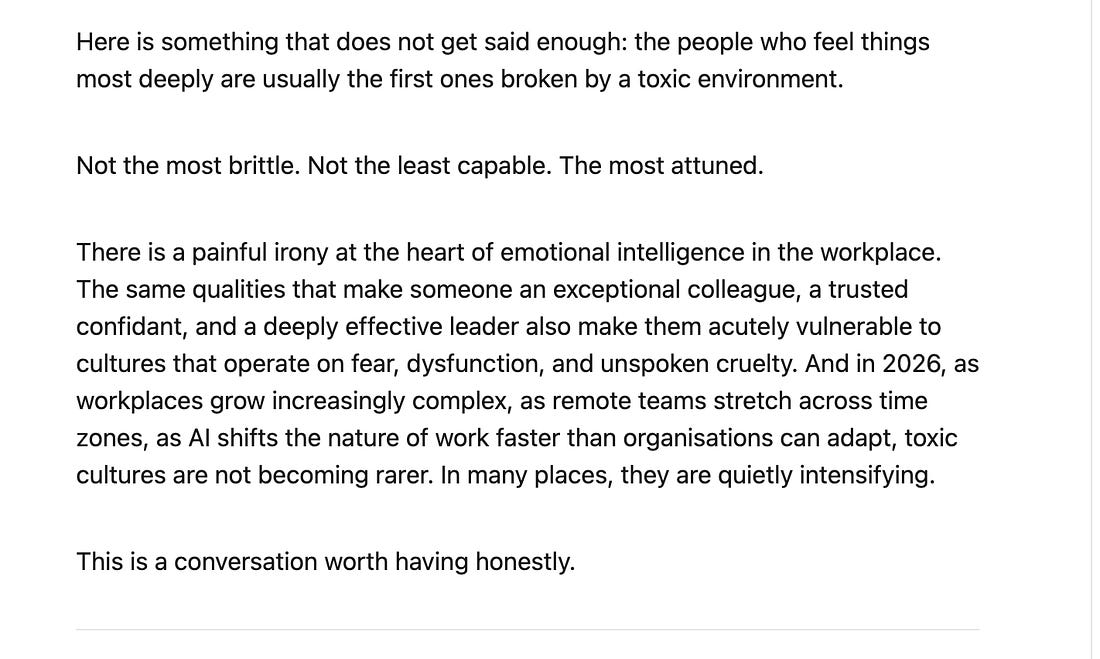
Oops… A Harvard professor bot-shamed by the FT - well, I never. I hadn't planned to write a third part of the series about academics using AI for public engagement, but since I wrote parts 1 and 2, I have had ample opportunity to reflect on what happens when it’s done badly … because it. Very. Often. Is. Harvard prof up there is not at all unusual. I edit another blog (Business Research Unpacked), and I get quite a few AI-generated submissions. Sadly, those often require less work than the ones academics write without assistance, because they avoid most academic pitfalls: big words, classic research sentences and structure, lots of hedging and a lack of clear, punchy insight… well, I could go on. And I should make clear: they are by no means botshit, as they are usually based on academic research, only rendered through AI prose; they have substance, just with the AI lingo that gives everyone the ick by now They are still work because I have to revise them. Substacks can now be scanned by any reader with Pangram, and it would be quite embarrassing for all concerned if that came back with the shame-badge of the 100% AI-generated label. (Of course, you could disable it, thereby signposting that it is clearly AI-generated…) Funnily enough, like the Kennedy School professor in the FT, many of our colleagues don't realise that. I was recently asked to review a grant application that was clearly entirely AI-generated and frankly on the less substantial side. I mentioned it to the research support office, but I remain unclear whether anyone did anything about it. The rise and rise of the meat proxiesUK universities are curiously blasé about all the AI-generated slop. I also marked dissertations… wow, sometimes I could identify with pinpoint accuracy which model iteration they used (I know the Claude Opus range too well). I politely pointed out that their chances of landing a consultancy role after graduation may be much lower if all they can offer is AI-generated insights… Seriously, what employer would pay six (or even five) figures for that?! Our universities' deeply laissez-faire attitude is even more puzzling given the significant online ire about AI-generated text. As you know, I don't share this, but even I now feel ground down by the constant botshit I am expected to read and comment on. People: Use a decent model, learn to set up a good harness, know that prompting guides are bs, and for god’s sake, REVISE THE TEXT AFTERWARDS!! The internet rage granted me a boon, nevertheless, in the form of an amazing new word: “meat proxy” I shall deploy this from now on. You may ask why a relative AI advocate like me is suddenly siding with the haters. Truth is, I have also reached my “too much.” There are good reasons to use it: information retrieval, summarisation, research assistance. Claude is a great aide. But not a great writer. Read this LinkedIn offering:
If you cannot see the AI tells, let me tell you:
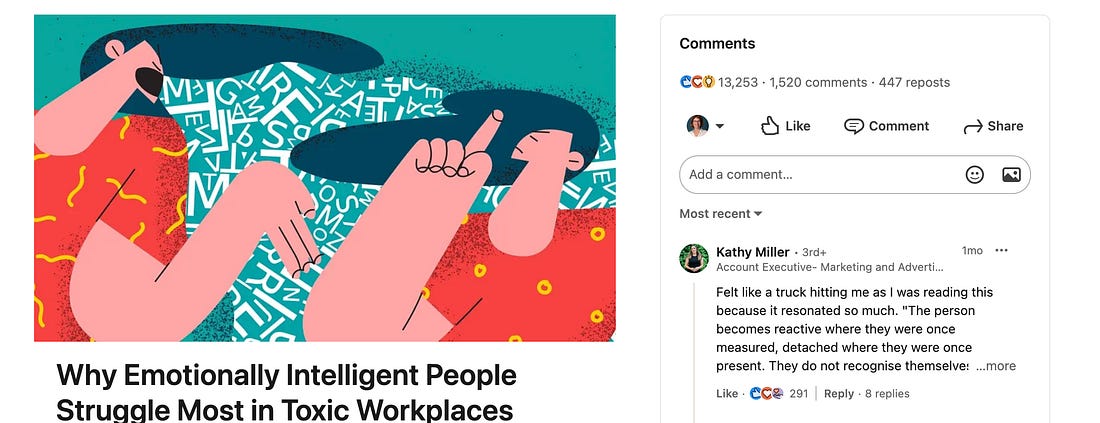
Another thing AIs endlessly do is tell you what something isn't, then what it is. Or the other way round. Which is completely redundant. One presupposes the other. (Using it sometimes for emphasis is fine. Using it all the time in dry academic writing that normally aims for brevity over expressiveness, not so much.) If you still think it’s all about em dashes and “delve”, you are so 2025. And I can use my favoured en dash again (which sadly doesn't work on Substack). Claudish lexica are now online, in case you want to catch up with the frontier. But while AIs are not great writers, they write excellent copy. So I stand by my earlier claim: they provide a great counterweight to the curse of knowledge. Just see the amazing engagement that this arguably clickbait piece on LinkedIn had:
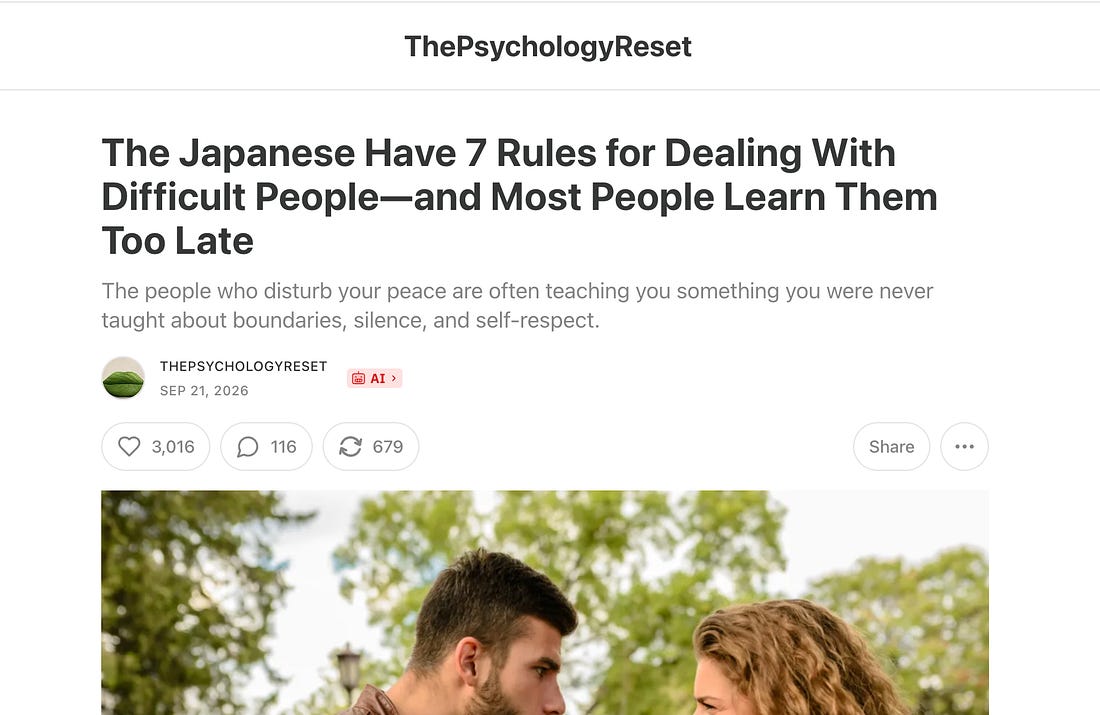
Substack, for all its collaboration with Pangram, just promoted a fully AI-generated piece to me today. It always seems to be some loosey-goosey psychological stuff that meat proxies favour:
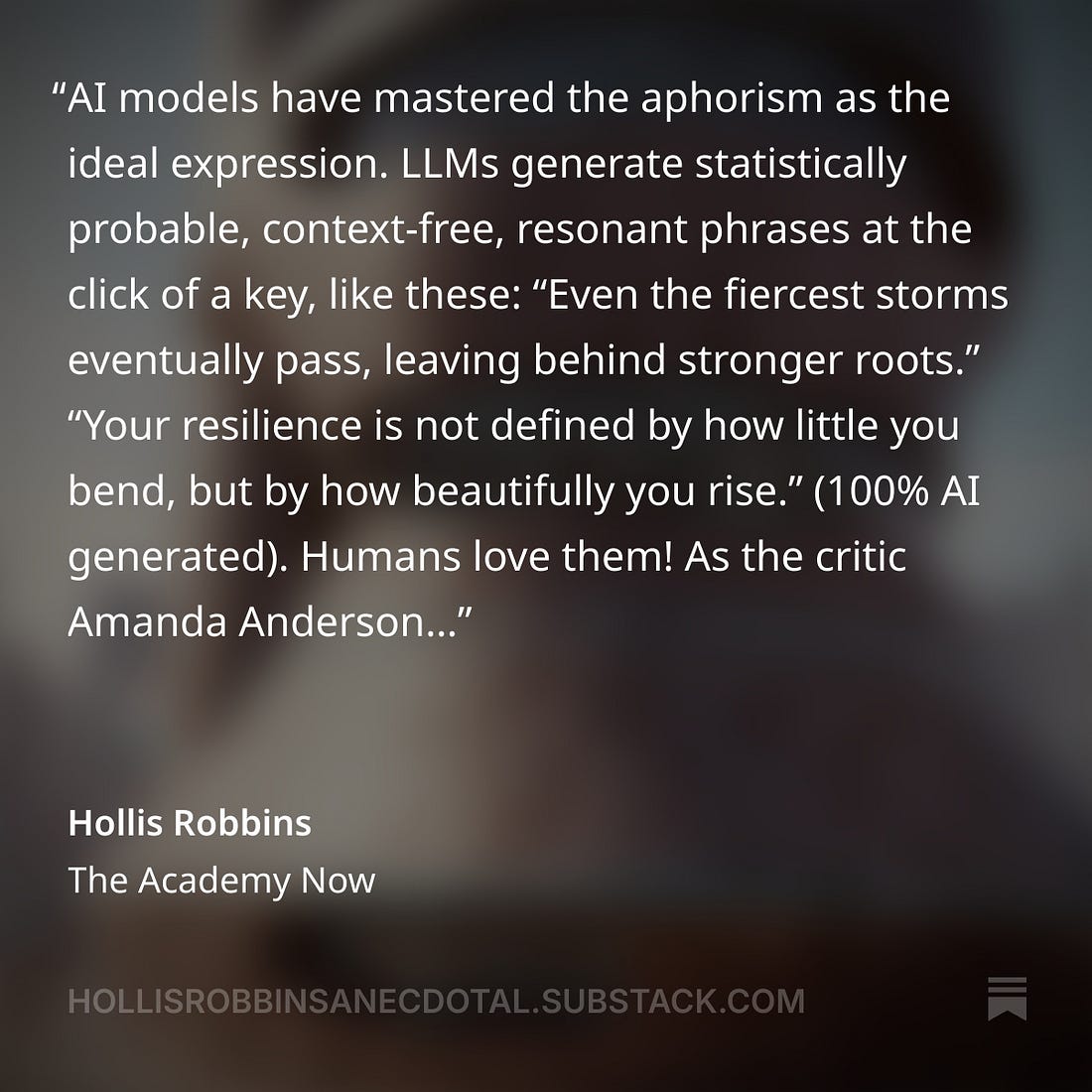
People love botshitTrained on vast swathes of the internet, LLMs know how to frame pithy attention-grabbers. Hollis Robbins provided a great analysis of why their prose is so loved by so many: the aphorism.
But if you work with LLMs fairly regularly, you spot that type of prose pretty quickly. I find myself in a similar position to Johan Fourie, who uses AI himself but keeps rejecting papers because they are AI-generated. And crap. 
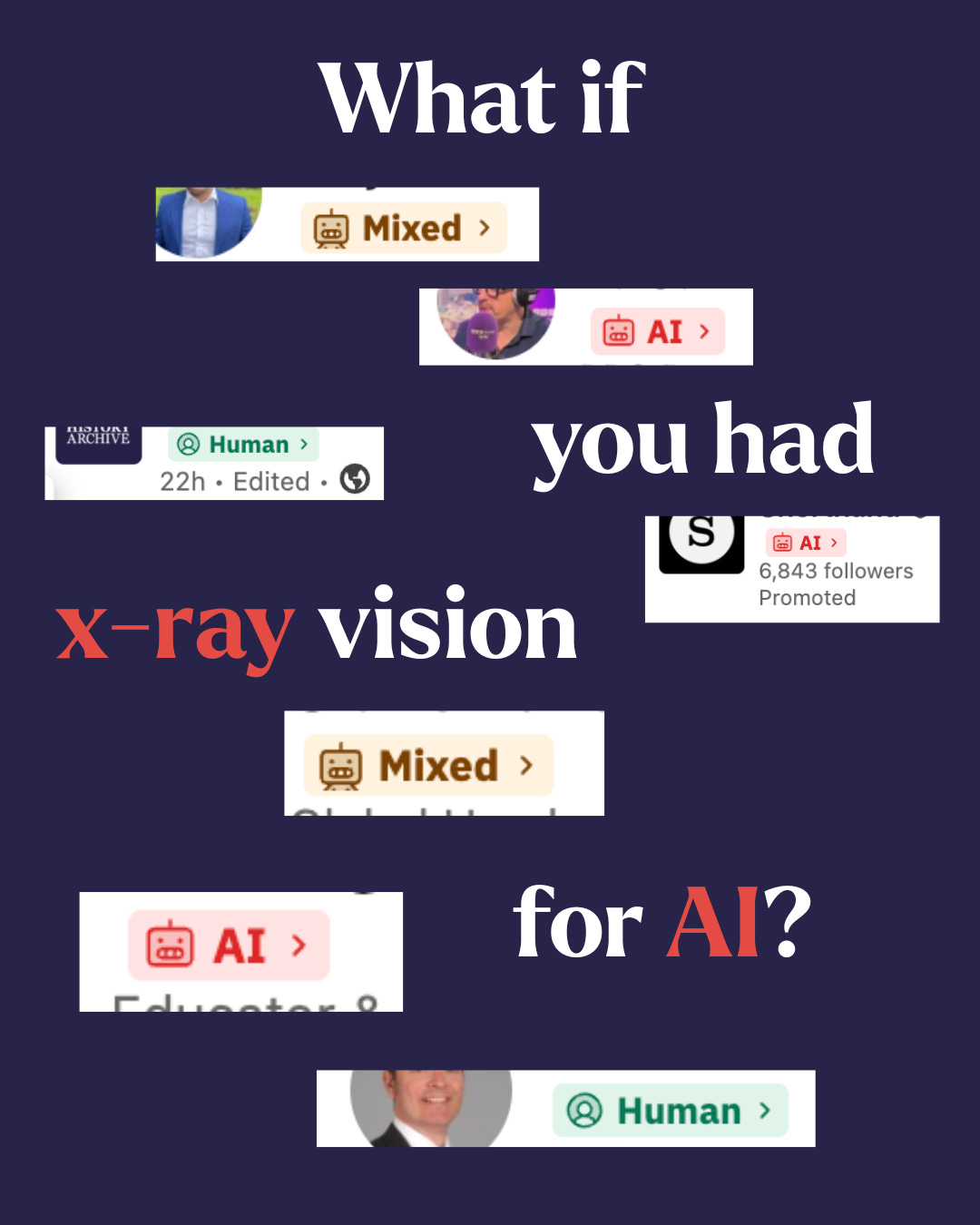
Actually, I refused to review a piece for a major management journal after spotting AI prose in the abstract. And I just don’t have the time to read another piece of junk. Sure, it may not be junk. But why would I donate my time for free if I am already getting a whiff of the stuff in the first 100 words?? This is even more ironic because I hate composing abstracts. I am bad at it. So I use AI. Because it is good at it. And then I revise the text… Universities seem to be in cloud-cuckoo-land…The general attitude in UK HE seems to be that AI use is permitted because we cannot clearly determine whether someone is using it. Nonsense. By now I can spot AI-generated text a mile off. AI use is, of course, another matter. (But then I don’t think that is always bad.) If only we had a Turnitin for AI… which Turnitin would like to be good at because nobody needs it anymore. Plagiarism has gone the way of the dinosaurs, but that’s a subject for another day. But wait, we do! It’s called Pangram. And yes, you might remember me saying it did not work. Claude and I could fool it with light revision. Well…. My money is on 2027 being the year AI detection becomes the new plagiarism detection. It’s changed. VERY quickly. As of last month, Pangram is so good that I would call it nearly foolproof. (It’s not reliable on really short texts, like under 50-100 words.) In all my tests, it’s like a spaniel sniffer dog. Gone are the days when a light revision fooled it. Now, when I generate any text with AI, I either use it for background research or (re-)write each paragraph from scratch. I got a free 7-day trial with Pangram, and wow… … it is like X-ray vision for AI botshitWhat I hadn't realised is that it runs in your browser and automatically scans your social feeds. So my LinkedIn now looks like this:
Who’s been swimming without their gear now the tide is out? But THEY DON’T KNOW THIS YET!! Yikes. Personally, I still don’t care much if people post AI-generated stuff on LinkedIn and other socials, because the human-generated stuff there ain’t so great either. Also, academic LinkedIn remains reassuringly human-to-mixed, so my feed is ok. Should you live in fear that you're one ill-advised step away from being slop-shamed if you regularly use AI-generated text without disclosing it? Probably. And thinking that you can get away with denying it because you still think AI detection doesn’t work? Well, that will soon be very 2025, too. My money is on 2027 being the year AI detection becomes the new plagiarism detection. And if you are telling me LLM text can never be detected because it was trained on human writing and therefore cannot be disambiguated, then, sadly, you don't understand how LLMs generate text. If you don’t believe me, try Pangram for free on their website. Or, if you follow this (affiliate) link or QR code, you get 20% off the paid version.
But if you want to avoid bot-shaming and learn how to write with AI without losing your voice, you'll want the excellent resources full subscribers get below. ;-) Thanks for reading (I know it’s a long one today) and have a great weekend! Too much, not everything relevant to your interests?Manage which types of content you receive from History in Organizations:
There’s a shortcut, too: the Unsubscribe link at the bottom of every email will offer to unsubscribe you from individual sections rather than the whole newsletter. So if one post too many lands in your inbox, use that link to drop the section. You're currently a free subscriber to History in Organizations. For the full experience, upgrade your subscription.
|









No comments:
Post a Comment