|
I can't believe it's been 10 incredible years since you first joined me on this journey! This month, we're celebrating a milestone that wouldn't have been possible without you. A decade of blogging, sharing stories, and connecting with millions of readers from all around the world. 🎉 |
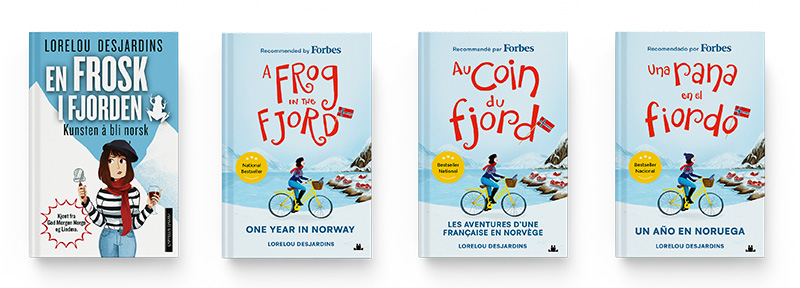
| My passion has always been to write about culture with humor and share engaging stories about Norway 🇳🇴. Along the way, I've faced obstacles—publishers told me there was no market for my book about Norwegian culture. Or that no one would be interested in my story of moving to Norway, learning the language, and trying to integrate. But together, we've proven them wrong! I'm proud to announce that over 12,000 copies of "A Frog in the Fjord: One Year in Norway" have been sold. It's now available in four languages: English, French, Spanish, and Norwegian.
Your unwavering support has meant the world to me, and I am beyond grateful.🙏 And now, A Frog in the Fjord has grown into something even bigger—we've officially become a publishing house! 🐸📚 Stay tuned for more exciting updates coming your way soon.
With gratitude, Lorelou Desjardins 🐸 |
|
Best-selling writer, journalist and speaker www.afroginthefjord.com | www.lorelou.com
|
| If you want to read this in a browser, click here. If you're not interested in my content anymore, click here and I'll make sure to not send you any further emails about it. This email and any files transmitted with it are confidential and intended solely or the use of the individual or entity to whom they are addressed. Please notify the sender immediately by e-mail if you have received this e-mail by mistake. If you are not the intended recipient you are notified that disclosing, copying, distributing or taking any action in reliance on the contents of this information is strictly prohibited. Unsubscribe if you do not wish to receive these communications in future. A Frog in the Fjord, Oppegård 1415, Norway 🇳🇴 |
Sunday, 22 September 2024
THANK YOU for 10 Amazing Years ❤️




Friday, 20 September 2024
What it takes to become a big league scientist
Some scientists are more science-famous than others, some of us work are more prestigious institutions than others, some of us receive far more compensation than others, and there are some professional activities that some of us do and a lot of us don’t. Picture in your mind someone who people might classify as a “big league scientist.” The checklist would include employment in a fancy-pants institutions, publishing in the most exclusive journals, received big awards, a steady stream of funding from public and private sources, regularly hobnob with a coterie of other fancy-pants scientists. Is this person actually operating in a different league than the rest of us? I don’t think so. Nobody is a big-league scientist because we have no leagues. Science is not a sport, and the ability and capacity to do high quality science is not even comparable to what happens in sports. And what constitutes high quality science is highly subjective. For some people it’s an h-score, for others, it’s how many of their middle school students understand how osmosis works, and others it’s how well you’ve prepared trainees for doing more science. “Excellence” is a meaningless term in this situation¹, if you’re thinking that more excellent people are in higher leagues. I can understand where the idea of leagues may be appealing. Some folks have different spheres of influence: local, regional, national, international; dealing with very little money, some money, or hundreds of millions of dollars; specialized in publishing research, teaching, working in industry, policy, or something else. But please don’t think of these as tiers that are above one another. Our social ecosystem is far more complex than that, and the perception or imposition of these hierarchies gets in the way. How we think about this issue is foundational for equity, access, and justice in science. Because those of us who believe and act as if there are some of us are in higher “leagues” than others are harboring fundamentally different types of growth mindsets than others, and have different beliefs about the background and environments that it takes to “advance” oneself into higher “leagues.” No matter where you work, you can submit and publish your work in any journal. When you’re assessing a person’s talent as a scientist, you can’t learn this from how many papers they’ve published, how much grant money they bring in, or the level of status associated with their position. While some folks insist on putting rankings on people, departments, institutions, journals, and everything else, it's not like professional sports with organized leagues.
Yes, there are certain skills and situations that can help you advance your career in science. You can be really good at writing grants, you might be great at difficult math or some obscure but very important techniques, you might have been born into the right zip code, you might have had the chance to volunteer in a program that gave you connections to influential people. Here’s an old school example explaining why acting as if there are “leagues” is problematic: The progress of evolutionary biology and genetics was (arguably) slowed by decades because folks had simply overlooked the science of Gregor Mendel. It took decades for his work to be visible to scientists in relevant fields. If that same exact project was done by someone who was more deeply engaged in the “big leagues,” our understanding of the inheritance of traits would have advanced far more rapidly. Let me give you an example ripped from my own (personal) headlines. I recently was visiting with a friend at another institution who describing to me their cool and ambitious collaborative research project under development. For the past couple years, they’ve cobbled together some smallish amounts of funds from local agencies and were preparing to launch. It was running on very thin budgetary margins, with not quite enough funding for staff so a lot it would be coming out of the hide of the PI in the long run, and the science was extremely solid but the amount of replication could have been better if there was more time/money/support. I was like, “This sounds like a super cool project for a couple different NSF programs, have you applied?” My friend had convinced themselves that the project didn’t have enough preliminary data, or that the panel wouldn’t be convinced it would be important or exciting enough, and that it wasn’t just ready for prime time. But I really made the case to them that this project was a great fit. I think if this same scientist was working in a bigger “league” institution, they would have been surrounded by people who would haven’t thought twice about submitting this as a proposal to a federal agency. I left that conversation thinking that my colleague felt not as fully enfranchised in our research community because their position didn’t have the same status and resources as others do. Whereas I am convinced the reality is that the folks who are making the funding decisions for these projects definitely feel that this person belongs — even if there are some elitist attitudes to be found in other corners of our community might not feel the same way. When I’ve served on NSF panels, I’ve occupied equal footing with people who worked in federal agency roles, community colleges, research institutions, small liberal arts colleges, and other regional publics. And I’ve seen enthusiasm for supporting work from throughout all kinds of institutions, without regard to “leagues” that someone may be operating in. I think this mindset that we are all members of one scientific community, all performing our individual roles, all of which are valuable, needs to be more than rhetoric. It’s something that we need to believe in and be a foundation for how we interact with others. Are you at a conference and there’s a person you’ve never heard from from a place you’ve never heard of? Learn about them and what they do! Is there a student applying to your lab but their only research experience is with someone who is poorly published? So fricking what! Are you excited about the intro course that you’re teaching even though everybody in your department thinks it’s a blow-off course that you shouldn’t invest in? Follow your conscience and your heart! When I started Small Pond Science eleven years ago, I think I was tired of my and my colleagues at institutions like mine being perceived of as less, or as not a part of the broader community. The journey that I’ve taken since then (which has brought me into higher “league” activities if you want to see it that way) has indicated to me that this hierarchy only exists when people insist it upon us, and intentional communities can be far more equitable and accessible. We stop treating science as competitive sport, as more as a community endeavor. We aren’t separated by leagues, but we are kept apart by those who believe in them. 1 When I give the occasional DEIAJ talk or roundtable or whatnot, the conversation varies greatly with the audience, but the one thing I can promise is that I will bring up this paper. I will never not stop talking about that paper. You’re currently a free subscriber to Science For Everyone. Thanks for your support! If you wish to support this work more, then you could pay for a subscription.
|




Submit your papers to the EGOS History Sub-theme 2025!
Organizational History Network
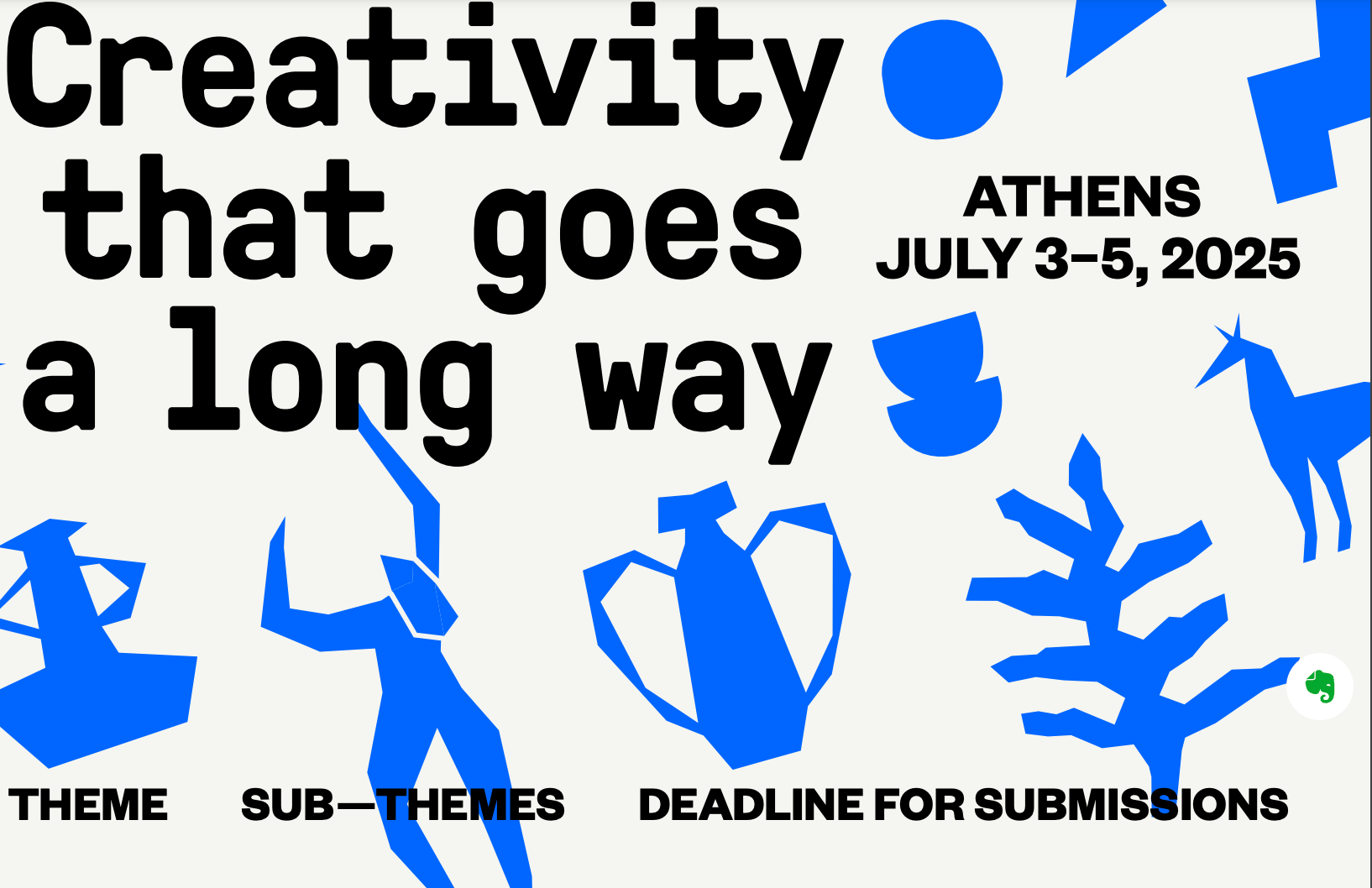
Sub-theme 41: Tracing the Past: Historical Methods for Studying Entrepreneurship, Imagination, and Innovationhttps://www.egos.org/2025_Athens/SUB-THEMES_Call-for-Papers Convenors: Elena Giovannoni University of Birmingham, United Kingdom Christina Lubinski Copenhagen Business School, Denmark Adam J. Nix University of Birmingham, United Kingdom Call for PapersExploring creativity that goes a long way requires an explicit engagement with temporality and the links between past, present, and future. Historical research has long offered a variety of methods and conceptual tools for researching creative works and organizations, and their impact on society (Bucheli & Wadhwani, 2014; Decker et al., 2023). These methods rely upon a rich variety of sources, ranging from archival documents, including textual, numerical, visual, and digital accounts (Clark & Rowlinson, 2004; Kipping et al., 2014; Nix & Decker, 2023), to recordings, memories, spatial traces, and material and embodied practices (Lipartito, 2014; Platts, 2023). By providing an inventory of traces that not only allow us to reconstruct the past but also inspires theoretical imagination, such sources enhance our understanding of diverse social phenomena and the lived experience of historical actors (see, e.g., Kostera, 2020). Indeed, recent research on historical imagination (Heller & Rowlinson, 2020), entrepreneurial imagination (Ram et al., Forthcoming), microhistory (Hargadon & Wadhwani, 2023), rhetorical history (Lubinski, 2023; Suddaby et al., 2023), and memory studies (Foroughi et al., 2020) have all successfully drawn on a variety of spatial, material, sensory, visual or oral sources to elaborate these themes. The traces of the past are an ideal vantage point from which to better understand the thoughts, imagination, perceptions, moral search, and experiences that make up the craft of creative composition within and beyond organizations. Nevertheless, there is significant scope to delve further into the aspirations, ambitions, creative thinking, morality, and the lived experience surrounding how creativity unfolds and eventually becomes innovation. For example, insights here could contribute to the history of ideas, science and technology (Juma, 2016), social movements (see, e.g., Crossley, 2003), new practices (see, e.g., Quattrone, 2009 on the spread of accounting, and the power of visual images, imagination, and memory), or objects (see, e.g., Daston & Galison, 1992 on photography). Additionally, the past allows appreciation of the darker sides of creative and innovative processes; for instance, when pushing the boundaries of entrepreneurial innovation crosses the line into wrongdoing (Nix, Decker, & Wolf, 2021), when ‘creative’ accounting or other professional practices undermine public trust and fiduciary duties (Gabbioneta et al., 2019), or when creative processes apparently fail, are left incomplete or ambiguous, but nevertheless continue to inspire imagination (Giovannoni & Quattrone, 2018). This agenda calls for new or adjusted approaches to historical sources and methods, innovating the way in which scholars look for the traces of the past to contribute to the understanding of creativity processes and phenomena. Far from being passive recollections of facts, sources are themselves part of the social texture that underpins past phenomena, explaining their dynamism and how they are, or can be, projected into long-standing innovation. This sub-theme will provide a space for organization scholars interested in innovating their research methods through historical approaches. Our aim is to discuss traditional and innovative ways of looking into the rich variety of historical sources, their nature, structures, fluidity, their absences and voids, as well as their material, spatial, sensory, and social properties that allow scholars to explore the historical roots of phenomena, or newly emerging phenomena, in nuanced ways. We welcome theoretical, empirical, and methodological studies addressing questions including but not limited to:
We are interested in submissions from different disciplinary perspectives and methodological traditions that directly address or speak to the points above, exploring challenges and opportunities for innovative approaches in using and tracing the past as a way to innovate theory, methods and practices for researching organizations and organizing. References
Elena Giovannoni is Professor of Accounting at the Department of Accounting, Birmingham Business School, United Kingdom. She was the founder and former co-director of CHRONOS (Critical and Historical Research on Organization and Society) research centre. Her work bridges critical and historical perspectives and methods for researching accounting, calculative practices and organizing, with a particular interest on visual, material, and spatial practices and methods. She has published her research in leading accounting journals – among others, ‘Human Relations’ and ‘Organization Studies’ –, and she has co-edited a handbook on historical research methods for management. Christina Lubinski is Professor of Entrepreneurship and Business History at the Department of Business Humanities and Law, Copenhagen Business School, Denmark. She is the principal investigator of the interdisciplinary research project “Rethinking Entrepreneurship in Society”, funded by the Carlsberg Foundation, supporting a research environment of ten PhD students and Post-docs from history, entrepreneurship, political sciences, law, and sociology. Adam J. Nix is a Lecturer in Responsible Business at the Department of Management, University of Birmingham, United Kingdom. His research employs historical approaches to management and organization studies, with a particular interest in understanding misconduct, corruption, and failure as organizational issues. Adam’s prior work has explored entrepreneurial failure in the dot.com era, market manipulation in deregulated energy markets, and the use of email as a source of historical insight into organizations. Organizational History Network is free today. But if you enjoyed this post, you can tell Organizational History Network that their writing is valuable by pledging a future subscription. You won't be charged unless they enable payments.
|


-
Dear Reader, To read this week's post, click here: https://teachingtenets.wordpress.com/2025/07/02/aphorism-24-take-care-of-your-teach...
-
A slightly unconventional guide to your first time ͏ ͏ ͏ ͏ ͏ ͏ ͏ ͏ ͏ ͏ ͏ ͏ ͏ ͏ ͏ ...

